


Crispy Air-Fryer Chicken Drumsticks with Herb Salt
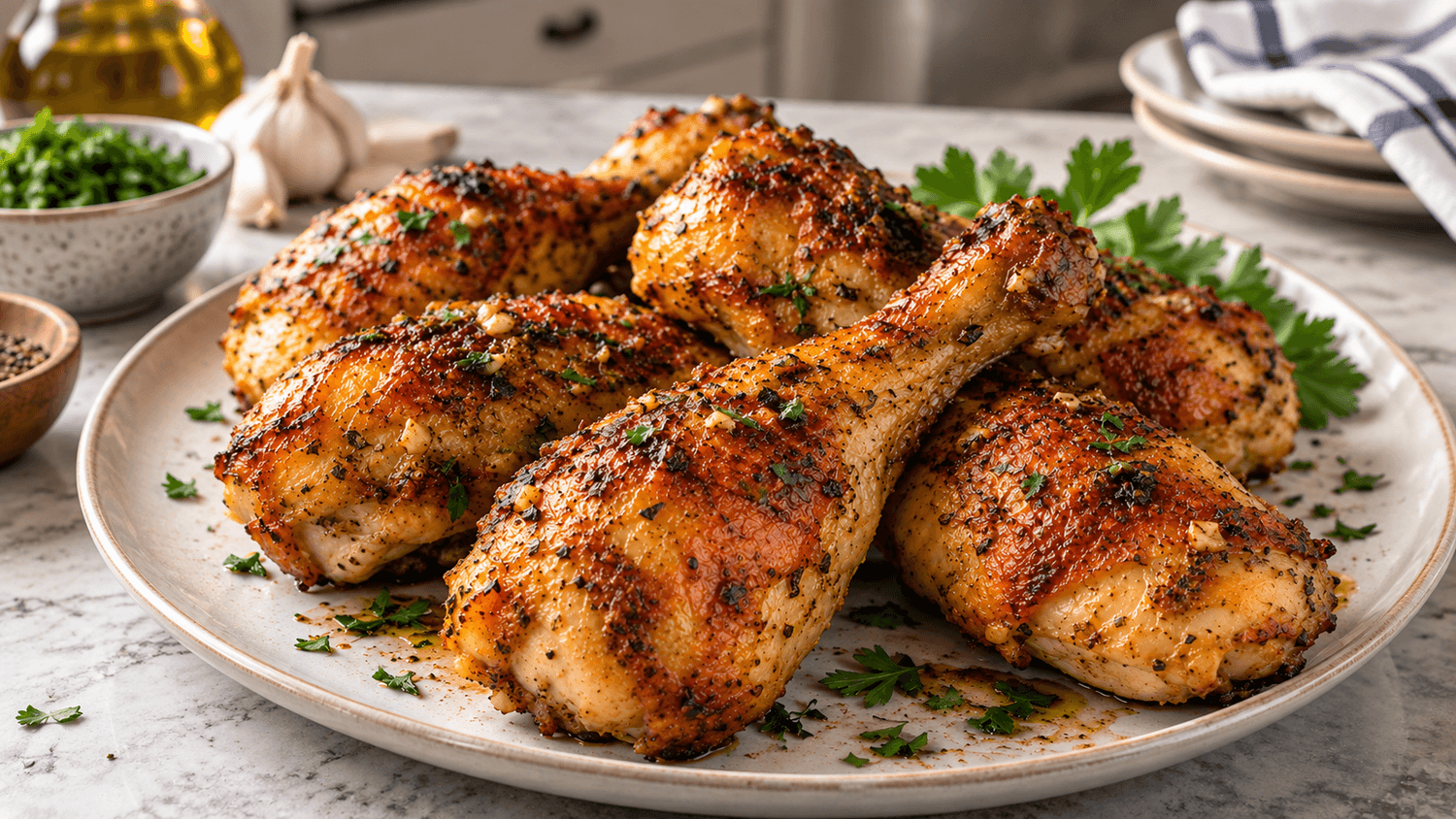
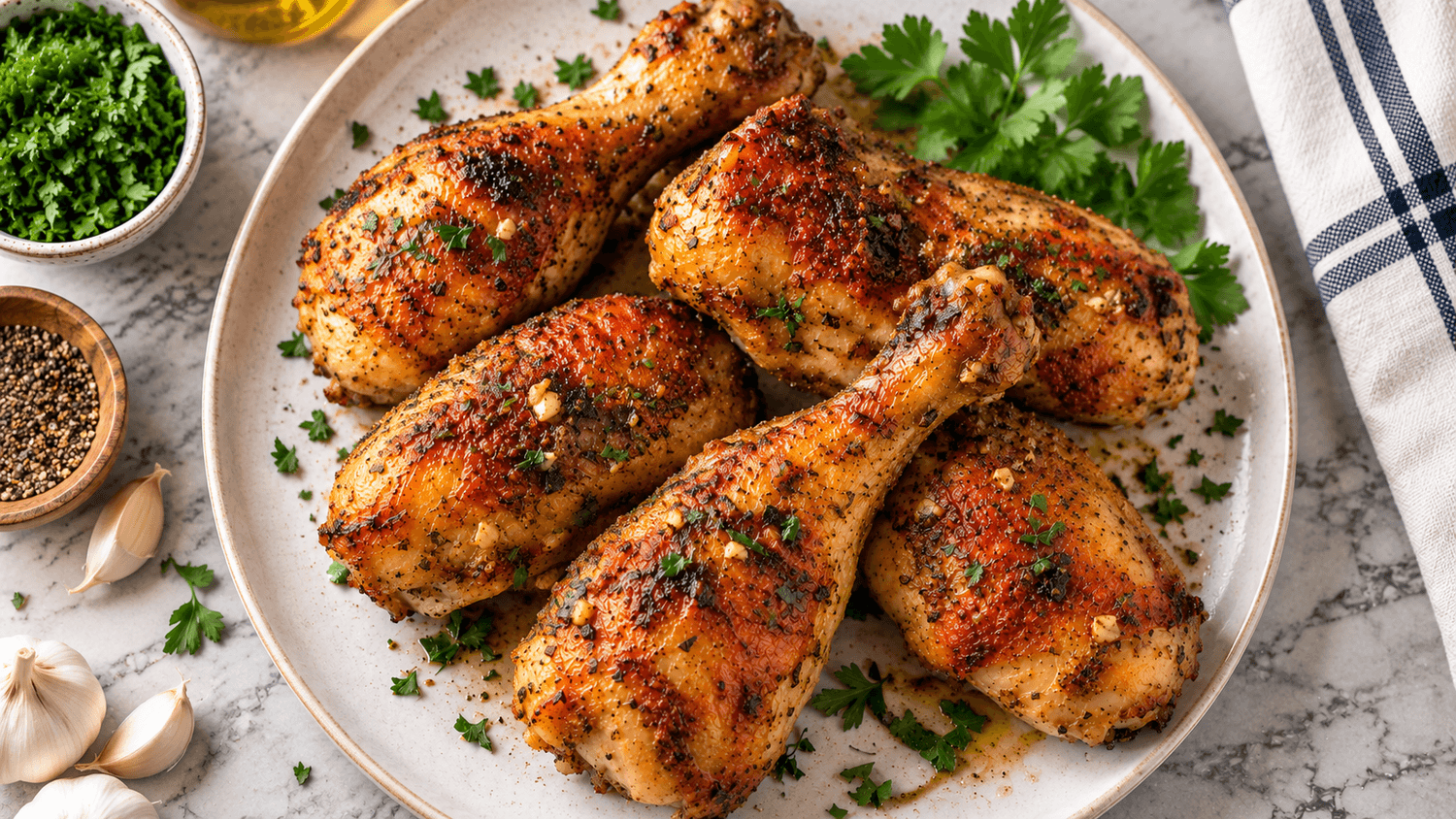
These air fryer chicken drumsticks high protein are designed for a simple goal: crisp, savory chicken with juicy dark meat and enough flexibility to serve a smaller or standard portion.
The recipe makes 8 drumsticks. The standard serving is 2 drumsticks, while 1 drumstick can be used as a smaller portion.
There is no flour or breadcrumb coating. A small amount of olive oil helps distribute the garlic-herb seasoning, while the chicken skin supplies the crisp exterior.
Why These Chicken Drumsticks Are Different
Chicken breast is lean and useful, but eating the same preparation repeatedly can make a high-protein routine feel monotonous.
Drumsticks offer a different eating experience because the dark meat has a naturally richer texture and the skin can become crisp in the air fryer.
That distinction matters from a recipe-development perspective: this is not simply another chicken recipe with GLP-1 keywords added to it. The core appeal is texture variety plus portion flexibility.
The recipe also keeps the seasoning simple:
- Garlic powder
- Dried parsley
- Oregano
- Thyme
- Smoked paprika
- Black pepper
- Kosher salt
How to Get Crisp Skin in the Air Fryer
The first important step happens before the chicken enters the air fryer.
Pat the drumsticks dry.
Excess surface moisture works against browning, so thoroughly drying the skin gives the circulating hot air a better opportunity to create a crisp exterior.
Then:
- Coat the drumsticks lightly with olive oil.
- Season evenly.
- Keep the pieces in a single layer.
- Leave room for air circulation.
- Turn them around the halfway point.
- Check internal temperature before serving.
At 400°F, these drumsticks generally take about 22–26 minutes, although actual timing depends on the size of the chicken and the air fryer.
The safety endpoint is 165°F internally, not a particular number of minutes. (Ask USDA)
Why Drumsticks Can Be a Useful Alternative to Chicken Breast
Drumsticks are dark-meat poultry, so they naturally have a different fat and texture profile from skinless chicken breast.
That can be useful when the problem is not lack of protein but protein boredom.
The goal is not to claim that drumsticks are medically superior to chicken breast or that everyone will tolerate them better.
Instead, they give you another way to prepare poultry:
- Crisp instead of soft
- Juicy instead of very lean
- Savory instead of plain
- Bone-in instead of boneless
- Air-fried instead of skillet-cooked
That variety can make a protein-focused eating routine easier to maintain.
Is Chicken Skin Okay on a GLP-1 Eating Plan?
Chicken skin is not automatically incompatible with eating while taking a GLP-1 medication.
However, the skin contributes additional fat and calories compared with skinless chicken, so it should be counted as part of the actual recipe rather than ignored.
Individual tolerance also matters.
If richer foods do not feel comfortable for you, a smaller portion or less skin may be more practical. You do not need to force a predetermined serving simply because the recipe card says two drumsticks.
Current clinical nutrition guidance for people using GLP-1 medications emphasizes nutritional adequacy, adequate protein, nutrient-dense foods, and flexible smaller meals when appetite is reduced. (PubMed Central (PMC))
What About Collagen and Skin Elasticity?
The original recipe concept included a claim that collagen from poultry skin could support skin elasticity during rapid weight reduction.
That claim has not been used as a health promise in this recipe.
Chicken skin and connective tissues contain collagen-related proteins and amino acids, but that does not establish that eating chicken skin will prevent loose skin or guarantee improved skin elasticity during weight loss.
This recipe should therefore be understood as a flavorful protein option—not as a collagen treatment or loose-skin solution.
How Long Should Chicken Drumsticks Air-Fry?
At 400°F, start with a cooking range of 22–26 minutes.
Turn the drumsticks after approximately 12 minutes.
Smaller pieces may finish sooner, while larger drumsticks can require additional time.
The definitive safety check is an internal temperature of 165°F measured with a food thermometer. USDA specifically identifies 165°F as the safe minimum temperature for poultry. (Ask USDA)
How Much Chicken Should You Serve?
The recipe uses a deliberately flexible approach.
1 drumstick: approximately half the recipe's standard serving and useful when appetite is smaller.
2 drumsticks: the recipe's standard serving.
This does not mean everyone taking a GLP-1 medication should eat exactly one or two drumsticks.
The appropriate portion depends on the individual, the rest of the meal, nutritional needs, and appetite.
For readers looking for another high-protein air-fryer option with a different texture and sauce profile, GLPIANS also has moist air-fryer turkey meatballs in light marinara.
How This Fits Into GLP-1 Meal Planning
GLP-1 medications can reduce appetite and food interest for some people, which makes nutritional adequacy important.
A 2025 joint advisory from the American College of Lifestyle Medicine, American Society for Nutrition, Obesity Medicine Association, and The Obesity Society emphasizes nutrient-dense foods, adequate protein, and smaller meals when appropriate during GLP-1 therapy. (PubMed Central (PMC))
That does not mean a recipe needs to be extremely low-calorie or stripped of fat to be useful.
A more practical approach is to build meals that are:
- Enjoyable enough to repeat
- Protein-containing
- Portion-flexible
- Nutritionally adequate
- Compatible with individual food tolerance
These drumsticks are particularly useful when texture variety is what makes the difference between wanting a meal and avoiding it.
What to Serve With Air-Fryer Chicken Drumsticks
For a balanced dinner, pair the chicken with foods that complement the crisp texture.
Good options include roasted vegetables, a cucumber salad, or a modest serving of potatoes or rice.
A yogurt-based dip can also add a cool contrast to the hot, crisp chicken.
Keep the sides flexible rather than treating one combination as medically required.