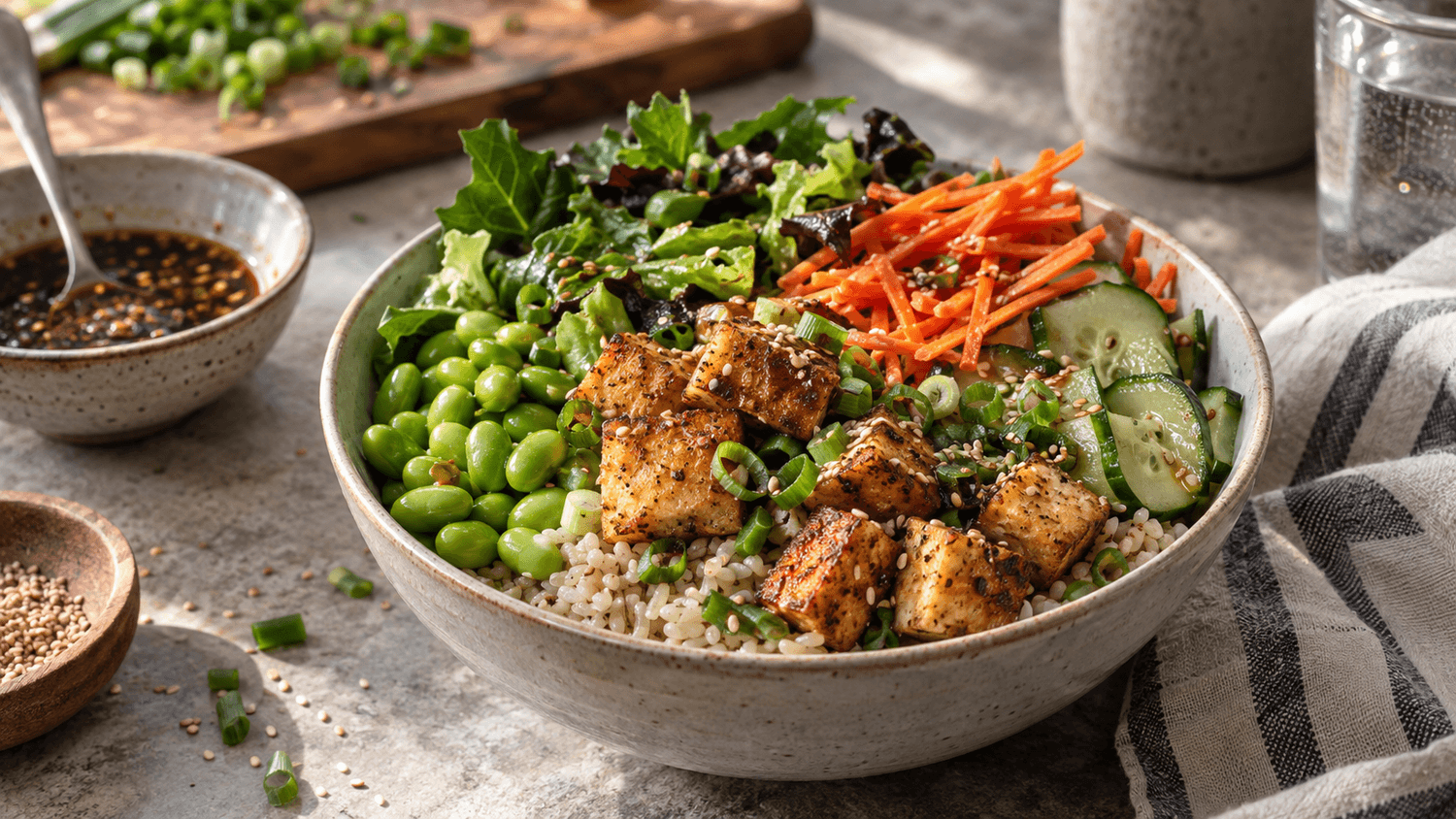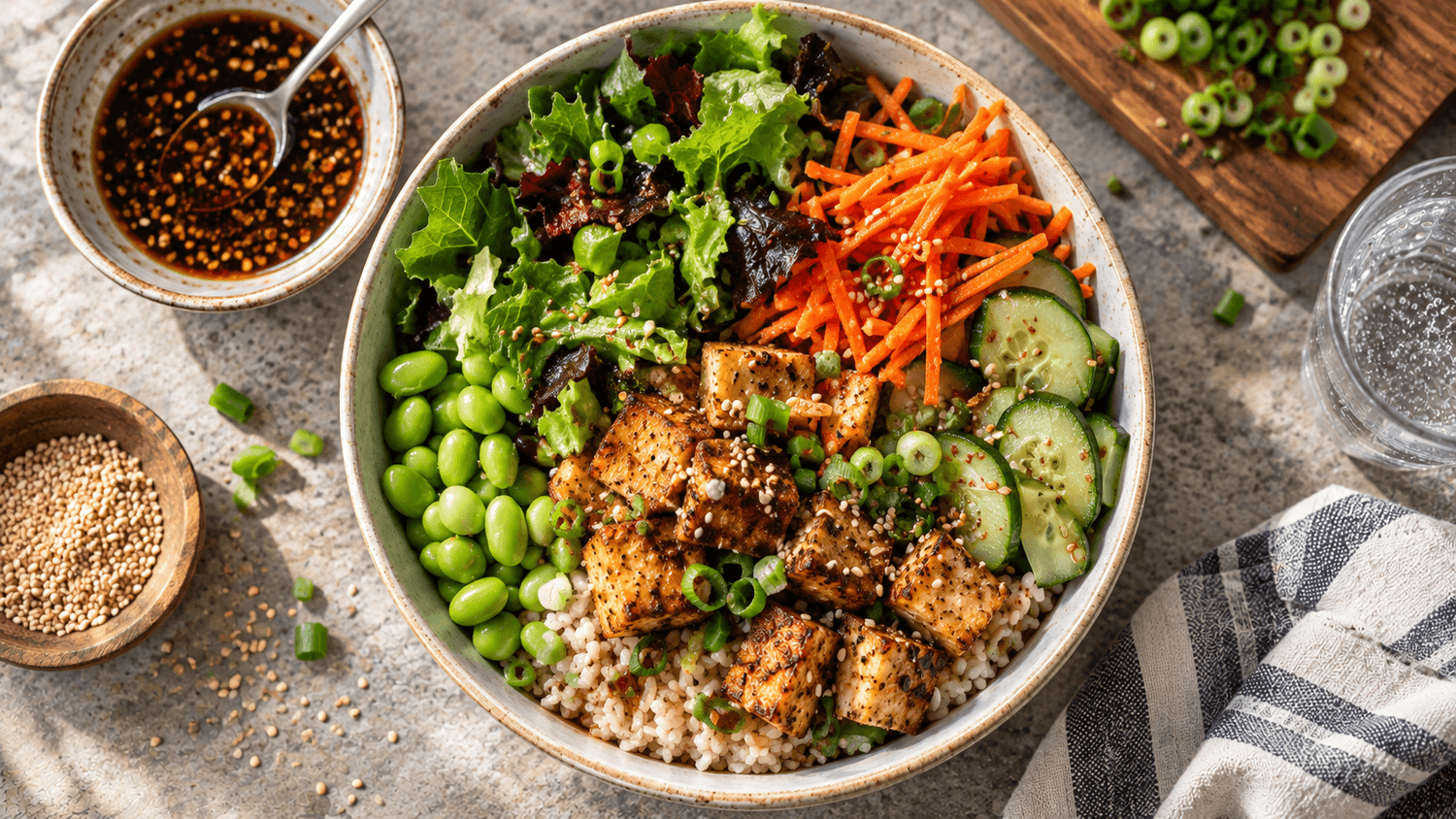



Air-Fryer Crispy Tofu & Edamame Power Bowl
This air-fryer crispy tofu edamame bowl combines golden, crisp tofu with warm edamame, brown rice, fresh greens, crunchy vegetables, and a savory tamari-sesame dressing.
The key technique is simple: press the tofu, coat it lightly with cornstarch, air-fry it without added oil, and add the dressing after cooking.
That keeps the tofu crisp while giving the finished bowl plenty of savory flavor.
Why This Bowl Works as a Plant-Based GLP-1 Meal
For vegetarian or meat-averse readers, tofu and edamame provide two substantial plant-based protein components in the same meal.
The recipe is also intentionally flexible.
You can use the full brown-rice portion, or create a half-rice, half-greens base when a smaller or more vegetable-forward bowl feels more appropriate for your appetite.
That is a practical serving option—not a prescribed medical or carbohydrate target.
If you are looking for another meal built around a different protein format, the GLP-1 meat-aversion chilled shrimp bento box offers a portable alternative.
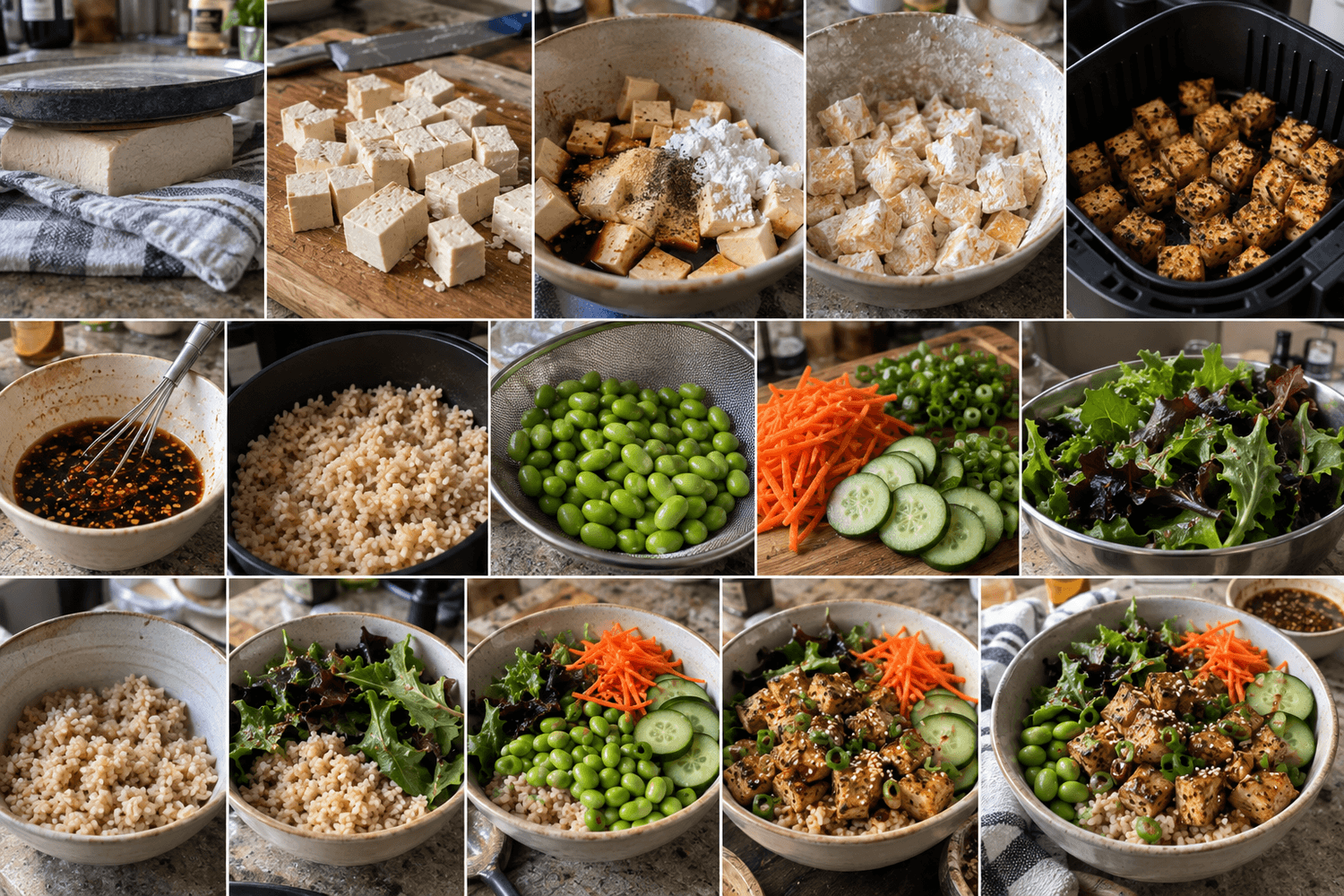
How to Make Tofu Crispy in an Air Fryer Without Oil
Crispy tofu starts with moisture control.
Extra-firm tofu contains substantial water, so pressing it before cooking helps create a drier surface.
After pressing, season the tofu with tamari and spices, then add cornstarch.
The cornstarch forms a thin dry coating that helps the tofu brown and crisp during air frying.
You do not need to add oil to the tofu for this method.
Instead, a small amount of toasted sesame oil goes into the dressing, where it contributes flavor without making the tofu surface wet before cooking.
The three most important details are:
- Press the tofu thoroughly.
- Leave space between the tofu pieces.
- Add the dressing after air frying.
Why Tofu and Edamame Work Together
Tofu provides a firm, chewy texture after air frying, while edamame adds a softer, slightly firm texture.
That contrast makes the bowl more interesting than relying on one protein source alone.
USDA food-composition data identify edamame as a meaningful source of protein and fiber, making it a useful ingredient when building a plant-based protein-focused meal.
For readers interested in the underlying food-composition data, the USDA Agricultural Research Service provides authoritative food and nutrition research resources.
Is Soy Protein a Legitimate Protein Choice?
Yes. Soy foods such as tofu and edamame provide complete protein.
Research comparing soy and animal proteins in resistance-training contexts has not established that soy is inherently incapable of supporting strength or lean-mass outcomes. However, that evidence should not be turned into a guarantee that this recipe or soy consumption will preserve muscle for a person taking a GLP-1 medication.
Muscle-related outcomes depend on the broader dietary pattern, protein intake, resistance exercise, energy intake, health status, and individual circumstances.
The practical takeaway is straightforward: tofu and edamame are legitimate protein foods that can be incorporated into a varied eating pattern.
How Much Protein Does Edamame Provide?
Prepared edamame provides a substantial amount of protein relative to many vegetables.
The exact amount depends on the product and preparation method, which is why packaged Nutrition Facts information should take priority when available.
In this recipe, edamame works alongside tofu rather than being expected to provide all of the meal's protein by itself.
Why the Dressing Goes on Last
The tamari-sesame dressing contains liquid ingredients.
If you coat the tofu with the dressing before air frying, the wet surface can interfere with the crisping process.
Cooking the tofu first and dressing the assembled bowl afterward gives you two different textures:
- crisp tofu;
- fresh vegetables and greens.
It also lets you control how much dressing reaches each component.
The Flexible Rice-and-Greens Base
The standard bowl uses brown rice and greens together.
This gives you a familiar grain-bowl structure while keeping the rice portion moderate.
If you prefer more greens, reduce the rice and replace that volume with additional greens.
If you prefer a more traditional grain bowl, retain the full 1/2-cup cooked brown rice serving.
There is no single portion that is appropriate for every person using a GLP-1 medication. Appetite and food tolerance vary, so the recipe is intentionally designed to be adjustable.
Make It Meal-Prep Friendly
The best way to meal-prep this bowl is to keep the components separate.
Prepare the tofu, rice, edamame, vegetables, and dressing in advance.
When ready to eat, reheat the tofu and rice, then add the greens, fresh vegetables, and dressing.
Keeping the tofu separate prevents moisture from softening the crust.
For food safety, prepared perishable foods should be refrigerated promptly and kept at or below 40°F.
A Useful Option for Meat-Averse Days
You do not need to eat vegetarian meals all the time to benefit from having plant-based options available.
If meat becomes less appealing, having several protein formats available can make meal planning easier.
This bowl uses tofu and edamame instead of poultry, beef, pork, or seafood, while still creating a substantial meal structure around protein, vegetables, and a grain.