



Chia Berry Overnight Oats With Acacia Fiber & Protein

4.9 ★
0 people reviewed 🎉 Thanks for review!
Lauren Hayes
Written By Lauren Hayes ✓
Lauren Hayes
Recipe Developer & Culinary Editor

Lauren develops and reviews GLPIANS recipes with a focus on ingredient accuracy, cooking technique, texture, timing, portioning, and reliable home-kitchen execution.

Melissa Grant, MS, RDN
Reviewed By Melissa Grant, MS, RDN ✓
Melissa Grant, MS, RDN
Registered Dietitian Nutritionist

Melissa reviews GLPIANS content for nutrition accuracy, responsible GLP-1 framing, portion guidance, and evidence-based communication.

Daniel Harper, MPH
Fact Checked By Daniel Harper, MPH ✓
Daniel Harper, MPH
Food Safety & Health Fact Checker

Daniel reviews GLPIANS content for food-safety accuracy, including cooking temperatures, food handling, storage, reheating, and source-backed safety guidance.

Chia Berry & Acacia Fiber Overnight Protein Oat Cups

These chia berry overnight oats combine rolled oats, chia seeds, acacia fiber, Greek yogurt, protein-enriched milk, and fresh berries in a no-cook breakfast that can be prepared the night before.

The result is a creamy, spoonable breakfast with protein and multiple sources of dietary fiber. The four-serving batch is designed for meal prep, while individual portions can be adjusted to suit appetite and preference.

For another no-cook, protein-focused breakfast, you can also try another high-protein no-cook breakfast: High-Protein Greek Yogurt Parfait Prep.

Why These Overnight Oats Fit GLP-1 Meal Planning

GLP-1 users can have different appetite levels, meal capacities, and food tolerances. A make-ahead breakfast can therefore be useful because the recipe can be prepared once and portioned according to what feels appropriate at mealtime.

This recipe combines:

  • Rolled oats for the base and texture.
  • Chia seeds for thickness and additional fiber.
  • Acacia fiber as an added soluble-fiber ingredient.
  • Greek yogurt for creaminess and protein.
  • Protein-enriched milk for additional protein and the liquid needed for soaking.
  • Berries for flavor, color, and naturally occurring fiber.

Dietary fiber is found naturally in foods such as whole grains and fruit, and FDA recognizes certain beneficial physiological effects associated with dietary fiber, including increased frequency of bowel movements. (U.S. Food and Drug Administration)

That does not mean this recipe treats constipation or prevents medication-related gastrointestinal effects. Individual responses to food, fiber, and GLP-1 medications vary.

What Makes This Recipe Different

The important feature is not simply adding the word "GLP-1" to overnight oats.

The recipe deliberately combines food-based fiber with a measured amount of added acacia fiber while keeping the preparation simple enough for breakfast meal prep.

The baseline uses 5 g of acacia fiber per serving rather than immediately using the higher optional amount.

That gives the recipe two practical characteristics:

  1. The fiber addition is clearly quantified.
  2. The recipe does not assume that everyone needs or tolerates the same amount of supplemental fiber.

How Much Chia Seed Should You Add?

This recipe uses 1/4 cup of chia seeds for four servings, which is approximately 1 tablespoon per serving.

That amount gives the overnight oats a noticeably thick, creamy texture without making chia the dominant ingredient.

If you prefer a thinner consistency, slightly reduce the chia and adjust the milk as needed. If you prefer a thicker consistency, keep the recipe as written and allow the full overnight chilling period.

How Much Acacia Fiber Should You Add?

The base recipe uses 5 g of acacia fiber per serving.

A higher version can use 10 g per serving, but that should be treated as an optional variation rather than a universal recommendation.

Acacia gum is a soluble, non-viscous fiber. Human research has examined its gastrointestinal tolerance, including a 2021 randomized study in healthy adults and a 2024 randomized controlled trial involving people with constipation-predominant IBS. The evidence does not establish a universal acacia-fiber dose for GLP-1 users. (PubMed)

For this reason, the recipe uses a lower baseline and makes the higher amount optional.

Acacia Fiber vs. Psyllium: Is One Gentler?

It would be inaccurate to state that acacia fiber is universally gentler than psyllium.

Acacia gum is described in research as a non-viscous soluble fiber, and studies have investigated its gastrointestinal tolerance. (PubMed)

However, tolerance depends on the individual, the amount consumed, the rest of the diet, fluid intake, and the specific fiber product.

So the practical recipe guidance is:

  • Start with the 5 g-per-serving baseline if you are new to this recipe.
  • Do not automatically double the amount.
  • Increase fiber gradually if appropriate for you.
  • Follow the selected product's directions.
  • Pay attention to your own tolerance.
  • Seek medical advice for persistent or concerning gastrointestinal symptoms rather than trying to solve them solely with a recipe.
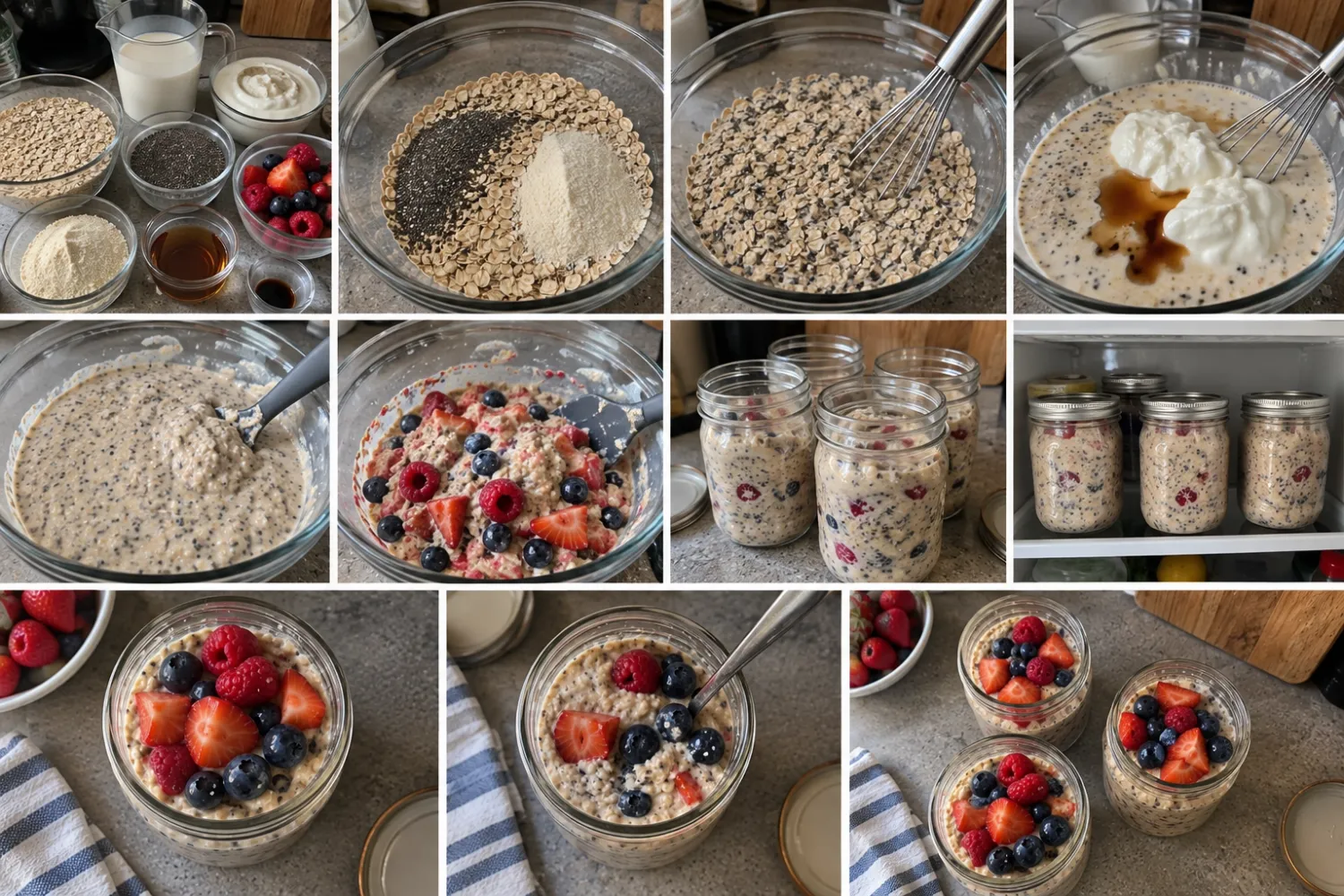
Step-by-step preparation process of chia berry overnight oats

How to Make the Overnight Oats

Start by whisking the oats, chia seeds, and acacia fiber together.

This distributes the powder before the liquid is introduced.

Then stir in the Greek yogurt, protein-enriched milk, maple syrup, and vanilla. Fold in most of the berries, divide the mixture among four containers, cover, and refrigerate for at least eight hours.

By the next morning, the oats and chia will have absorbed the liquid and the mixture will have developed its characteristic thick, spoonable texture.

Portion Flexibility

The recipe makes four large meal-prep portions, but a full portion does not have to be eaten simply because it was prepared that way.

If a smaller amount is more comfortable, serve part of a portion and return the remainder to the refrigerator promptly.

This is one reason the recipe is prepared as individual containers rather than as a single large bowl.

Why the Protein Matters in This Recipe

Greek yogurt and protein-enriched milk provide the primary protein contribution.

The goal is not to make a medical promise about protein or appetite. Instead, the ingredients make the recipe more protein-forward than a basic oats-and-milk overnight-oats formula.

The final protein value will depend on the specific yogurt and milk selected, which is why the nutrition panel should be recalculated against the exact products used on the published recipe.

Make-Ahead Breakfast Strategy

Prepare all four portions at the same time.

For the freshest result, keep some berries separate and add them immediately before eating. This is especially useful if the containers will be consumed over several days.

The oats can also be loosened with a small splash of milk immediately before serving if the mixture becomes thicker than preferred.

How Long Do These Oat Cups Last in the Refrigerator?

Keep the prepared containers refrigerated at 40°F or below and use them within 3–4 days. USDA guidance recommends using refrigerated leftovers within 3–4 days. (Food Safety and Inspection Service)

Because this recipe contains dairy and fresh fruit, consistent refrigeration is important.

For a more detailed explanation of safe refrigeration temperatures and food storage, the USDA refrigeration guidance provides the relevant food-safety framework.
GLPIANS
Professional Recipe Collection
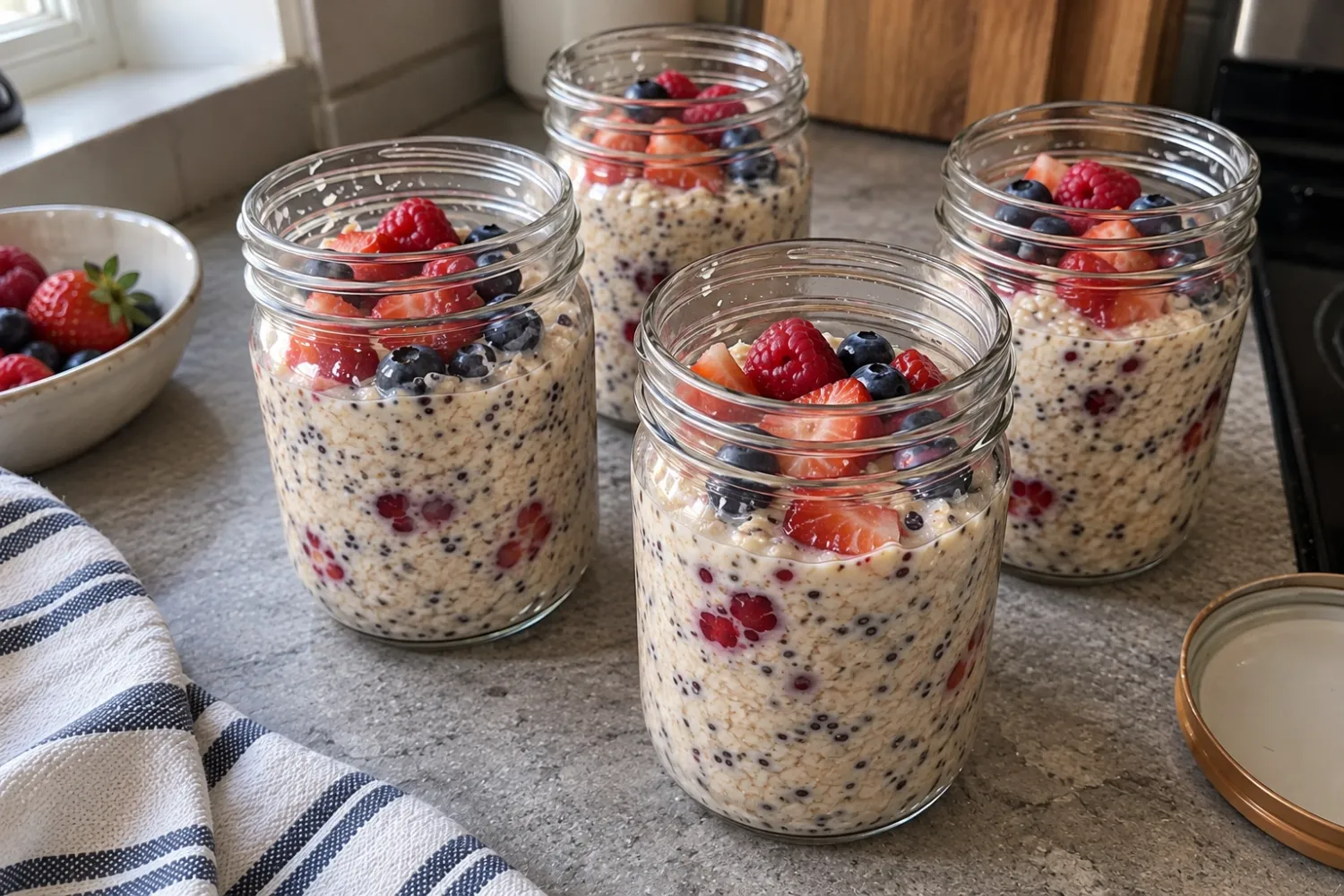
Chia berry overnight protein oat cups with Greek yogurt, chia seeds, and fresh mixed berries in glass jars.
HIGH-FIBER BREAKFAST MEAL PREP

Chia Berry & Acacia Fiber Overnight Protein Oat Cups

Creamy overnight oats made with old-fashioned rolled oats, chia seeds, acacia fiber, plain Greek yogurt, unsweetened protein-enriched milk, vanilla, maple syrup, and fresh berries. The mixture is prepared cold and refrigerated overnight for a convenient make-ahead breakfast.

Servings
4
Yield 4 oat cups
Prep Time 10 mins
Cook Time 0 mins
Total Time 8 hrs 10 mins
Course Breakfast
Cuisine American

Ingredients

Optional Higher-Fiber Version: For adults who already tolerate added fiber well, the total acacia fiber can be increased from 20 g to 40 g (providing 10 g per serving). This is optional, not universally recommended. Use selected product's directions.

Equipment

Large mixing bowl
Whisk
Rubber spatula or large spoon
Measuring cups and spoons
Digital kitchen scale
Four ~20-oz jars/containers
Refrigerator

Instructions

  • 1
    Combine the dry ingredients. Add the rolled oats, chia seeds, and 20 g acacia fiber powder to a large mixing bowl. Whisk until the acacia fiber is evenly distributed throughout the oats and chia.
  • 2
    Add the yogurt and milk. Add the Greek yogurt, protein-enriched milk, maple syrup, and vanilla. Stir thoroughly until the yogurt is fully incorporated and the mixture is evenly combined.
  • 3
    Fold in the berries. Gently fold in approximately 1 1/2 cups of the berries, reserving approximately 1/2 cup for topping.
  • 4
    Check the mixture. The mixture should be thick but easily stirrable before refrigeration. If it is unusually stiff, add a small splash of milk and stir again.
  • 5
    Portion the oats. Divide the mixture evenly among four clean, lidded food-storage containers or jars with enough room for stirring and toppings.
  • 6
    Refrigerate. Cover the containers and refrigerate for at least 8 hours.
  • 7
    Finish before serving. Stir each portion before eating. Add the reserved berries. If the overnight oats are thicker than preferred, loosen the serving with 1–2 tablespoons milk and stir.

Recipe Notes

  • Measure the acacia fiber by weight: Powder density varies among products, so weighing the fiber provides more consistent dosing than relying on a volume spoon.
  • Mix the fiber with the dry ingredients first: This helps distribute the powder more evenly before liquid is added.
  • Texture: Chia thickens the mixture during refrigeration while the oats provide additional body.
  • Berry choice: Blueberries and raspberries can be added whole. Slice larger strawberries so they distribute more evenly.
  • Berry timing: Reserving some berries for topping gives later meal-prep portions a fresher texture.
  • Sweetness: The maple syrup provides mild sweetness. The amount can be adjusted according to the sweetness of the milk and berries.
  • Fiber approach: The base recipe uses 5 g of added acacia fiber per serving. The higher 10 g version is optional and should not automatically be treated as preferable.
  • Individual tolerance: Fiber tolerance varies. Increasing several fiber sources at the same time may not be comfortable for everyone.
  • Portion flexibility: The four-serving batch can be divided into smaller eating portions if preferred.

Nutrition Facts

Estimated nutrition per serving (1/4 of the prepared recipe):
NutrientAmount
Calories~430 kcal
Protein~27 g
Carbohydrates~57 g
NutrientAmount
Fat~11 g
Fiber~15 g
Sugar~20 g
NutrientAmount
Sodium~150 mg

Substitutions

  • Greek yogurt: Plain 2% or whole-milk works, but increases fat and calories.
  • Protein-enriched milk: Another unsweetened milk works, but nutrition will change.
  • Maple syrup: Use honey in approximately the same amount.
  • Fresh berries: Frozen berries work (they release more liquid as they thaw). Or use one variety.
  • Rolled oats: Quick oats work, but will be softer.
  • Acacia fiber: Do not substitute gram-for-gram with psyllium or another fiber. Follow the selected product's directions.

Storage

Keep the prepared oat cups covered and refrigerated at 40°F or below. Use within 3–4 days. (Food Safety and Inspection Service). Reserve topping berries separately for best texture.

Reheating

NOT APPLICABLE.
These overnight oats are designed to be eaten chilled. No reheating is required.

Make Ahead / Meal Prep

  • Prepare all four portions together for a four-breakfast batch.
  • Mix approximately 1 1/2 cups of berries into the base.
  • Reserve approximately 1/2 cup for topping.
  • Keep all containers covered and refrigerated.
  • Add the reserved berries immediately before eating when possible.
  • Do not leave the prepared oat cups unrefrigerated for extended periods.

Serving Suggestions

Keep your morning simple and adjust your portions for the perfect breakfast:

  • Top with the reserved fresh berries immediately before eating.
  • Add a small spoonful of Greek yogurt for additional creaminess.
  • Add a light sprinkle of cinnamon if desired.
  • Loosen with 1–2 tablespoons of milk if the oats become thicker than preferred.
  • Serve a smaller portion if a full serving feels larger than desired.
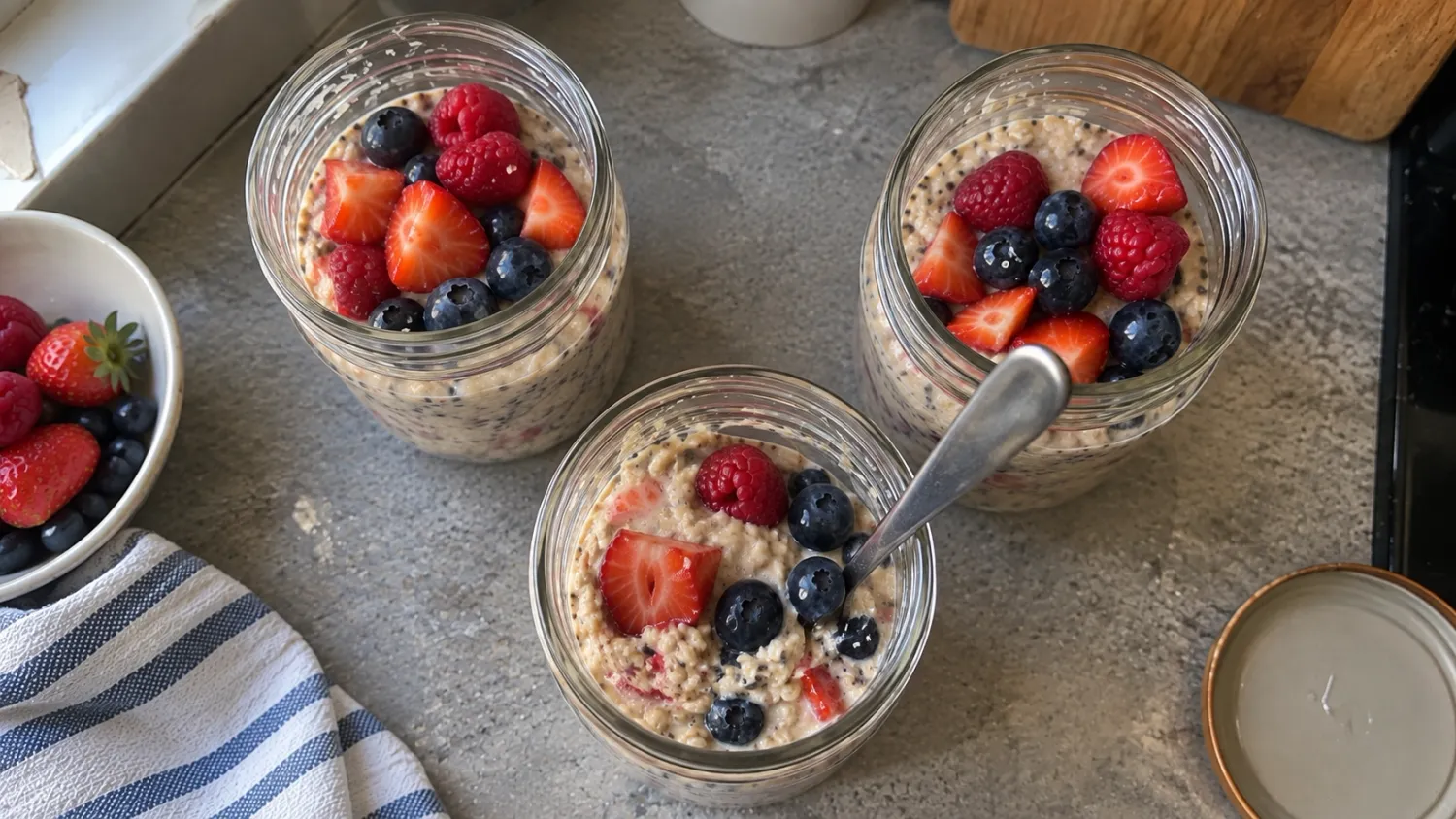
Top view of chia berry acacia fiber overnight oats

GLP-1 Practical Notes

This recipe is designed as a practical high-fiber breakfast, not as a treatment for constipation or a way to prevent GLP-1 medication side effects.

The base recipe provides 5 g of added acacia fiber per serving. The optional 10 g version is intended only for readers who already tolerate added fiber well and should be adjusted according to the selected product and individual tolerance.

If constipation is persistent, severe, associated with significant abdominal pain, vomiting, inability to pass stool or gas, blood in the stool, or other concerning symptoms, seek appropriate medical care rather than relying on a food recipe alone.

Food Safety Information

Keep the finished oat cups refrigerated at 40°F or below. USDA recommends keeping cold perishable foods at 40°F or below and discarding perishable foods that have remained at room temperature for more than 2 hours, or more than 1 hour when the temperature is above 90°F. (Food Safety and Inspection Service)

Use clean containers and utensils during preparation. Because the recipe contains dairy, maintain refrigeration after preparation.

Common Mistakes to Avoid

Adding the fiber after the liquid

Whisking acacia fiber into the dry oats and chia first helps distribute it more evenly.

Making the mixture too thick before refrigeration

The oats and chia continue absorbing liquid during the overnight period. The mixture should be thick but stirrable before it goes into the refrigerator.

Automatically using 10 g of acacia fiber

The higher amount is optional. More added fiber is not automatically better for every person.

Adding all the berries at once

Keeping some berries for topping gives later meal-prep portions a fresher texture.

Treating the recipe as a constipation treatment

The recipe can provide dietary fiber, but it should not be presented as a treatment, cure, or guaranteed preventive measure for constipation.

A Simple Meal-Prep Pattern

For a four-day breakfast batch:

  • Day 1: Prepare four containers.
  • Days 1–4: Keep the containers refrigerated.
  • Add reserved berries immediately before eating when possible.
  • Adjust the consistency with a small splash of milk if needed.
  • Serve a smaller amount if that better matches your appetite.

Frequently Asked Questions

Are these overnight oats suitable for people taking GLP-1 medications?

They are designed around practical considerations relevant to GLP-1 users, including portion flexibility, protein, fiber, and make-ahead preparation. Individual appetite, tolerance, and dietary needs vary.

How much chia seed should I add to overnight oats?

This recipe uses 1 tablespoon of chia seeds per serving, or 1/4 cup for the four-serving batch. This amount provides a noticeable thickening effect while keeping the oats spoonable.

Is acacia fiber gentler than psyllium?

There is not enough evidence to state that acacia fiber is universally gentler than psyllium for every person. Acacia gum is a non-viscous soluble fiber and has been studied for gastrointestinal tolerance, but individual responses vary. (PubMed)

Should I use 5 g or 10 g of acacia fiber?

The base recipe uses 5 g per serving. The 10 g version is an optional higher-fiber variation for people who already tolerate added fiber well. Follow the specific product's directions and consider individual tolerance.

How long do overnight oats last in the refrigerator?

Keep them covered and refrigerated at 40°F or below and use them within 3–4 days. (Food Safety and Inspection Service)

Can I use frozen berries?

Yes. Frozen berries can be used, although they release more liquid and color as they thaw. Fresh berries generally provide a firmer topping texture.

Can I make a smaller serving?

Yes. Prepare the batch as written and serve a smaller amount if preferred. Keep the remaining prepared oats refrigerated.

Do overnight oats need to be heated?

No. These oat cups are designed to be eaten chilled. No cooking or reheating is required.

Your Next GLPIANS Step

Looking for another simple breakfast you can prepare ahead? Explore more practical GLPIANS recipes built around protein, convenience, and flexible portions.

Explore More GLP-1 Breakfast Recipes
Link copied to clipboard!