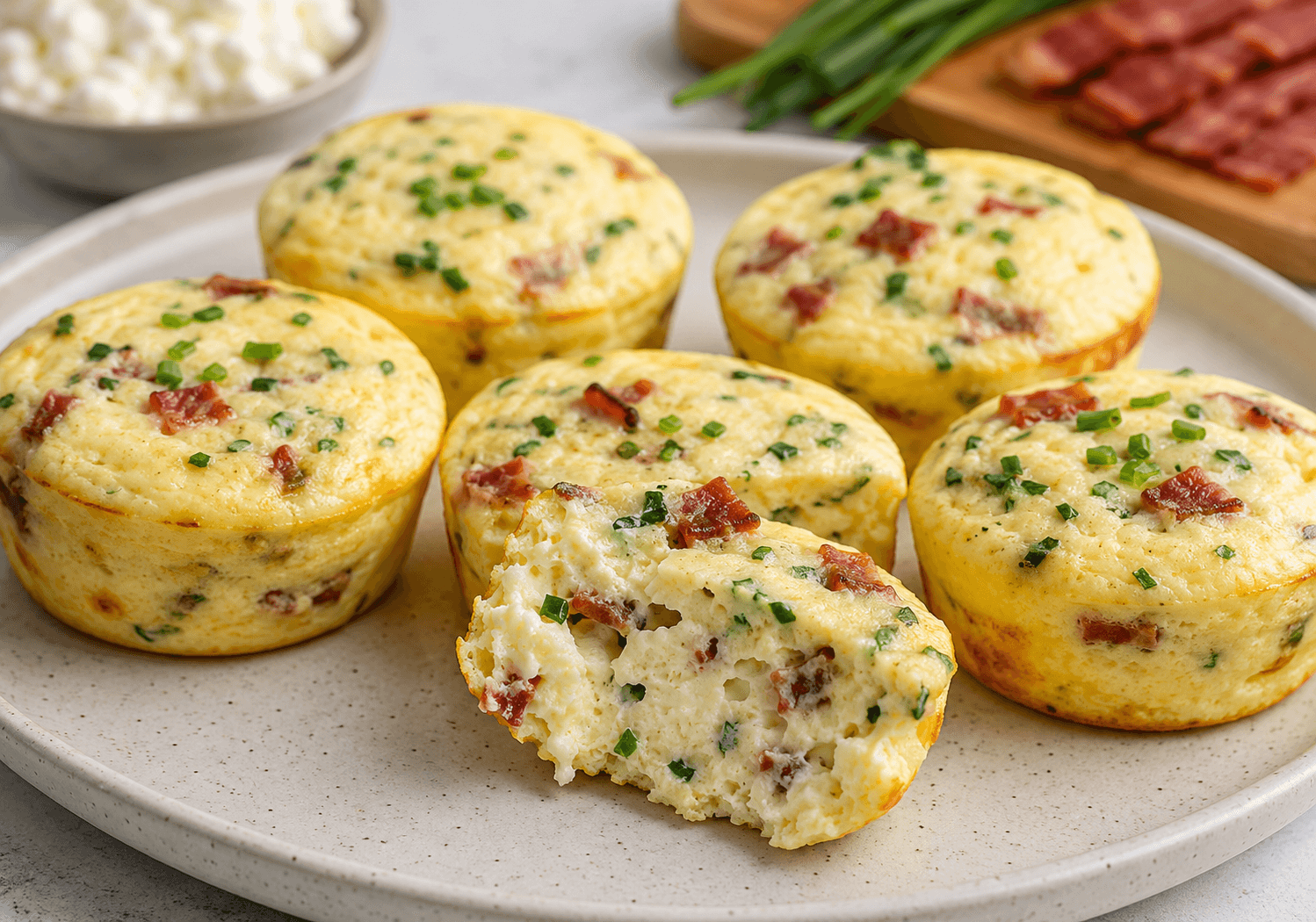



Why These Cottage Cheese Egg Bites Work So Well for Meal Prep
These cottage cheese egg bites are built around one simple idea: a small breakfast does not have to be dry or low in protein.
The cottage cheese is blended completely smooth before it is combined with the egg whites. That removes the curdy texture that some cottage-cheese egg bites have and distributes the dairy throughout the egg mixture.
Turkey bacon adds savory flavor without relying on a large amount of higher-fat breakfast meat, while a small amount of reduced-fat mozzarella gives the bites a more familiar cheesy egg-bite flavor.
The finished recipe makes 6 egg bites, or 3 servings of 2 bites each. That compact yield is intentional. It makes the recipe easy to prepare ahead without requiring a large batch of breakfast food.
What Makes These Egg Bites Different
The biggest difference is the texture strategy.
Many baked egg recipes use high heat and rely on a dry, firm set. That can work when the eggs are eaten immediately, but the texture can become noticeably tougher after refrigeration and reheating.
These bites use three techniques instead:
- Smooth-blended cottage cheese adds moisture and distributes evenly through the mixture.
- Gentler oven heat helps the egg mixture set without aggressively drying the edges.
- A water bath surrounds the silicone mold with moist heat and helps moderate the cooking environment.
The result should be soft, tender, and easy to portion.
The goal is not to make the egg bites dramatically puffy. A little puffing is normal, and some deflation as they cool is expected.
Why Blend the Cottage Cheese?
Blending is more important here than simply adding cottage cheese to beaten eggs.
Whole cottage cheese curds remain visible when mixed directly into the egg mixture. Blending breaks those curds down into a smooth mixture that integrates with the egg whites.
That gives the finished egg bites a more uniform texture and makes the cottage cheese much less noticeable.
For this recipe, blend the cottage cheese before adding the egg whites. Once the egg whites are incorporated, only blend briefly to combine.
A Compact High-Protein Breakfast
Each two-bite serving provides approximately 22 grams of protein based on the final ingredient formulation and standard food-composition data.
Protein can be particularly useful when building a compact meal because it allows a relatively small portion to contribute a meaningful amount of protein without requiring a large-volume breakfast.
For people using GLP-1 medications, appetite and food tolerance can vary considerably. This recipe is therefore framed as a practical small-portion option—not as a treatment for medication effects or a guarantee of satiety.
Individual tolerance varies, so the appropriate serving is the amount that feels comfortable for you.
How to Prevent Rubbery Egg Bites
The biggest mistakes are usually overcooking and aggressive reheating.
1. Do not chase a browned top
Egg bites do not need a deeply browned surface to be finished. The center should be set and the egg mixture should reach 160°F.
2. Use gentle heat
A 325°F oven gives the egg mixture time to set without relying on very high heat.
3. Use the water bath
The water bath helps moderate the heat around the silicone mold. It is especially useful when the goal is a tender texture rather than a browned, firm exterior.
4. Reheat briefly
Microwave reheating is where many otherwise good egg bites become rubbery.
Start with approximately 20–30 seconds for two refrigerated bites. Covering them with a damp paper towel adds a small amount of moisture to the reheating environment.
Short additional bursts are preferable to one long microwave cycle.
Can You Make These in an Air Fryer?
Yes.
The same blended mixture can be cooked in a silicone mold at approximately 300°F for about 10–14 minutes.
Air fryers vary considerably, so begin checking early. The egg bites are finished when the centers are set and the mixture reaches 160°F internally.
The air-fryer version is useful when making a small batch without heating a full-size oven.
How to Use the Three-Serving Batch
The recipe makes three portions of two egg bites.
For meal prep, divide the finished bites into three containers as soon as they are cool enough to handle. Refrigerate the portions you expect to eat within the next few days.
If you know you will not use all six bites within the refrigerator storage window, freeze the extras instead.
For breakfast, two bites can be paired with fruit, Greek yogurt, toast, or another food that fits your appetite and nutritional needs.
The important point is flexibility: the recipe provides a compact protein-focused base rather than requiring everyone to eat the same size breakfast.