
A Gentle Chicken Noodle Soup for GLP-1 Shot Days
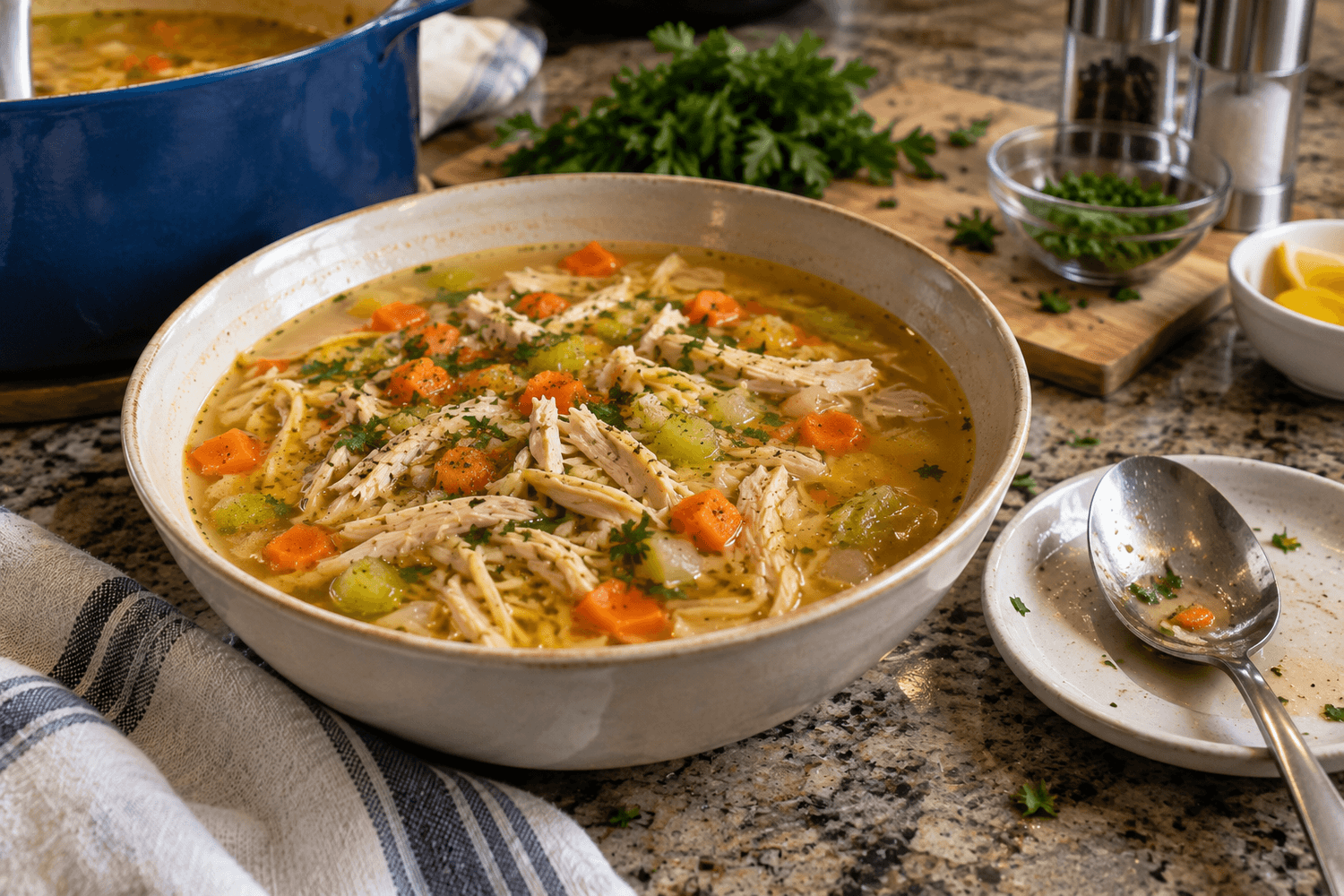
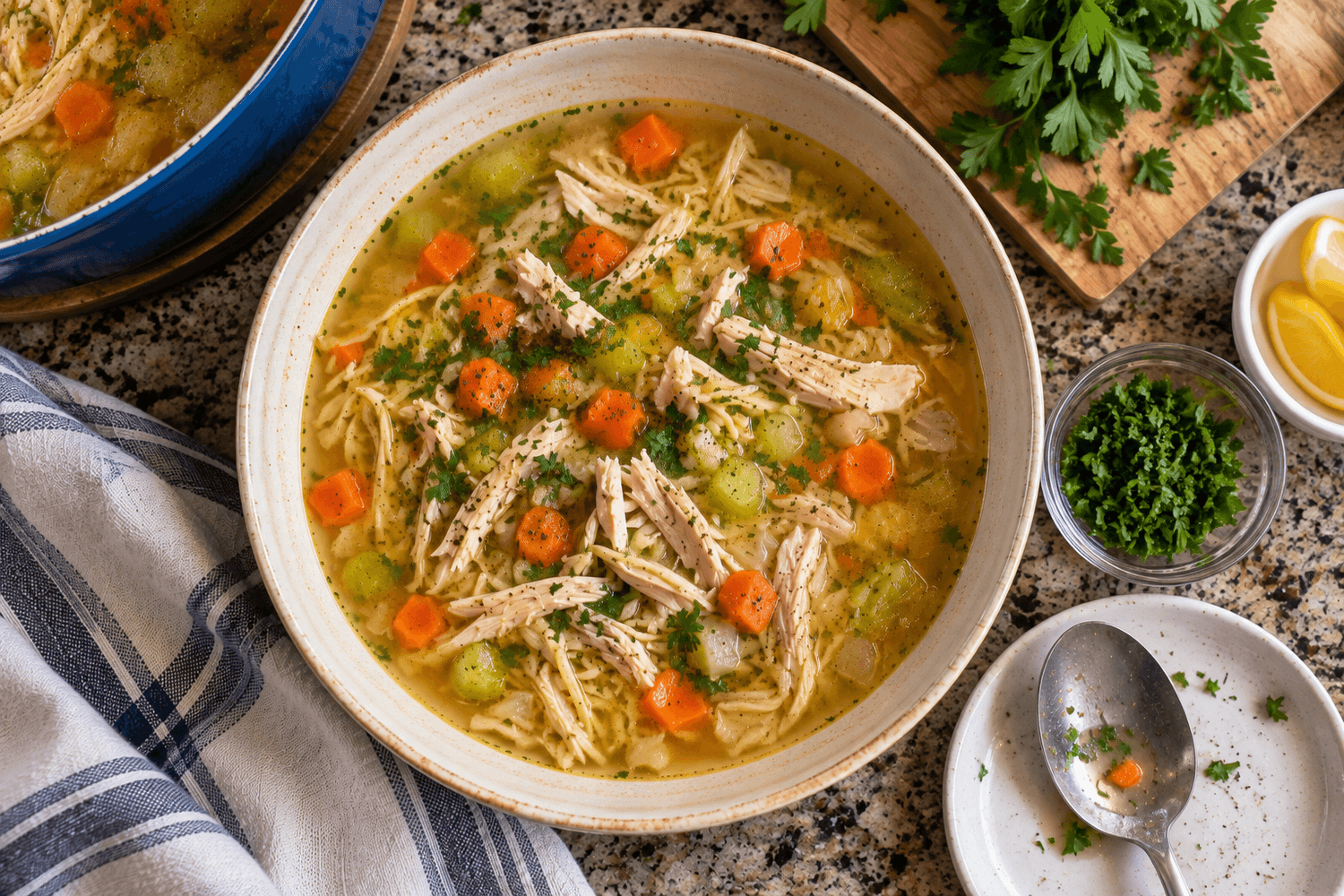
This GLP-1 shot day soup recipe combines shredded chicken breast, tender vegetables, thin noodles, and chicken bone broth in a light soup that can be served as a standard 1-cup portion or divided into smaller amounts.
The important idea is portion flexibility. If a full bowl feels like more than you want, you can start with approximately 4 ounces and save the rest for later.
GLP-1 medications can be associated with gastrointestinal effects such as nausea, vomiting, decreased appetite, abdominal pain, constipation, and dyspepsia. Some GLP-1 or related medications also delay gastric emptying. These effects vary by medication and person, so there is no universal "shot-day diet." (FDA Access Data)
Why This Soup Is Built Differently
This is not simply a traditional chicken noodle soup with "GLP-1" added to the title.
The recipe is deliberately structured around several practical features:
- Finely shredded chicken instead of large pieces
- Tender, finely diced vegetables
- Thin noodles that cook quickly
- A broth-based preparation without cream
- A relatively small amount of added fat
- A standard 1-cup serving
- An optional approximately 4-ounce portion
The purpose is practical rather than medical: give readers another mild, easy-to-portion meal option when their appetite is reduced.
How Much Soup Should You Serve?
The recipe's standard serving is approximately 1 cup.
But serving size does not have to equal the amount you eat at one time.
If a full cup feels like too much, portion approximately 4 ounces into a small bowl or mug. If that amount feels comfortable, you can have more later.
This approach also makes the soup useful for meal preparation because the same batch can be divided into portions that match different appetite levels.
Why Use Shredded Chicken?
The chicken provides the recipe's primary protein contribution.
Finely shredding the chicken distributes it through the broth rather than leaving several large pieces in the bowl. That makes the soup easier to portion and gives you a little chicken in more spoonfuls.
The chicken is poached directly in the broth, so there is no separate browning step and no need for a large amount of cooking fat.
What About the Bone Broth?
Bone broth can be a flavorful soup base, but its nutrition is not standardized across brands.
For example, one current Swanson chicken bone broth product lists 35 calories and 8 grams of protein per cup, while sodium is 350 mg per cup. (The Campbell's Company)
That is why the recipe should not make a blanket claim that all bone broth is high-protein or low-sodium.
For the most accurate nutrition information, check the Nutrition Facts panel on the exact product you use.
Keep the Noodles Thin
Thin egg noodles or Vermicelli work especially well here.
They cook quickly, require little preparation, and can be broken into shorter pieces before cooking.
Shorter noodles also make a small portion easier to eat from a mug or small bowl.
Is a Low-Fat Soup Better on a GLP-1 Medication?
It is too broad to say that every person taking a GLP-1 medication should choose low-fat foods or that low-fat soup prevents reflux or delayed gastric emptying.
Individual tolerance varies.
This recipe simply keeps added fat relatively low by using skinless chicken breast, broth, and no cream or butter. That gives readers a lighter option without turning the recipe into a medical treatment claim.
What to Eat on a GLP-1 Injection Day
There is no single food that everyone should eat on an injection day.
A practical meal may depend on appetite, food preferences, medication, dose, side effects, and individual tolerance.
This soup can be one option when a mild, broth-based meal sounds appealing. Another reader may prefer a cold or no-cook option.
For example, GLPIANS' high-protein Greek yogurt parfait prep provides a different texture and preparation style.
For another warm chicken soup option with a more substantial profile, see Cozy Chicken and Potato Comfort Soup.
A Simple Portioning Strategy
If appetite is especially low, do not automatically fill a large soup bowl.
Instead:
- Pour approximately 4 ounces.
- Eat slowly.
- Stop if you feel full or uncomfortable.
- Save the remaining soup for another time.
The recipe's nutrition information is based on the standard 1-cup serving, so a 4-ounce portion contains approximately half the listed serving amount.
When to Choose Something Else
Soup is not automatically the best choice simply because someone uses a GLP-1 medication.
If soup does not sound appealing, another small meal may be more appropriate for that individual.
For a no-cook savory alternative, the savory cottage cheese cucumber bowl is another small-volume option.
The goal is not to follow one rigid "GLP-1 diet." The goal is to have practical foods available that can be adapted to your appetite and tolerance.
Food Safety Matters
Raw chicken should be cooked to 165°F using a food thermometer. Leftover soup should be refrigerated promptly and used within 3 to 4 days. When reheating leftovers, bring the soup to a rolling boil and make sure the food reaches 165°F. (Food Safety and Inspection Service)
For official U.S. food-safety guidance, see the USDA FSIS food-safety guidance for leftovers.
The Bottom Line
This GLP-1 shot day soup recipe is built around mild flavor, lean chicken, thin noodles, broth, and flexible portioning.
It is not a treatment for nausea or another medication side effect. Instead, it gives GLP-1 users another practical meal option that can be served in a standard portion or divided into smaller amounts.
If you are experiencing persistent vomiting, significant abdominal pain, inability to keep fluids down, dehydration, or other concerning symptoms, contact your healthcare professional rather than relying on a recipe to manage those symptoms.