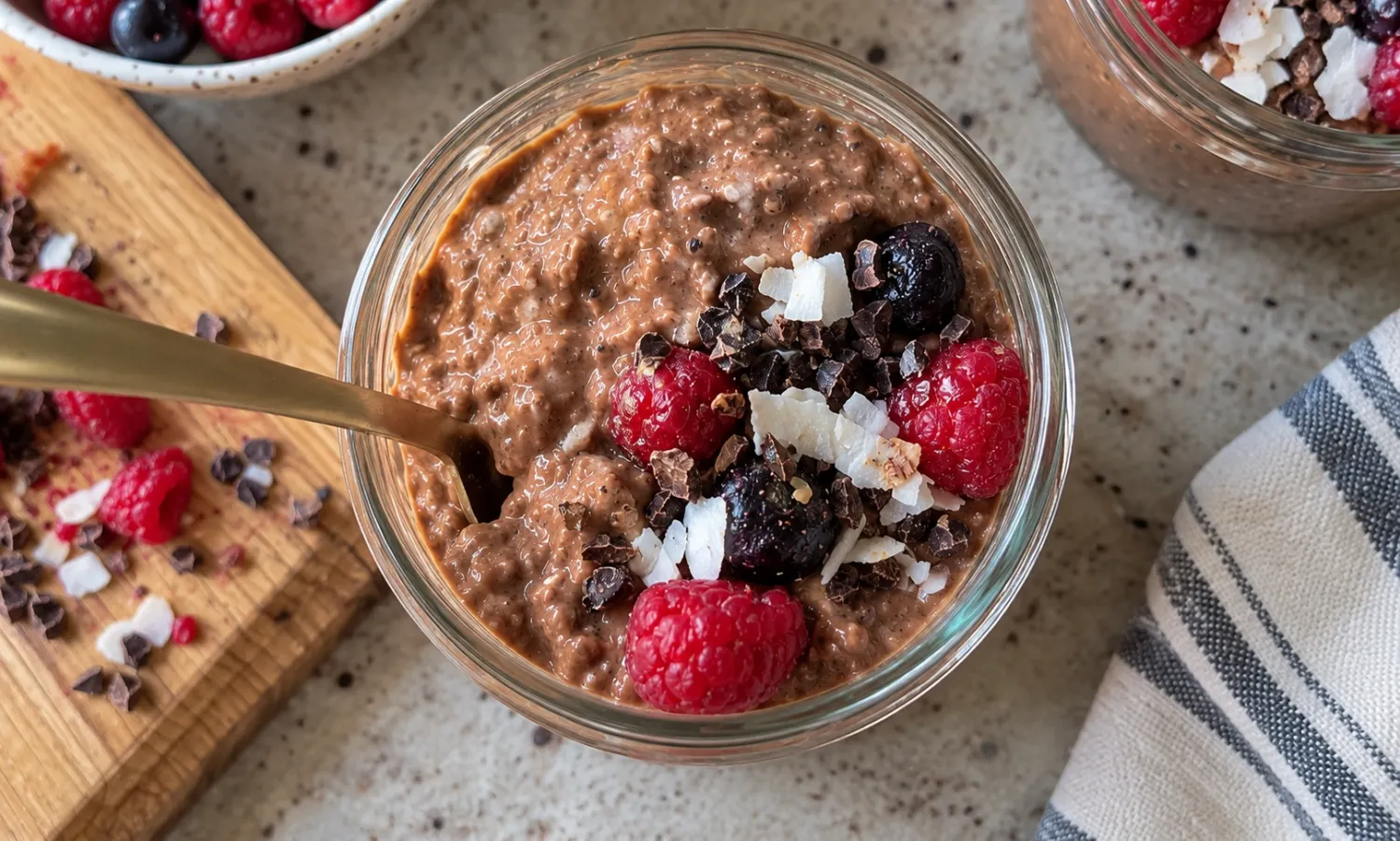



High-Protein Greek Yogurt Chocolate Chia Pudding | GLP-1 Dessert

4.9 โ˜…
0 people reviewed ๐ŸŽ‰ Thanks for review!
Lauren Hayes
Written By Lauren Hayes โœ“
Lauren Hayes
Recipe Developer & Culinary Editor

Lauren develops and reviews GLPIANS recipes with a focus on ingredient accuracy, cooking technique, texture, timing, portioning, and reliable home-kitchen execution.

Melissa Grant, MS, RDN
Reviewed By Melissa Grant, MS, RDN โœ“
Melissa Grant, MS, RDN
Registered Dietitian Nutritionist

Melissa reviews GLPIANS content for nutrition accuracy, responsible GLP-1 framing, portion guidance, and evidence-based communication.

Daniel Harper, MPH
Fact Checked By Daniel Harper, MPH โœ“
Daniel Harper, MPH
Food Safety & Health Fact Checker

Daniel reviews GLPIANS content for food-safety accuracy, including cooking temperatures, food handling, storage, reheating, and source-backed safety guidance.

High-Protein Greek Yogurt Chocolate Chia Pudding

This high-protein Greek yogurt chocolate chia pudding turns a chocolate craving into a creamy, make-ahead dessert with approximately 24 grams of protein and 6 grams of fiber per baseline serving.

The recipe uses plain nonfat Greek yogurt as the main creamy base, chocolate whey protein powder for additional protein, Dutch-process cocoa for a deep chocolate flavor, and chia seeds to create the pudding texture as it chills.

There is no stovetop cooking and no cornstarch-based pudding base. Blend the chocolate mixture, stir in the chia seeds, refrigerate, and portion.

For another high-protein chocolate dessert with a completely different base, see the Silken Tofu Chocolate Mousse.

Why This Chocolate Pudding Works for a GLP-1 Eating Routine

A GLP-1 recipe does not need to make a medical promise to be practically useful.

This dessert is designed around several practical considerations that may matter to people eating smaller portions:

  • The baseline serving is about 3/4 cup.
  • The recipe contributes meaningful protein.
  • Chia seeds provide fiber.
  • The entire batch can be divided into four portions.
  • The recipe can be prepared ahead of time.
  • The dessert format keeps the focus on chocolate rather than presenting a conventional savory meal as a dessert substitute.

Individual food tolerance varies. This pudding should not be presented as a treatment or prevention strategy for medication side effects.
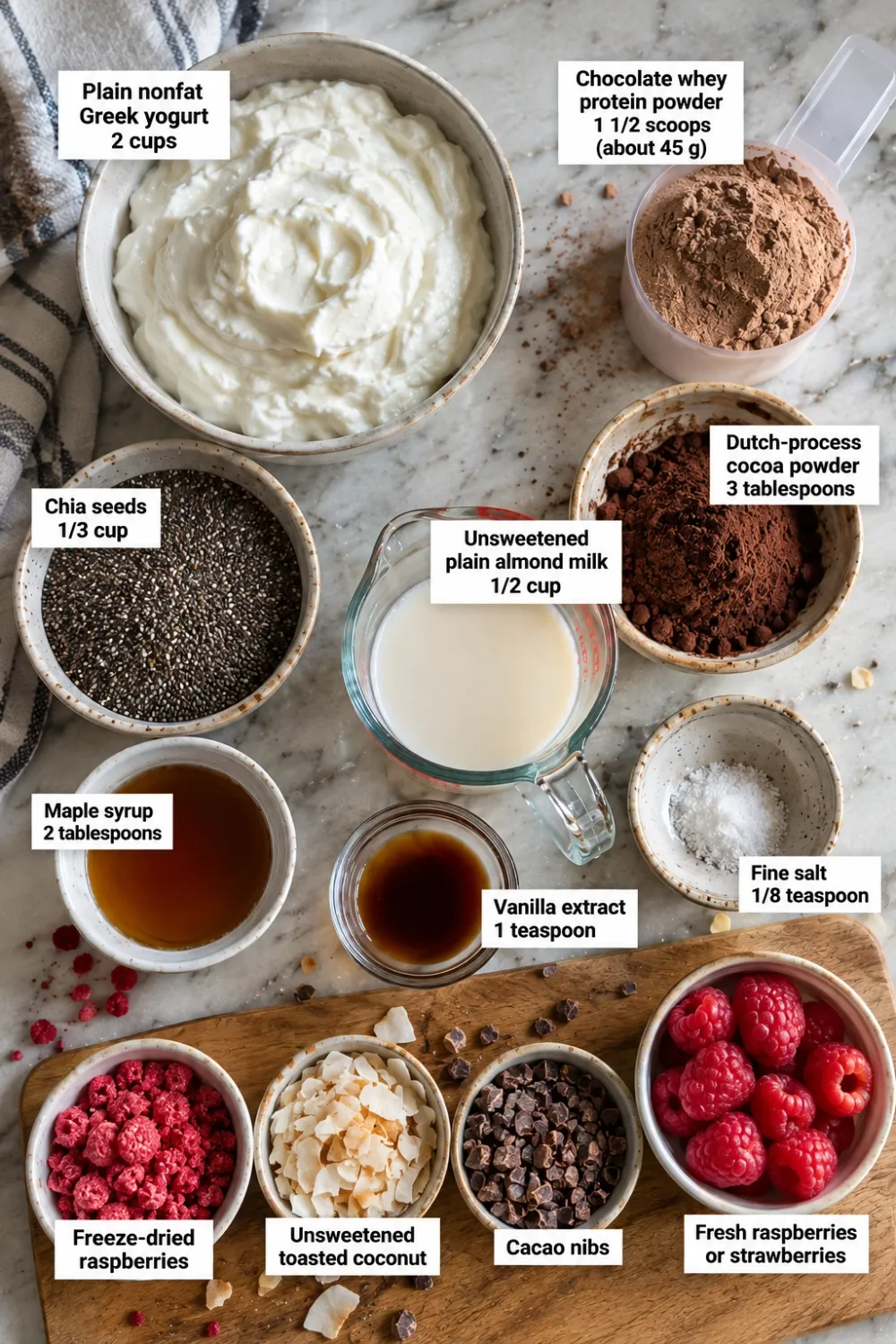
All ingredients for High-Protein Greek Yogurt Chocolate Chia Pudding with labels

How Long Should Chia Seeds Sit in the Pudding?

Give the pudding at least 4 hours in the refrigerator.

Chia seeds absorb liquid as they hydrate, which is what helps transform the mixture from a yogurt-based chocolate cream into a spoonable pudding.

For the most developed texture, make it the night before.

The 10-minute intermediate stir also matters. Chia seeds can settle during the first few minutes, so stirring the mixture again before refrigeration helps distribute them more evenly.
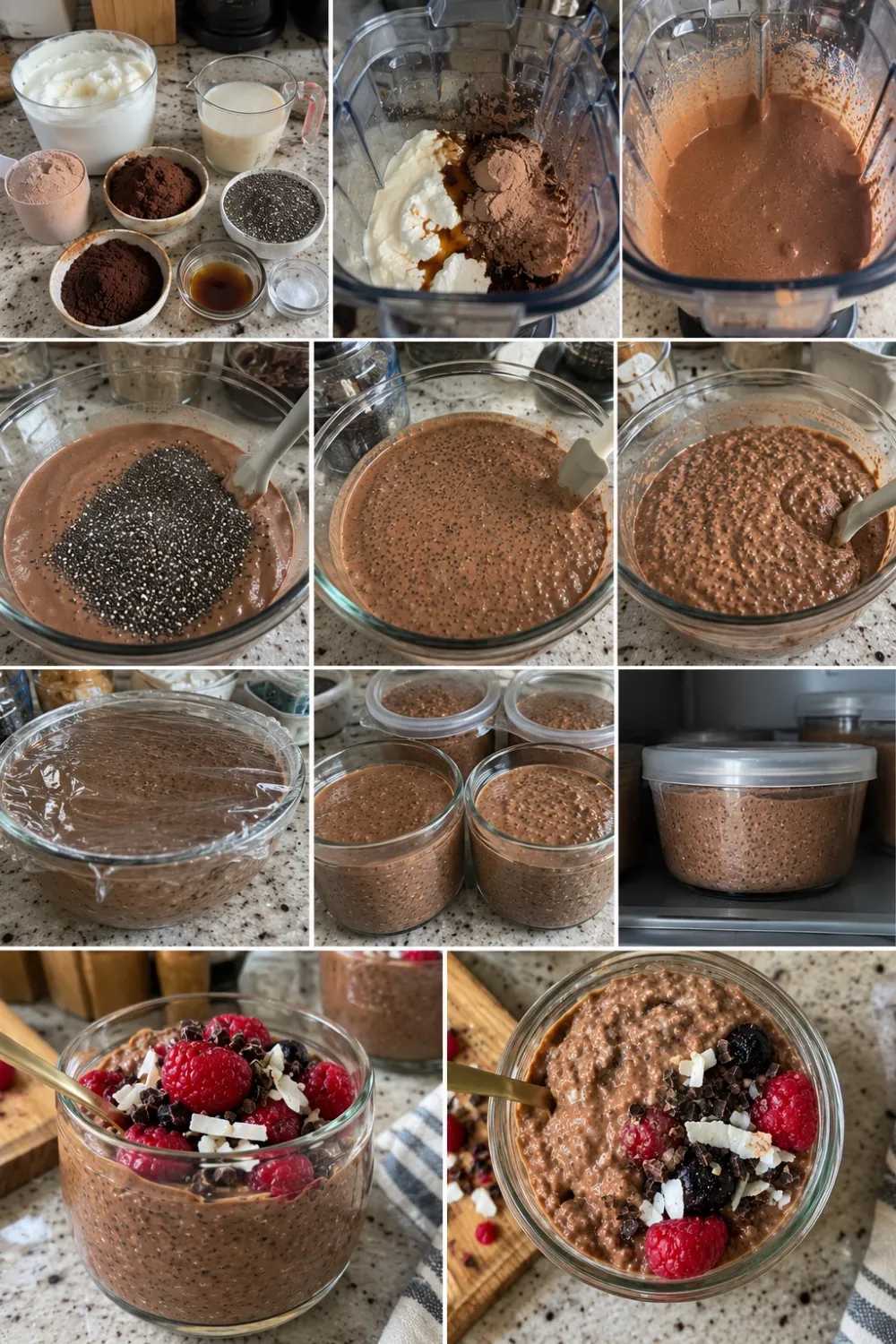
Full preparation and blending process for High-Protein Greek Yogurt Chocolate Chia Pudding

How to Get a Smooth Chocolate Texture

The recipe starts by blending the yogurt, protein powder, cocoa, almond milk, maple syrup, vanilla, and salt.

This creates a smooth chocolate base before the chia seeds are introduced.

If you want a traditional chia-pudding texture, stir the chia seeds in afterward.

If you want a smoother, more uniform pudding, blend the chia seeds directly into the chocolate mixture.

The second approach changes the texture without changing the core recipe concept.

Which Cocoa Powder Should You Use?

Use unsweetened Dutch-process cocoa powder when you want a smooth, dark chocolate profile.

Natural cocoa powder can also be used, but its flavor is generally sharper and more acidic.

Do not use a sweetened hot-cocoa mix as a direct substitute because it changes both the sweetness and nutritional composition of the recipe.

Why the Protein Powder Matters

The recipe specifies approximately 45 grams of chocolate whey protein powder rather than a particular commercial brand.

That distinction matters because chocolate protein powders can differ substantially in protein, sugar, fat, fiber, sodium, sweeteners, and thickening ingredients.

The published nutrition is therefore an estimate rather than a universal value for every protein powder.

For the most accurate final nutrition on a specific published version, use the Nutrition Facts information from the exact protein powder used in production.

Does Greek Yogurt Automatically Mean Probiotic?

Not necessarily in the way the original concept implies.

Yogurt is produced using characteristic bacterial cultures, but the presence of live microorganisms should not automatically be turned into a claim that a particular yogurt will produce a specific health outcome.

FDA's yogurt standard addresses live and active cultures and labeling conditions for products making that statement. (FDA — Yogurt Standard of Identity and Live Cultures)

For that reason, this recipe does not claim that the pudding maintains microbiome diversity, treats constipation, or produces a guaranteed gastrointestinal benefit.

Can You Make It With Plant-Based Yogurt?

Yes, but choose the replacement carefully.

A thick, unsweetened, high-protein soy yogurt is a practical starting point because it can provide a closer texture and protein profile than a thin plant-based yogurt.

However, plant-based yogurt products are not nutritionally interchangeable.

Check:

  • protein;
  • added sugar;
  • thickness;
  • fat;
  • carbohydrate;
  • serving size;
  • ingredient list.

If the replacement yogurt is substantially thinner, the pudding may need additional chilling time or may have a softer final texture.

If it contains less protein, the published nutrition for the standard recipe no longer applies.

Make-Ahead Portions for Evening Chocolate Cravings

This pudding works particularly well as a batch-prepared dessert.

Make the full mixture once and divide it into four containers.

The portions can then be refrigerated until needed instead of requiring a new dessert preparation every evening.

Keep crunchy toppings separate until serving. Freeze-dried raspberries, cacao nibs, and toasted coconut can soften when stored directly on top of the pudding.

What Makes This Different From Traditional Chocolate Pudding?

Traditional chocolate pudding is often built around milk, sugar, cocoa, and a starch-thickened base.

This version uses:

  • Greek yogurt for the creamy foundation;
  • chocolate protein powder for additional protein;
  • cocoa for concentrated chocolate flavor;
  • chia seeds for the chilled pudding structure;
  • maple syrup for sweetness;
  • refrigeration rather than stovetop cooking.

That makes it particularly convenient for make-ahead preparation.
GLPIANS
Professional Recipe Collection
High-protein Greek yogurt chocolate chia pudding in glass jars topped with raspberries and cacao nibs
NO-BAKE GLP-1 DESSERT

High-Protein Greek Yogurt Chocolate Chia Pudding

A creamy chocolate chia pudding made with plain nonfat Greek yogurt, chocolate whey protein powder, Dutch-process cocoa, chia seeds, unsweetened almond milk, maple syrup, vanilla, and a small amount of salt. The mixture is blended smooth, chilled, and portioned into four make-ahead desserts.

Servings
4
Yield
About 3 cups pudding; 4 servings
Serving Size
About 3/4 cup
Prep Time
10 mins
Cook Time
0 mins
Total Time
4 hrs 10 mins
Course
Dessert
Cuisine
American-inspired

Ingredients

Chocolate Chia Pudding
  • 2 cups plain nonfat Greek yogurt
  • 1 1/2 scoops (about 45 g) chocolate whey protein powder
  • 3 tablespoons unsweetened Dutch-process cocoa powder
  • 1/3 cup chia seeds
  • 1/2 cup unsweetened plain almond milk
  • 2 tablespoons pure maple syrup
  • 1 teaspoon vanilla extract
  • 1/8 teaspoon fine salt
Optional Toppings

These are optional and not included in the nutrition calculation:

  • Freeze-dried raspberries, lightly crushed
  • Unsweetened toasted coconut
  • Cacao nibs
  • Fresh raspberries or strawberries

Equipment

Blender or food processor
Medium mixing bowl
Measuring cups
Measuring spoons
Rubber spatula or spoon
Four small covered serving containers

Instructions

  1. 1
    Add the Greek yogurt, chocolate whey protein powder, cocoa powder, almond milk, maple syrup, vanilla extract, and salt to a blender or food processor.
  2. 2
    Blend for 30–45 seconds, scraping the sides once if necessary, until the mixture is smooth and creamy.
  3. 3
    Transfer the mixture to a medium bowl and stir in the chia seeds until evenly distributed.
  4. 4
    Let the mixture stand for 10 minutes, then stir thoroughly again. This helps prevent the chia seeds from settling into clumps.
  5. 5
    Cover and refrigerate for at least 4 hours. Overnight refrigeration is preferred for the most fully hydrated chia texture.
  6. 6
    Stir before serving. If the pudding is thicker than desired, mix in additional almond milk 1 tablespoon at a time until the preferred consistency is reached.
  7. 7
    Divide into four portions of approximately 3/4 cup each and add optional toppings immediately before serving.

Chef's Recipe Notes

  • Dutch-process cocoa gives this pudding a smooth, dark chocolate profile. Natural cocoa can be substituted but will generally taste sharper.
  • The second stir after 10 minutes is important because chia seeds can settle or cluster as they begin hydrating.
  • Protein powders vary considerably in sweetness, thickness, calories, and sodium. Taste the blended base before adding the chia seeds.
  • For a completely smooth pudding, blend the chia seeds directly into the chocolate base instead of stirring them in afterward.
  • If the finished pudding becomes too thick, loosen it with a small amount of almond milk.
  • Optional toppings are best added immediately before serving so crunchy toppings retain their texture.

Estimated Nutrition Facts

Per Serving (1 of 4 servings, approx 3/4 cup; optional toppings excluded):
Calories ~220 kcal
Protein ~24 g
Carbohydrates ~16 g
Fat ~6 g
Fiber ~6 g
Sugar ~11 g
Sodium ~175 mg

Substitutions

  • Greek yogurt: A thick, unsweetened high-protein soy yogurt can replace Greek yogurt for a dairy-free version.
  • Almond milk: Use unsweetened soy milk, oat milk, or another unsweetened plant-based milk.
  • Protein powder: A chocolate plant-based protein powder can be used; adjust sweetness to taste.
  • Dutch-process cocoa: Natural unsweetened cocoa can replace it 1:1 for a sharper flavor.
  • Maple syrup: Honey or another liquid sweetener can be substituted gradually.

Storage & Reheating

Store covered in the refrigerator at 40°F or below. Consume within 3–4 days (USDA FSIS Leftovers Guidance).

Reheating: NOT APPLICABLE. This is a chilled dessert meant to be enjoyed cold. If too firm after refrigeration, stir in a splash of almond milk.

Make-Ahead & Meal Prep

This recipe is ideally suited for make-ahead meal prep:

  • Prepare the entire batch up to 1 day ahead.
  • Divide into four individual covered containers.
  • Refrigerate overnight for optimum chia hydration.
  • Keep crunchy toppings separate until serving.

Serving Suggestions

  • โœ“
    Serve chilled in individual glass jars or small dessert bowls.
  • โœ“
    Add a few crushed freeze-dried raspberries for a bright, tart flavor contrast.
  • โœ“
    Add a small amount of cacao nibs for a satisfying dark chocolate crunch.
  • โœ“
    Add unsweetened toasted coconut for an delicious chocolate-coconut flavor profile.
  • โœ“
    Add a few fresh berries (strawberries or raspberries) for a classic fruit-chocolate pairing.
  • โœ“
    If appetite is smaller, enjoy a comfortable portion and keep the remainder safely refrigerated.
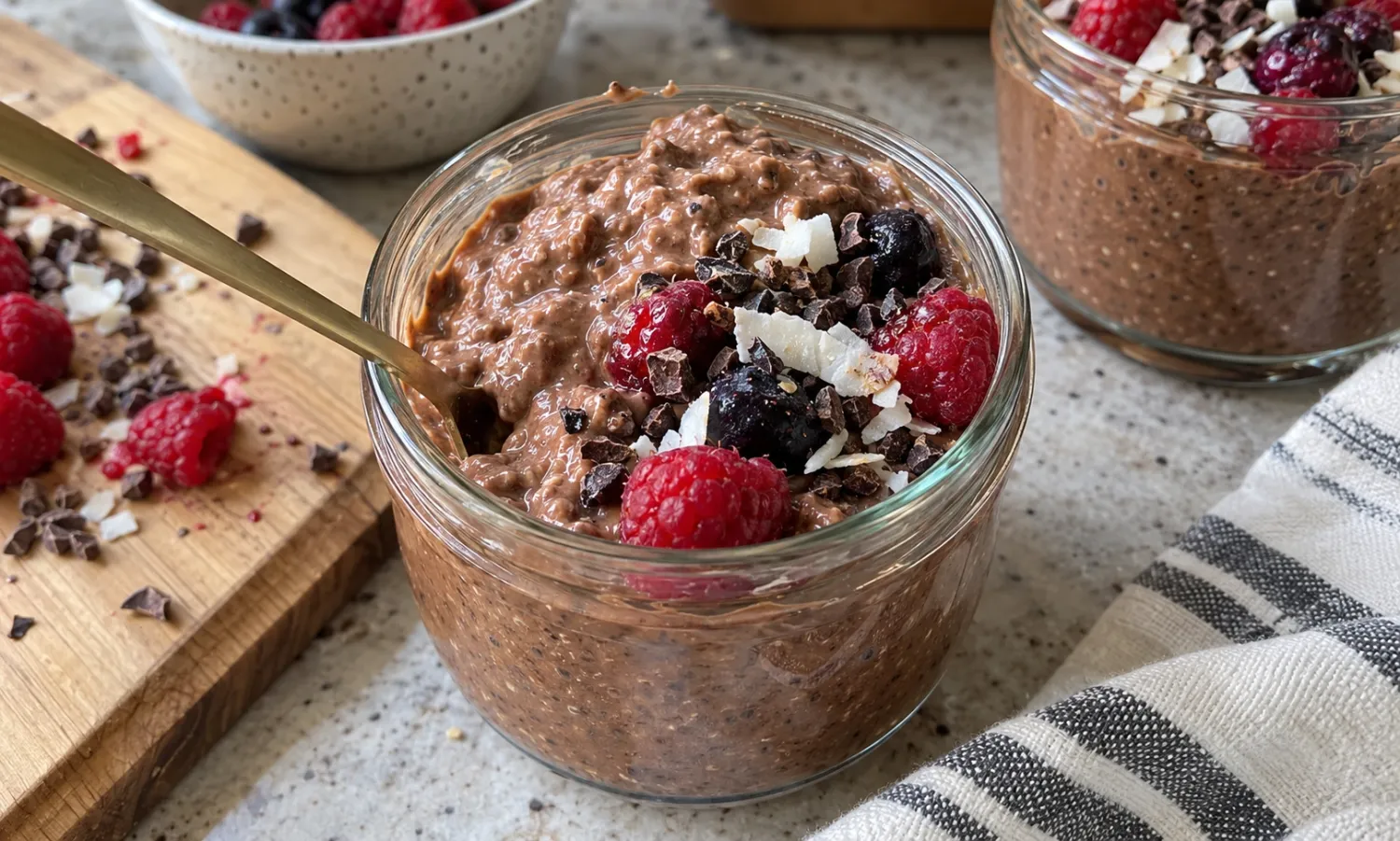
Top-down view of High-Protein Greek Yogurt Chocolate Chia Pudding in dessert jars

Food Safety & Hygiene Guidelines

This is a no-cook, refrigerated dairy dessert. Temperature control is essential:

  • Keep dairy and refrigerated ingredients chilled until ready to prepare.
  • Refrigerate the prepared pudding promptly in covered containers.
  • Keep refrigerator maintained at 40°F or below (FDA Safe Food Storage).
  • Do not leave prepared pudding at room temperature for more than 2 hours (or 1 hour if surrounding temperature is above 90°F).

Allergens: Contains milk (Greek yogurt, whey protein). Almond milk adds tree nuts. Always review individual product labels.

GLP-1 Practical Notes

This recipe is designed around practical eating considerations rather than a medical claim.

Smaller-volume option

The baseline serving is approximately 3/4 cup. If a smaller amount is more comfortable, the pudding can be eaten in a smaller portion and the remainder kept refrigerated.

Protein contribution

The recipe provides approximately 24 grams of protein per baseline serving under the stated nutrition assumptions.

Fiber contribution

The chia seeds provide a substantial portion of the recipe's estimated fiber.

Dessert-first experience

The recipe is intentionally chocolate-forward. The goal is to make the dessert itself useful rather than simply labeling an ordinary yogurt snack as a GLP-1 dessert.

Common Texture Problems

The pudding is too thin

First give it additional refrigeration time. Protein powders and Greek yogurts differ in their water content and thickening behavior.

The pudding is too thick

Stir in almond milk 1 tablespoon at a time until the desired consistency is reached.

The chia seeds are clumped

The 10-minute second stir is important. For a completely smooth texture, blend the chia seeds into the base.

The pudding tastes too bitter

Check the cocoa and protein powder combination. Dutch-process cocoa can provide a smoother flavor, while additional maple syrup can be added gradually if needed.

The pudding is too sweet

The protein powder may already contain substantial sweetener. Reduce the maple syrup the next time you prepare it rather than adding additional cocoa to compensate.

Frequently Asked Questions

How long does the pudding need to sit for chia seeds to fully soften?

Refrigerate for at least 4 hours. Overnight refrigeration gives the chia seeds more time to hydrate and produces a thicker, more cohesive texture.

Which cocoa powder gives the richest chocolate flavor?

Unsweetened Dutch-process cocoa is recommended for a smooth, dark chocolate profile. Natural cocoa also works but generally produces a sharper flavor.

Can this pudding be made with plant-based yogurt?

Yes. Use a thick, unsweetened, high-protein plant-based yogurt. A soy-based option is a practical choice, but the final texture and nutrition will vary.

Can I use natural cocoa instead of Dutch-process cocoa?

Yes. Use the same quantity. The finished pudding will have a somewhat sharper chocolate flavor.

Can I use a different protein powder?

Yes, but different powders can change sweetness, thickness, protein content, calories, carbohydrates, fat, fiber, and sodium. Recalculate the nutrition if you change the protein powder.

Can I make this pudding completely smooth?

Yes. Blend the chia seeds directly into the chocolate base instead of stirring them in afterward.

Can I make it without protein powder?

You can, but the recipe will no longer have the stated protein content or exactly the same texture. The nutrition information must be recalculated.

Does this pudding treat constipation or GLP-1 medication side effects?

No. It should not be presented as a treatment or prevention method for constipation, nausea, vomiting, or other medication-related effects.

How should I store the pudding?

Keep it covered and refrigerated at 40°F or below. For best food-safety practice, consume within 3–4 days.

Can I prepare the pudding the night before?

Yes. Overnight refrigeration is particularly suitable because it gives the chia seeds sufficient time to hydrate.

Take Control of Your GLP-1 Journey

If you're working on a more consistent GLP-1 routine beyond individual recipes, the free GLPIANS Success Audit provides a structured way to review your current routine and identify areas worth examining.

Get the Free GLP-1 Success Audit →
Recipe saved to your browser!