


Quinoa Chickpea Salad Meal Prep | Cold GLP-1 Lunch

4.9 ★
0 people reviewed 🎉 Thanks for review!
Lauren Hayes
Written By Lauren Hayes ✓
Lauren Hayes
Recipe Developer & Culinary Editor

Lauren develops and reviews GLPIANS recipes with a focus on ingredient accuracy, cooking technique, texture, timing, portioning, and reliable home-kitchen execution.

Melissa Grant, MS, RDN
Reviewed By Melissa Grant, MS, RDN ✓
Melissa Grant, MS, RDN
Registered Dietitian Nutritionist

Melissa reviews GLPIANS content for nutrition accuracy, responsible GLP-1 framing, portion guidance, and evidence-based communication.

Daniel Harper, MPH
Fact Checked By Daniel Harper, MPH ✓
Daniel Harper, MPH
Food Safety & Health Fact Checker

Daniel reviews GLPIANS content for food-safety accuracy, including cooking temperatures, food handling, storage, reheating, and source-backed safety guidance.

Quinoa Chickpea Salad Meal Prep for a Cold GLP-1 Work Lunch

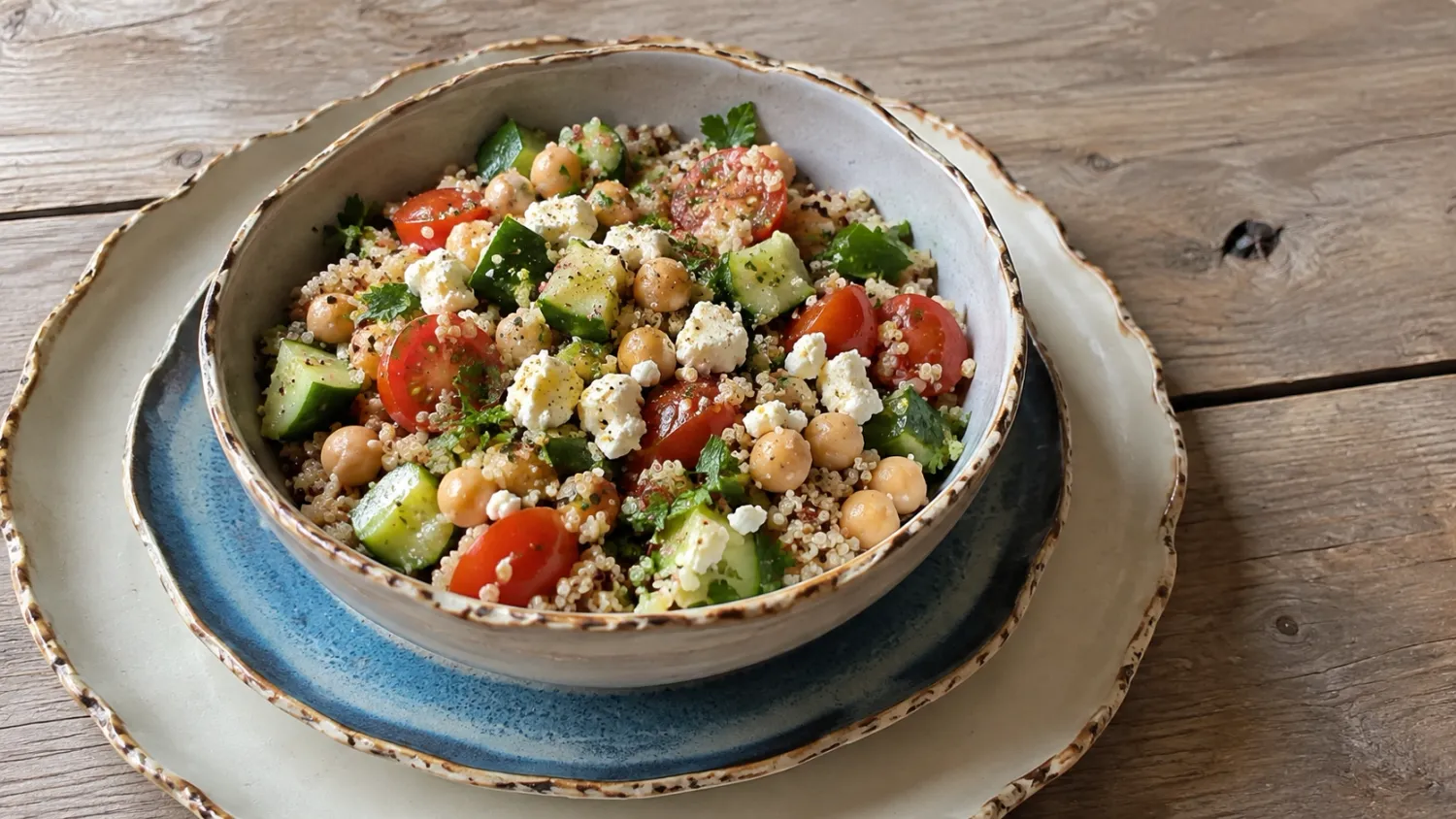
This quinoa chickpea salad is a make-ahead cold lunch built around fluffy quinoa, chickpeas, crisp cucumber, cherry tomatoes, parsley, feta, and lemon-herb dressing.

The recipe makes four portions of approximately 1 1/4 cups each and can be eaten directly from the refrigerator without reheating.

The key meal-prep technique is moisture control: cool the quinoa completely, dry the chickpeas and vegetables well, and keep the dressing separate when you want the crispest texture.

Why This Cold Lunch Is Practical for GLP-1 Meal Prep

People using GLP-1 medications can have different appetites, food preferences, and individual tolerances.

This recipe's GLP-1 relevance is therefore practical rather than medical.

It offers a cold format, defined portions, make-ahead preparation, and no requirement to reheat the meal at work.

If warm-food aromas are unpleasant for you on a particular day, a chilled lunch may be a more appealing personal option. That does not mean cold food universally prevents nausea or medication-related symptoms.

The recipe also combines quinoa, chickpeas, vegetables, feta, and olive oil, giving the meal a mixture of carbohydrate, protein, fiber, fat, and produce.

How to Keep Quinoa Chickpea Salad From Getting Watery

A meal-prep grain salad usually becomes less appealing when excess moisture accumulates in the container.

The best approach is to control moisture before the ingredients ever meet the dressing.

Cool the quinoa completely. Warm quinoa can soften the vegetables and introduce additional condensation.

Dry the chickpeas. Drain and rinse them thoroughly, then pat them dry.

Dry the vegetables. Cucumber and tomatoes naturally contain substantial water. Blot their cut surfaces before adding them to the salad.

Separate the dressing. This is the most useful step when you are preparing several portions at once.

The result is a salad that can remain more defined and crisp than one that is heavily dressed several days before eating.
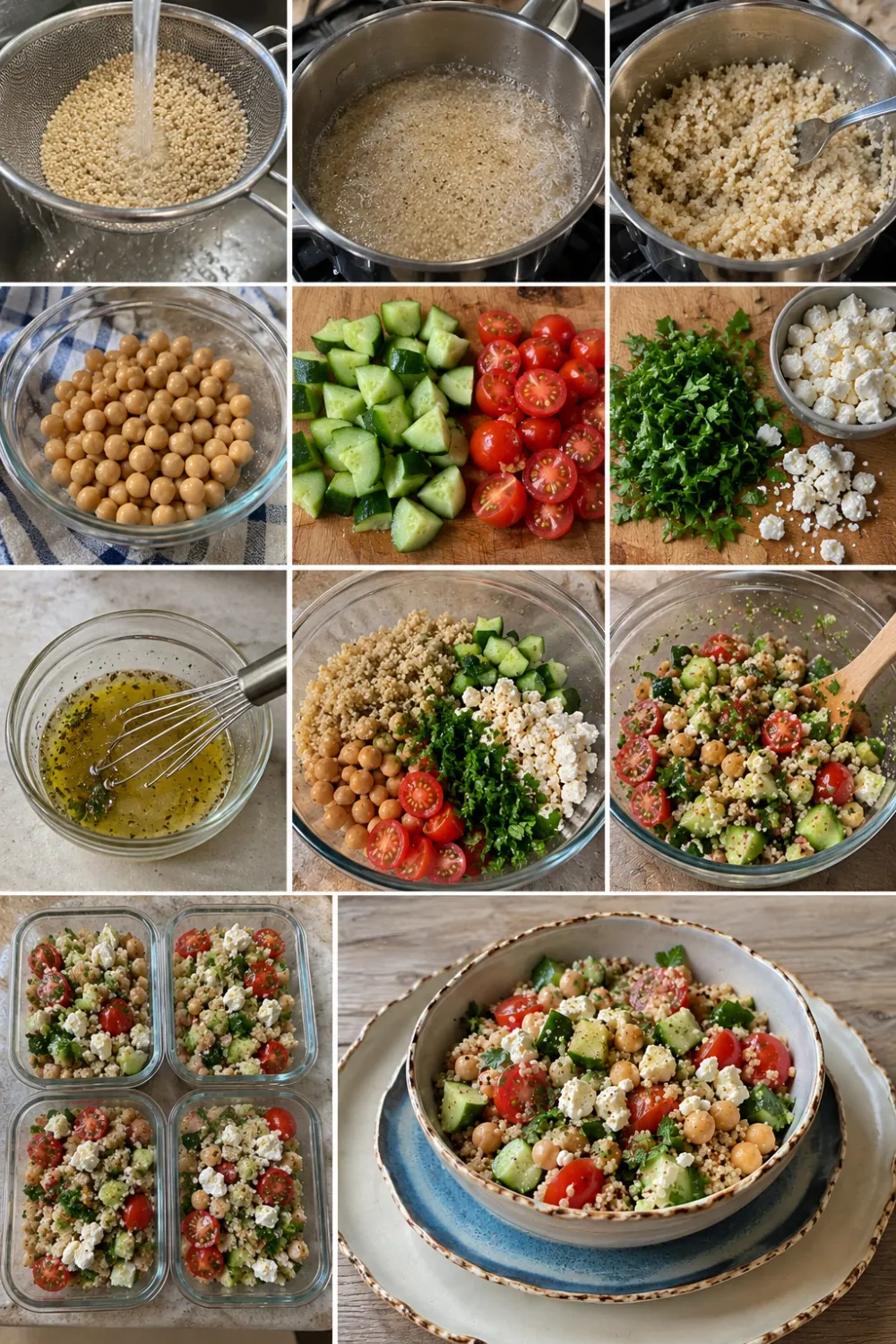
Step-by-step process for making cold quinoa chickpea cucumber salad meal prep

What Is in This Quinoa Chickpea Salad?

The base is cooked quinoa and chickpeas.

English cucumber and cherry tomatoes add fresh texture and moisture, while parsley provides a bright herb note. Feta contributes salty, tangy flavor.

The dressing uses olive oil, fresh lemon juice, garlic, oregano, salt, and black pepper.

There is no heavy creamy dressing, and there is no reheating step.
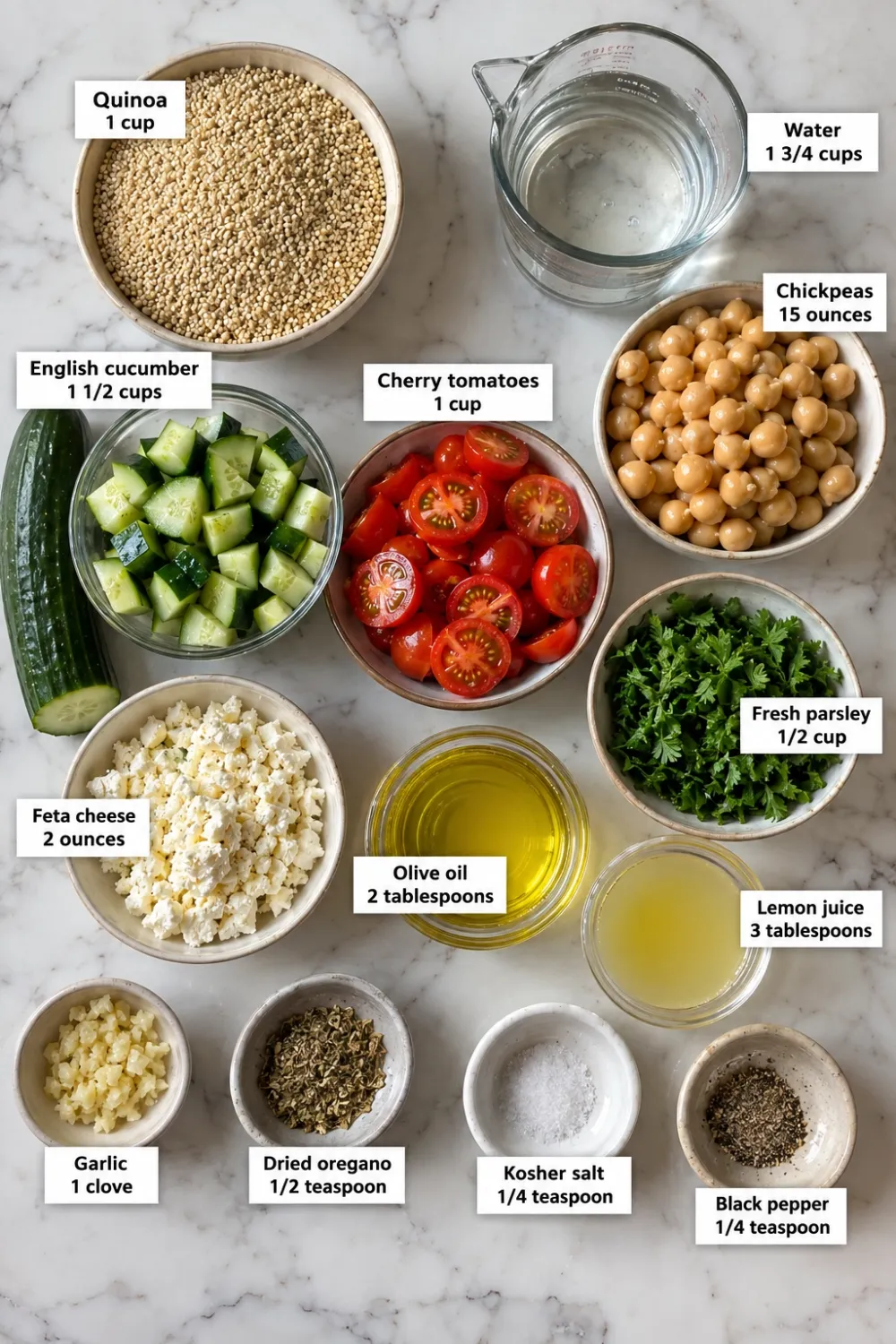
Fresh ingredients for cold quinoa chickpea cucumber salad including lemon, herbs, feta, and chickpeas

How Chickpeas Fit Into the Meal

Chickpeas provide plant protein and dietary fiber alongside their carbohydrate content.

That makes them useful in a grain-based lunch because the salad is not built around quinoa alone.

The nutrition values in this recipe are estimates based on the final ingredient list. They should not be interpreted as an individualized dietary target.

Does Chilling Quinoa Increase Resistant Starch?

This needs to be stated carefully.

Cooling cooked starches can promote starch retrogradation, and research has demonstrated that cooling can increase resistant starch in some cooked starchy foods. However, evidence from other starch systems should not be converted into a precise claim about the resistant-starch amount in this particular quinoa salad. (PubMed)

Research specifically examining quinoa starch also shows that processing can alter starch structure and digestibility, but that does not establish that this recipe produces a guaranteed resistant-starch increase or a specific gut-health outcome. (PubMed)

For that reason, the main reason to chill the quinoa here is practical: it produces the correct temperature and texture for a cold meal-prep salad.

How Long Does This Salad Last?

For food safety, use the prepared salad within 3 to 4 days when it has been promptly refrigerated and continuously kept at 40°F or below. (Ask USDA)

For this particular recipe, four days is also the practical meal-prep limit.

Texture can change before the food reaches that safety limit. Cucumber and tomatoes may gradually become softer, particularly when the dressing is already mixed in.

For the best texture, store the dressing separately.

How to Portion It for a GLP-1 Lunch

The standardized recipe produces four portions of approximately 1 1/4 cups.

That serving size is used for the recipe's nutrition calculation. It does not mean every person needs to consume exactly that amount.

Appetite can vary. If a smaller portion works better for you, portion less and refrigerate the remainder promptly.

The goal is a flexible meal-prep structure rather than a medically prescribed serving size.

Cold Work Lunch Alternative

If you want another cold, portable option rather than another quinoa-based meal, GLPIANS has a chilled shrimp bento box for a GLP-1 meat-aversion lunch.

Simple Substitutions

Persian cucumbers can replace English cucumber.

Red or tri-color quinoa can replace white quinoa, although the finished texture may differ.

Goat cheese can replace feta.

Fresh cilantro can replace parsley if you prefer its flavor.

For the most predictable result, avoid treating different grains or beans as completely interchangeable. They absorb water differently and can change the finished texture and nutrition.
GLPIANS
Cold GLP-1 Work Lunch Collection
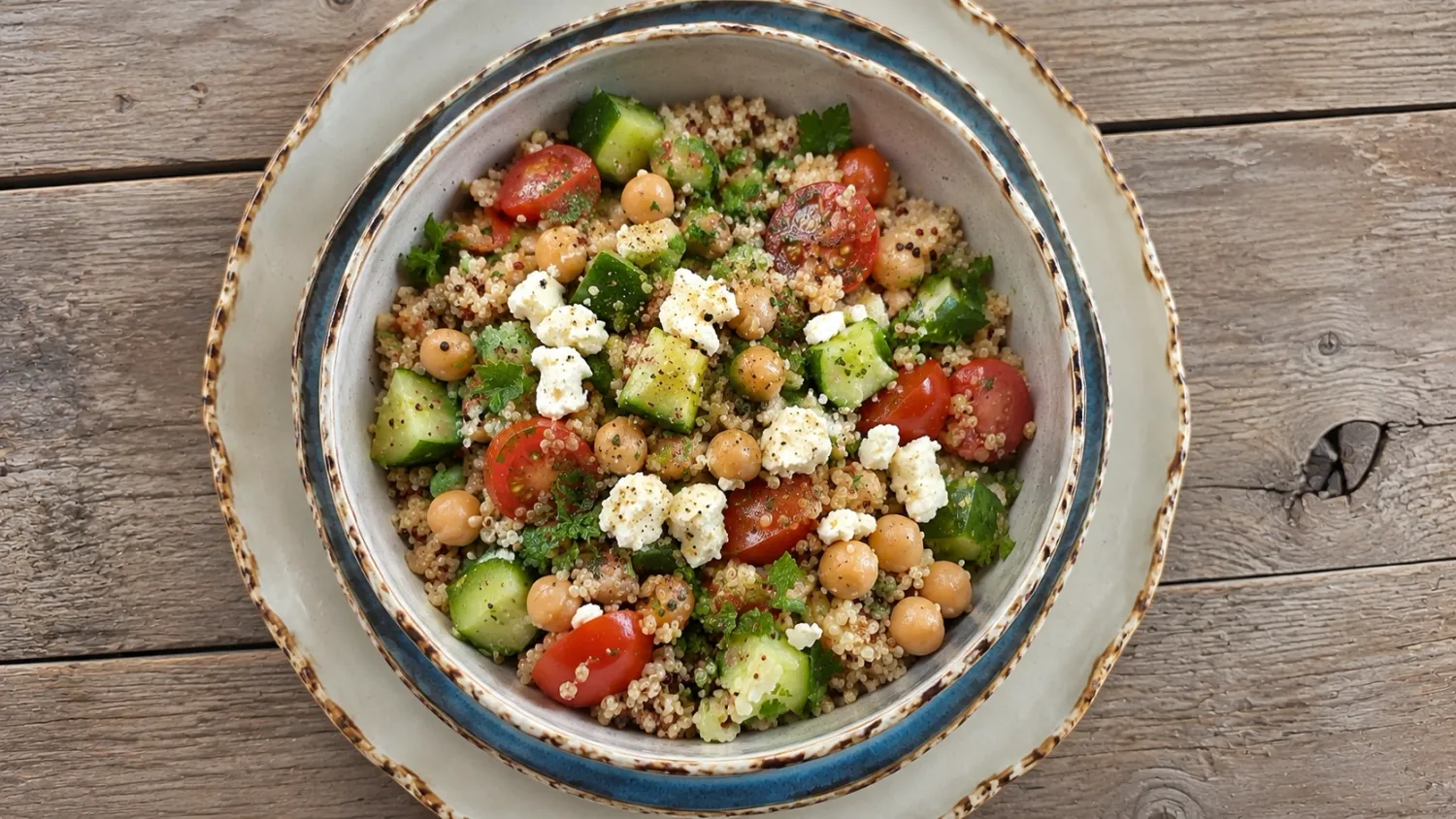
Cold Quinoa, Chickpea and Cucumber Salad with Lemon Herb Dressing in a meal prep bowl
COLD GLP-1 LUNCH / MEAL PREP

Cold Quinoa, Chickpea & Cucumber Salad with Lemon Herb Dressing

A chilled quinoa and chickpea salad with crisp English cucumber, cherry tomatoes, fresh parsley, feta, and a bright lemon-herb dressing. It makes four portions for a convenient cold work lunch.

Servings
4
Yield
~5 cups
Serving Size
~1 1/4 cups
Prep Time
20 mins
Cook Time
15 mins
Total Time
1 hr 5 mins
Course
Lunch
Cuisine
Mediterranean

Ingredients

Quinoa Salad
  • 1 cup dry quinoa, thoroughly rinsed
  • 1 3/4 cups water
  • 1 (15-ounce) can chickpeas, drained and thoroughly rinsed
  • 1 1/2 cups diced English cucumber
  • 1 cup halved cherry tomatoes
  • 1/2 cup finely chopped fresh parsley
  • 2 ounces crumbled feta cheese
Lemon Herb Dressing
  • 2 tbsp extra-virgin olive oil
  • 3 tbsp fresh lemon juice
  • 1 small garlic clove, finely minced
  • 1/2 tsp dried oregano
  • 1/4 tsp kosher salt
  • 1/4 tsp freshly ground black pepper

Equipment Required

Fine-mesh strainer
Small saucepan with lid
Fork
Shallow container / wide bowl
Large mixing bowl
Small bowl or jar
Whisk or fork
4 Airtight meal-prep containers

Instructions

  1. 1
    Rinse and combine quinoa: Rinse the quinoa thoroughly under cold running water. Combine the quinoa and water in a small saucepan and bring to a boil.
  2. 2
    Simmer: Reduce the heat to low, cover, and simmer for about 15 minutes, or until the water has been absorbed and the quinoa is tender.
  3. 3
    Rest and fluff: Remove the quinoa from the heat and let it stand, covered, for 5 minutes. Fluff with a fork.
  4. 4
    Chill completely: Spread the cooked quinoa in a shallow container or wide bowl. Refrigerate until completely cool, about 30 minutes.
  5. 5
    Prep produce & chickpeas: While the quinoa cools, drain and rinse the chickpeas thoroughly. Pat them dry. Dice the cucumber and halve the tomatoes, then gently blot excess moisture from the cut vegetables.
  6. 6
    Make dressing: Whisk the olive oil, lemon juice, garlic, oregano, salt, and black pepper together in a small bowl or jar.
  7. 7
    Assemble salad: Add the completely cooled quinoa, chickpeas, cucumber, tomatoes, parsley, and feta to a large mixing bowl.
  8. 8
    Toss lightly: Pour the dressing over the salad and gently toss until evenly combined.
  9. 9
    Portion for meal prep: Divide into four airtight containers. For the best texture through the meal-prep period, store the dressing separately and add it shortly before eating.

Recipe Notes

  • Cool the quinoa completely before combining it with the vegetables.
  • Thoroughly drain and dry the chickpeas.
  • Blot cucumber and tomatoes after cutting to reduce excess moisture.
  • Keeping the dressing separate provides the best texture for later portions.
  • If the salad is fully dressed in advance, expect the vegetables to soften gradually.
  • The four portions are approximately 1 1/4 cups each, but an individual may choose a smaller portion according to appetite.
  • Feta provides a concentrated salty, tangy flavor, so a relatively small quantity is sufficient.

Nutrition Information

Per Serving Basis: 1 of 4 servings, approximately 1 1/4 cups
Calories~350 kcal
Protein~12 g
Carbohydrates~43 g
Dietary Fiber~8 g
Total Fat~16 g
Total Sugars~6 g
Sodium~400 mg

Substitutions

  • English cucumber: Persian cucumbers can be substituted in equal quantity.
  • Quinoa: Red or tri-color quinoa can replace white quinoa.
  • Fresh parsley: Fresh cilantro can be used for a different herb profile.
  • Feta: Goat cheese can replace feta.
  • Dried oregano: Italian seasoning can be used in small amounts.
  • Chickpeas: Other cooked beans can be substituted with texture/flavor shifts.

Storage & Reheating

Storage: Refrigerate promptly in airtight containers at 40°F or below. Use within 3 to 4 days per USDA safety guidance.

For best texture, keep dressing separate until serving.

Reheating: NOT APPLICABLE. This recipe is specifically designed to be eaten chilled and does not require reheating.

Make-Ahead / Meal Prep

Designed around a 4-day meal-prep cycle.

Workflow: Cook & cool quinoa completely → Dry chickpeas & cut veggies → Whisk dressing → Divide into 4 portions → Store dressing separately → Refrigerate promptly.

Transport in an insulated lunch container with a cold source if workstation lacks refrigeration.

Food Safety Guidance

Keep the finished salad refrigerated at 40°F or below. Per USDA guidance, perishable food should not remain at room temperature for more than 2 hours (or 1 hour when temperatures exceed 90°F). (Ask USDA)

  • Use shallow containers for rapid cooling in the refrigerator.
  • Use clean utensils and avoid leaving the main container unrefrigerated during meal times.

Serving Suggestions

  • ✓ Serve chilled directly from the refrigerator for a refreshing, no-reheat work lunch.
  • ✓ Add the lemon-herb dressing shortly before eating to maintain optimum vegetable crispness.
  • ✓ Finish with an extra sprinkle of fresh chopped parsley or a fresh squeeze of lemon juice.
  • ✓ Adjust portion size according to appetite; refrigerate any remainder promptly.
  • ✓ Looking for another cold portable lunch? Try the chilled shrimp bento box.
Side view of cold quinoa chickpea cucumber salad in a meal prep container

GLP-1 Practical Notes

The recipe's main GLP-1-specific advantage is its practical format.

It is:

  • cold;
  • portable;
  • make-ahead;
  • portionable;
  • suitable for a no-reheat work lunch;
  • adaptable to a smaller serving;
  • designed with texture preservation in mind.

Individual appetite and food tolerance vary, so the recipe should be treated as a flexible meal option rather than a treatment for any medication-related symptom.

Common Meal-Prep Mistakes

Mixing warm quinoa with vegetables: This can soften the vegetables and create additional moisture.

Not drying the chickpeas: Residual water can dilute the dressing.

Using wet cucumber and tomatoes: Their natural moisture can accumulate in the container.

Dressing all four portions immediately: This is convenient but can reduce crispness over several days.

Leaving the salad at room temperature: Refrigerated perishable foods should not be left out beyond the USDA-recommended time limits. (Ask USDA)

Workday Packing Tip

If your workplace does not provide reliable refrigeration, keep the salad cold during transport using an insulated lunch container and an appropriate cold source.

Do not assume that a refrigerated recipe can safely remain at room temperature throughout a full workday.

Frequently Asked Questions

Can I make quinoa chickpea salad the night before?

Yes. Cook and completely cool the quinoa, prepare the vegetables and chickpeas, make the dressing, and refrigerate the finished components promptly.

How long does quinoa chickpea salad last in the refrigerator?

Use it within 3 to 4 days when promptly refrigerated and kept at 40°F or below, following USDA leftover guidance. (Ask USDA)

Can I eat this salad cold?

Yes. The recipe is specifically designed to be served chilled and does not require reheating.

Should I store the dressing separately?

Yes, if preserving texture is your priority. Separate dressing helps keep cucumber and tomatoes crisper over the meal-prep period.

Is this a GLP-1-friendly lunch?

It can be a practical cold lunch option for people using GLP-1 medications, particularly those who prefer make-ahead meals and flexible portions. Individual appetite and tolerance vary.

Why does quinoa salad become watery?

Excess moisture can come from cooked quinoa, chickpeas, cucumber, tomatoes, and the dressing. Cooling the quinoa completely and drying the other ingredients before assembly helps.

Can I use Persian cucumbers?

Yes. Persian cucumbers are a practical substitute for English cucumber and provide a similar crisp texture.

Does chilled quinoa definitely contain more resistant starch?

No specific amount should be guaranteed for this recipe. Cooling can affect starch structure in cooked foods, but the exact effect depends on the food and processing conditions. (PubMed)

Get the Free GLP-1 Success Audit

Build a clearer picture of your current GLP-1 routine and identify areas that may benefit from more practical structure.

Get the Free GLP-1 Success Audit