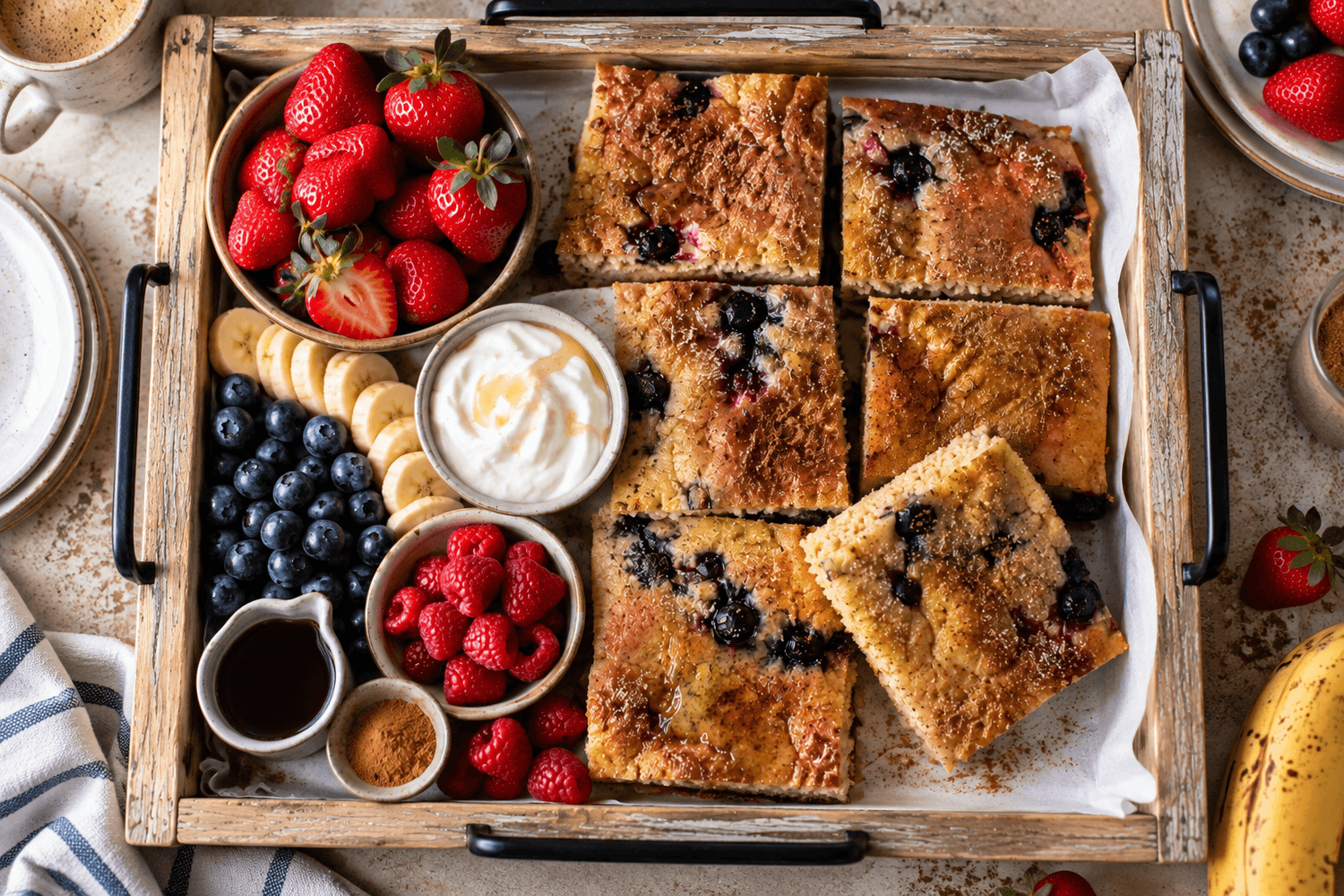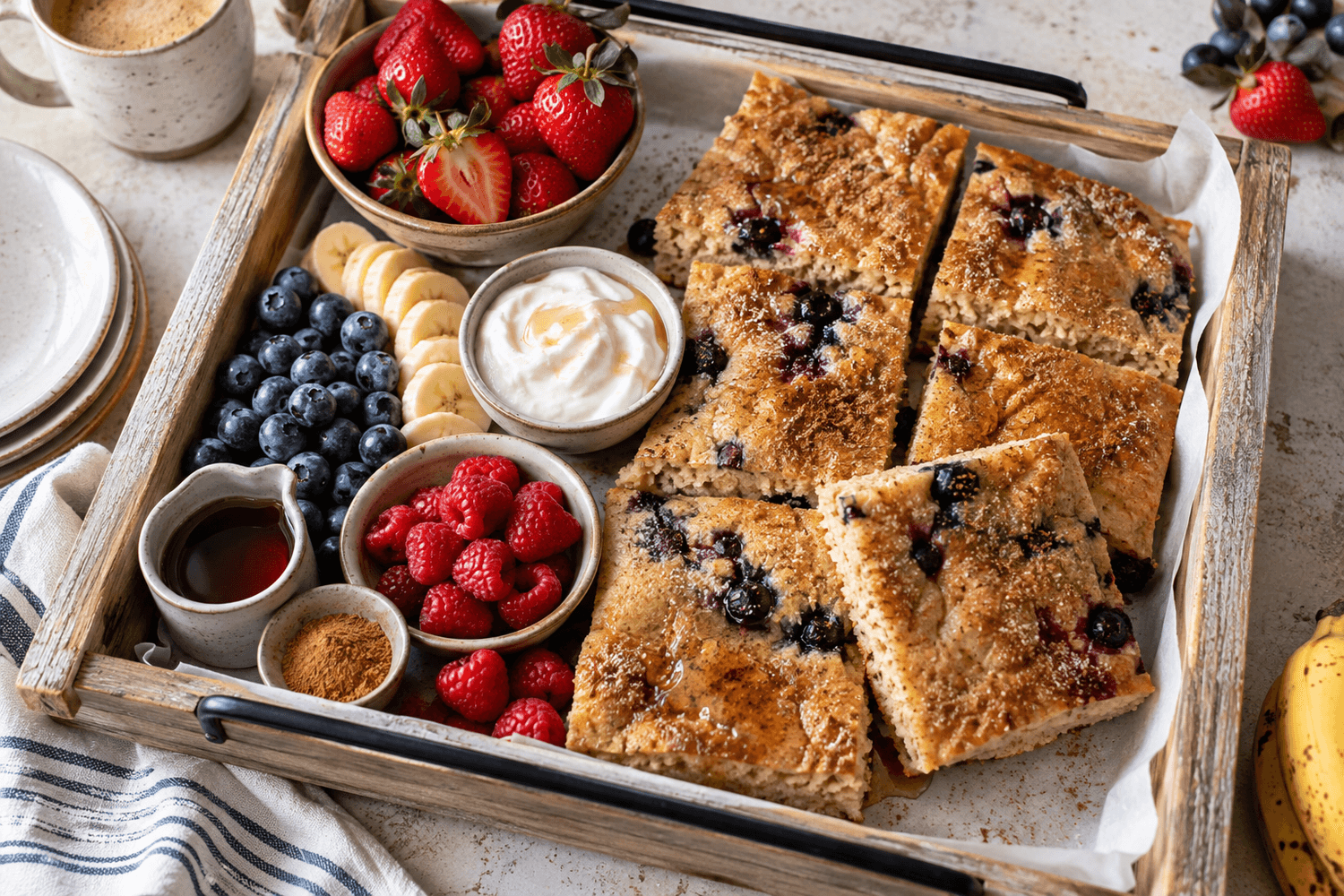



Sheet-Pan Greek Yogurt Protein Pancakes for Easy Breakfast Meal Prep
These sheet-pan protein pancakes with Greek yogurt turn a batch of oat-and-protein pancake batter into eight ready-to-reheat breakfast squares. Instead of standing over a skillet and flipping individual pancakes, you spread the batter into one 13 × 9-inch quarter-sheet pan and bake the entire batch at once.
The finished squares can be refrigerated for the next few breakfasts or frozen individually for longer-term meal prep.
That makes this format particularly useful when the goal is to have a warm breakfast ready with very little weekday cooking.
Why make protein pancakes in a sheet pan?
Traditional pancakes require active cooking. You have to heat the skillet, portion the batter, watch the surface, flip each pancake, and repeat until the batch is finished.
This recipe changes that workflow.
You mix the batter once, spread it into the pan, bake it once, cool it, and cut it into eight portions.
The result is a breakfast that is already portioned before you need it.
That also makes the recipe easier to use when breakfast preparation is competing with work, school, commuting, or other morning responsibilities.
What makes these Greek yogurt protein pancakes different?
The batter combines four major components:
- Ground rolled oats provide the pancake's grain base.
- Plain Greek yogurt contributes moisture and protein.
- Eggs provide structure.
- Whey protein powder increases the protein content while changing the batter's absorption and texture.
The result is intentionally more substantial than a thin traditional pancake.
Because the pancakes are baked and sliced rather than flipped individually, keeping the batter at an even thickness is more important than achieving a skillet-style shape.
How to get the right batter consistency
Protein powder and ground oats continue absorbing liquid after the batter is mixed.
That is why this recipe uses a short 2-to-3-minute resting period before you decide whether the batter needs additional milk.
After resting, the batter should be thick but spreadable.
If it is too stiff, add milk one tablespoon at a time.
Avoid adding a large amount of extra liquid at once. Protein powders differ substantially in their ability to absorb liquid, so a small adjustment is safer than changing the entire recipe.
Why the pan size matters
Use a 13 × 9-inch quarter-sheet pan for the baseline recipe.
A consistent batter depth helps the center and edges finish at approximately the same time.
If you double the recipe, do not simply pour twice as much batter into the same pan. The deeper batter layer would change the baking behavior.
Use two appropriately sized pans instead.
How to keep the pancake squares soft
The biggest risks are overbaking and uneven batter thickness.
Spread the batter all the way into the corners before baking.
Start checking toward the end of the stated baking window rather than automatically extending the bake because the surface is not deeply browned.
The center should be set, and because the recipe contains eggs, the center should reach at least 160°F. USDA guidance specifies 160°F for egg dishes. USDA egg-safety guidance
Let the baked pancake cool for about 10 minutes before cutting. This gives the structure time to settle and makes the squares easier to portion.
Can cottage cheese replace Greek yogurt?
Yes.
Blend 2 cups low-fat cottage cheese until smooth and substitute it for the Greek yogurt.
Cottage cheese can produce a somewhat different batter texture, so allow the batter to rest and then adjust with milk only if necessary.
This is a useful substitution when cottage cheese is already available or when you want to use another high-protein dairy ingredient.
How to meal-prep these pancakes
Once the pancake has cooled, cut it into eight squares.
Refrigerate the portions you plan to eat within the next 3 to 4 days.
Freeze the remaining portions individually rather than holding the entire batch in the refrigerator for a full week.
USDA recommends using refrigerated cooked leftovers within 3 to 4 days. USDA leftovers and refrigerator-storage guidance
Freezing gives you a much more flexible meal-prep system: you can prepare one batch without committing every portion to the refrigerator.
How to reheat sheet-pan pancakes without drying them out
For refrigerated pancakes, start with 30 to 45 seconds in the microwave.
For frozen pancakes, start with 60 to 90 seconds, checking partway through.
The key is to avoid treating the microwave like a timer-based baking process. Appliance power varies, and a long uninterrupted heating cycle can dry the outside before the center is warm.
For better surface texture, use a 325°F toaster oven or air fryer.
The toaster oven is especially useful when you want the outside slightly drier while keeping the center soft.
Previously cooked portions should reach 165°F when reheated. (Ask USDA)
A practical GLP-1 breakfast strategy
There is no universal food that should be considered medically "GLP-1 friendly."
The practical advantage of this recipe is different: it is portionable, protein-focused, batch-prepped, and easy to reheat.
Those characteristics can make it useful for people who prefer smaller, ready-to-eat breakfast portions.
One square is the defined serving in this recipe, but individual appetite and tolerance vary. If a full square is more than you want at one time, cut it in half and save the other portion.
For a completely different breakfast workflow, the high-protein Greek yogurt parfait meal prep provides a cold, no-cook alternative.
When a no-cook breakfast makes more sense
Sheet-pan pancakes are ideal when you want something warm, but not every morning requires reheating.
On days when you want something cold and ready immediately, a prepared yogurt-based breakfast can reduce the number of steps between opening the refrigerator and eating.
The important point is not to force the same breakfast every day. A useful meal-prep system gives you multiple convenient options.