



Silken Tofu Protein Smoothie for GLP-1 Low-Appetite Days

4.9 β˜…
0 people reviewed πŸŽ‰ Thanks for review!
Lauren Hayes
Written By Lauren Hayes βœ“
Lauren Hayes
Recipe Developer & Culinary Editor

Lauren develops and reviews GLPIANS recipes with a focus on ingredient accuracy, cooking technique, texture, timing, portioning, and reliable home-kitchen execution.

Melissa Grant, MS, RDN
Reviewed By Melissa Grant, MS, RDN βœ“
Melissa Grant, MS, RDN
Registered Dietitian Nutritionist

Melissa reviews GLPIANS content for nutrition accuracy, responsible GLP-1 framing, portion guidance, and evidence-based communication.

Daniel Harper, MPH
Fact Checked By Daniel Harper, MPH βœ“
Daniel Harper, MPH
Food Safety & Health Fact Checker

Daniel reviews GLPIANS content for food-safety accuracy, including cooking temperatures, food handling, storage, reheating, and source-backed safety guidance.

A Creamy Silken Tofu Smoothie for Low-Appetite Days

When solid food feels difficult to manage, a cold blended meal can be easier to portion and consume. This mango smoothie combines silken tofu, unsweetened soy milk, coconut water, fresh ginger, and lime into a smooth, creamy drink with moderate protein and a relatively small serving size.

The recipe makes four portions of about 10 fluid ounces, so you can start with a smaller amount instead of preparing yourself to finish a large smoothie.
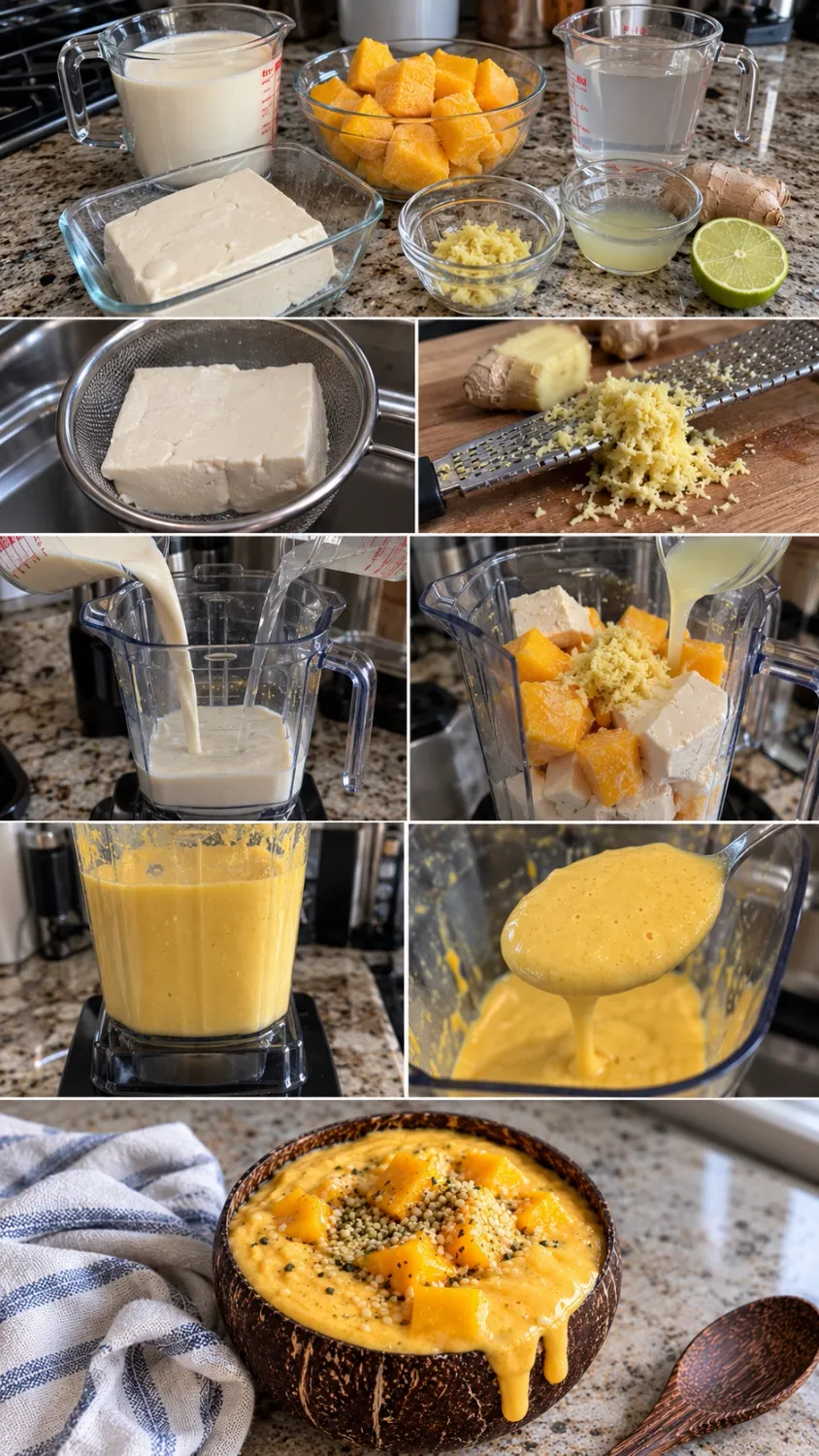
Full preparation and blending process for the Silken Tofu Mango Protein Smoothie

Why Silken Tofu Works in a Protein Smoothie

Silken tofu has a soft, delicate structure that blends into liquids without leaving the grainy texture associated with some whole-food protein additions.

It also provides protein without requiring dairy or whey protein powder.

In this recipe, tofu works together with soy milk rather than relying on a single ingredient to provide all of the protein. Mango supplies sweetness and fruit flavor, while coconut water keeps the liquid lighter and lime adds acidity.

The result is intentionally different from a thick, dessert-like protein shake.

Why This Format Can Be Practical During Low-Appetite Periods

The main GLP-1 consideration here is format and portion flexibility, not a claim that the smoothie treats medication effects.

A liquid meal can be divided into smaller amounts, and the four-serving batch makes that especially easy. Someone who prefers a smaller portion can drink part of a serving and refrigerate the remainder promptly.

Texture can also matter. This smoothie has no chewy meat, fibrous salad leaves, crunchy toppings, or large fruit pieces once fully blended.

That makes it a useful option to consider when a smooth texture is more appealing than a conventional solid meal.

Individual tolerance varies, so a food that feels comfortable for one person may not feel comfortable for another.
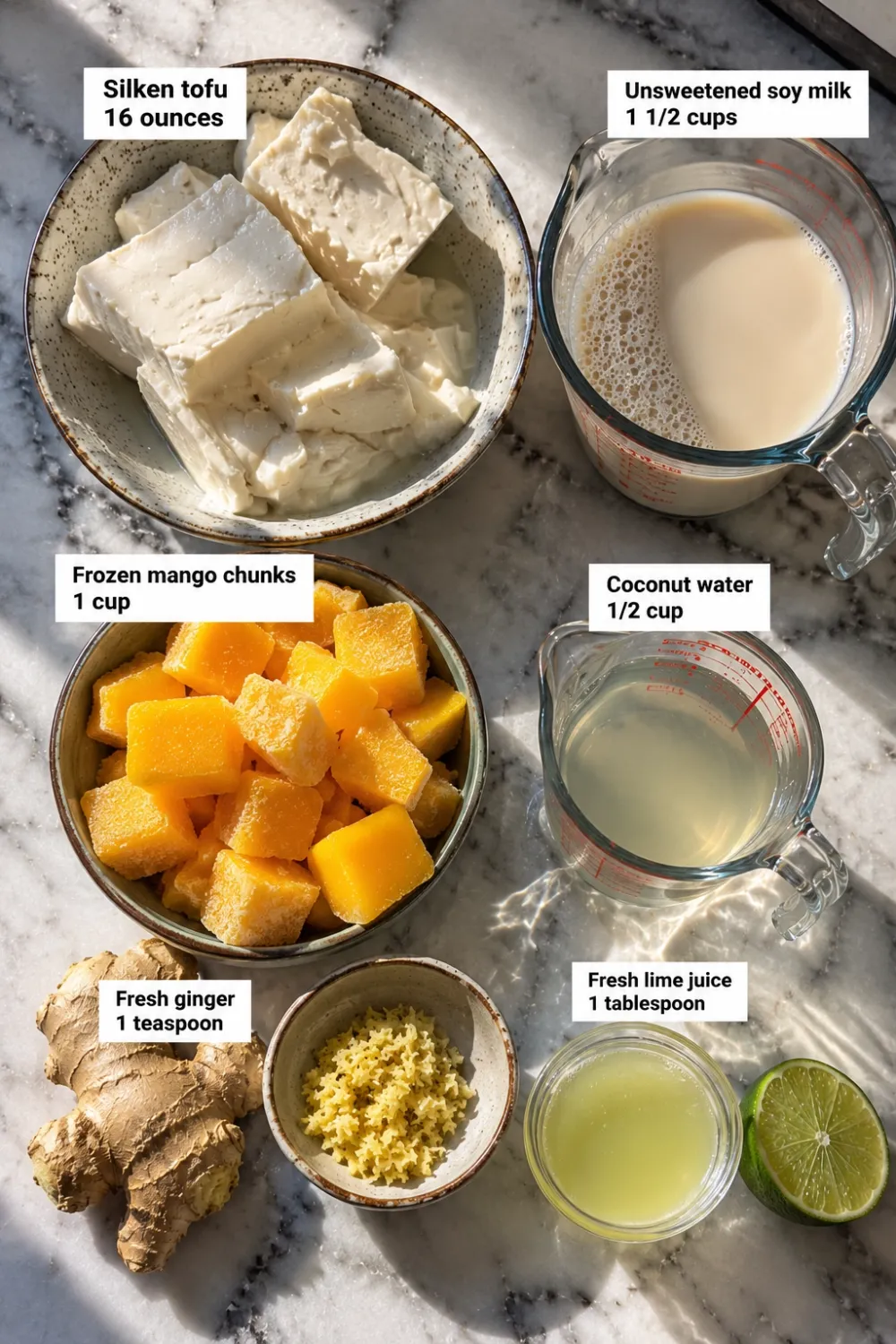
All ingredients for the Silken Tofu Mango Protein Smoothie

What About Ginger and Nausea?

Fresh ginger is included because it adds a bright, warming flavor that works naturally with mango and lime.

Ginger has also been studied for several forms of nausea and vomiting. However, the National Center for Complementary and Integrative Health notes that many studies have examined ginger supplements rather than ginger used as an ordinary food, and the evidence differs depending on the type of nausea being studied. NCCIH Ginger: Usefulness and Safety

That means this smoothie should not be described as a treatment for GLP-1 medication-induced nausea.

Instead, ginger is a recipe ingredient that may be appealing to someone who enjoys its flavor and is looking for a simple, cold, blended option.

Ginger can also cause abdominal discomfort, heartburn, diarrhea, or mouth and throat irritation in some people, so more is not necessarily better. (NCCIH)

Why Use Frozen Mango?

Frozen mango does three jobs at once:

  • adds natural sweetness;
  • supplies the main fruit flavor;
  • chills the smoothie without requiring ice.

Ice would dilute the flavor as it melts. Frozen mango keeps the finished drink creamy while maintaining a concentrated mango flavor.

If your mango is particularly sweet, there is no need to add another sweetener.

How to Make the Smoothie Easier to Tolerate

There is no universal "shot-day" serving size that works for everyone.

Instead, use the recipe's four-portion structure as a practical starting point.

Start small

Pour about 5–10 fluid ounces rather than automatically drinking the entire batch.

Sip instead of rushing

There is no nutritional advantage to finishing a smoothie quickly. If drinking slowly feels more comfortable, take your time.

Adjust temperature

The recipe is designed to be cold, but extremely cold foods are not comfortable for everyone. If necessary, let a portion sit briefly in the refrigerator before drinking.

Keep the texture completely smooth

Blend long enough to remove visible tofu pieces and mango chunks. A high-powered blender will generally achieve the smoothest result.

Respect individual tolerance

If a particular ingredient, texture, temperature, or portion does not feel comfortable for you, do not force it. Food tolerance can vary substantially from person to person.

Silken Tofu vs. Whey Protein Powder

Silken tofu is not nutritionally identical to whey protein powder, so it should not be presented as a one-for-one nutritional replacement.

The reason to use tofu here is primarily culinary and practical.

Silken tofu:

  • creates a naturally creamy texture;
  • works with fruit;
  • contains plant-based protein;
  • avoids dairy ingredients;
  • does not require a protein-powder flavor;
  • blends directly into the smoothie.

Whey protein powder can provide substantially more protein in a smaller amount, but it may not be the preferred ingredient for someone avoiding dairy or protein-powder flavors.

For another GLPIANS recipe using silken tofu in a completely different format, see the Silken Tofu Chocolate Mousse.

Can You Freeze It Into Popsicles?

Yes.

Pour the blended smoothie into small freezer-safe popsicle molds and freeze until solid.

The frozen version changes the eating experience: it becomes a frozen fruit-and-tofu pop rather than a drink. That can be useful if you prefer a very small portion that can be consumed gradually.

Do not use frozen popsicles as a reason to ignore normal food-safety handling. Frozen food remains subject to proper handling and storage practices, and freezing does not eliminate the need to keep perishable ingredients properly chilled before freezing. FDA guidance notes that properly frozen food remains safe at 0Β°F, although quality can decline over time. (U.S. Food and Drug Administration)

The Best Way to Use This Recipe

This smoothie works best as a flexible small-meal framework, not as a prescription for what someone should eat during a medication cycle.

The four-serving yield lets you choose a portion that matches your appetite.

You can drink it as a small breakfast, use it as a snack, or split one portion into smaller amounts depending on what feels practical.

The combination of silken tofu and soy milk provides protein, while mango supplies fruit and flavor and coconut water contributes additional fluid.
GLPIANS
Professional Recipe Collection
Creamy mango silken tofu protein smoothie in a clear glass with fresh ginger and lime.
PROTEIN SMOOTHIE

Creamy Blended Silken Tofu & Mango Protein Smoothie

A creamy mango smoothie made with silken tofu, unsweetened soy milk, coconut water, fresh ginger, and lime juice. The smooth texture and adjustable serving size make it a practical liquid small-meal option for GLP-1 users experiencing low appetite or difficulty with solid food.

Servings
4
Yield
About 40 oz
Prep Time
5 mins
Cook Time
0 mins
Total Time
5 mins
Course
Small Meal
Cuisine
American

Ingredients

  • 16 ounces silken tofu, drained
  • 1 1/2 cups unsweetened soy milk
  • 1 cup frozen mango chunks
  • 1/2 cup coconut water
  • 1 teaspoon finely grated fresh ginger
  • 1 tablespoon fresh lime juice

Equipment

High-speed blender or standard blender
Measuring cups and spoons
Fine grater or microplane
Serving glasses or containers

Recipe Notes

  • Texture: Silken tofu should disappear into the smoothie when fully blended. The finished drink should be creamy rather than grainy.
  • Temperature: Frozen mango provides cooling without diluting the smoothie with ice.
  • Ginger: Fresh ginger adds a warm, spicy note that balances the sweetness of mango.
  • Portion flexibility: The recipe intentionally makes four smaller portions rather than two large smoothie servings. This allows the drink to be portioned according to appetite.
  • For a thinner smoothie: Add soy milk or coconut water 1 tablespoon at a time.
  • For a thicker smoothie: Use slightly less liquid or add a little more frozen mango.
  • Do not overdo the ginger: More ginger is not automatically better. A stronger ginger flavor can become sharp or irritating for some people.

Instructions

  1. 1
    Prepare the ingredients. Drain the silken tofu. Peel and finely grate the ginger. If the frozen mango pieces are unusually large, break them apart so the blender can process them evenly.
  2. 2
    Load the blender. Add the soy milk and coconut water first, followed by the silken tofu, frozen mango, ginger, and lime juice. Adding the liquids first helps the blender circulate the thicker ingredients.
  3. 3
    Blend until completely smooth. Start on low speed and gradually increase to high. Blend for about 45–60 seconds, or until no visible tofu pieces or mango chunks remain and the smoothie is uniformly creamy.
  4. 4
    Check the consistency. If it is thicker than desired, add a small splash of soy milk or coconut water and blend again for 10–15 seconds. Avoid adding a large amount of liquid at once.
  5. 5
    Taste and adjust only if needed. If the mango is particularly tart, a small additional amount of mango can be blended in. If you prefer more brightness, add a few drops of lime juice. Keep the ginger amount modest if you are sensitive to strong flavors.
  6. 6
    Serve cold. Divide into four portions of about 10 fluid ounces each. For a smaller appetite, start with a smaller portion rather than feeling obligated to finish the full serving.

Nutrition

Amount per serving (about 10 fluid ounces)
Calories 120 kcal
Protein 9 g
Carbohydrates 11 g
Fat 5 g
Fiber 2 g
Sugar 9 g
Sodium 50–55 mg

Substitutions

  • Silken tofu: Soft tofu may be used, but the smoothie may be slightly less delicate and creamy. Extra blending may be necessary.
  • Unsweetened soy milk: Unsweetened almond milk can be used. The smoothie will contain less protein.
  • Coconut water: Additional unsweetened soy milk can replace coconut water. It becomes creamier and slightly higher in protein.
  • Frozen mango: Fresh ripe mango can be used. The smoothie will be less cold and thinner.
  • Fresh ginger: Ground ginger can be used in a small amount. The flavor will be less fresh and more concentrated.
  • Lime juice: Fresh lemon juice can be used, creating a slightly sharper, less tropical flavor.

Storage

For the best texture and flavor, drink the smoothie immediately after blending.

If making it ahead, transfer it promptly to a clean, covered container and refrigerate at 40Β°F or below. Shake or stir before drinking because natural separation can occur.

Do not leave the prepared smoothie at room temperature for more than 2 hours, or more than 1 hour when the surrounding temperature is above 90Β°F.

Make-Ahead

The best make-ahead strategy is ingredient preparation rather than extended storage of the finished smoothie.

  • Portion frozen mango into individual freezer containers.
  • Peel and grate the ginger shortly before blending.
  • Measure the dry/frozen components ahead of time.
  • Keep the tofu and soy milk refrigerated until blending.

Blend a fresh portion when you are ready to drink it.

Food Safety

This recipe contains refrigerated tofu and soy milk, so keep the ingredients and finished smoothie properly chilled.

  • Wash hands and clean the blender and preparation surfaces before use.
  • Keep refrigerated ingredients cold until blending.
  • Refrigerate the prepared smoothie promptly.
  • Keep the refrigerator at 40Β°F or below.
  • Discard the smoothie if it has been left at room temperature beyond the applicable safe time limit or if there are other signs of improper handling.

FDA food-safety guidance recommends prompt refrigeration of foods requiring refrigeration, a refrigerator temperature of 40Β°F or below, and covered storage for refrigerated foods.

Serving Suggestions

  • Serve very cold in a small glass rather than a large tumbler if a smaller visual portion feels more manageable.
  • Sip slowly rather than treating it like a drink that needs to be consumed quickly.
  • If cold foods feel unpleasant, allow the smoothie to sit briefly in the refrigerator before drinking rather than warming it substantially.
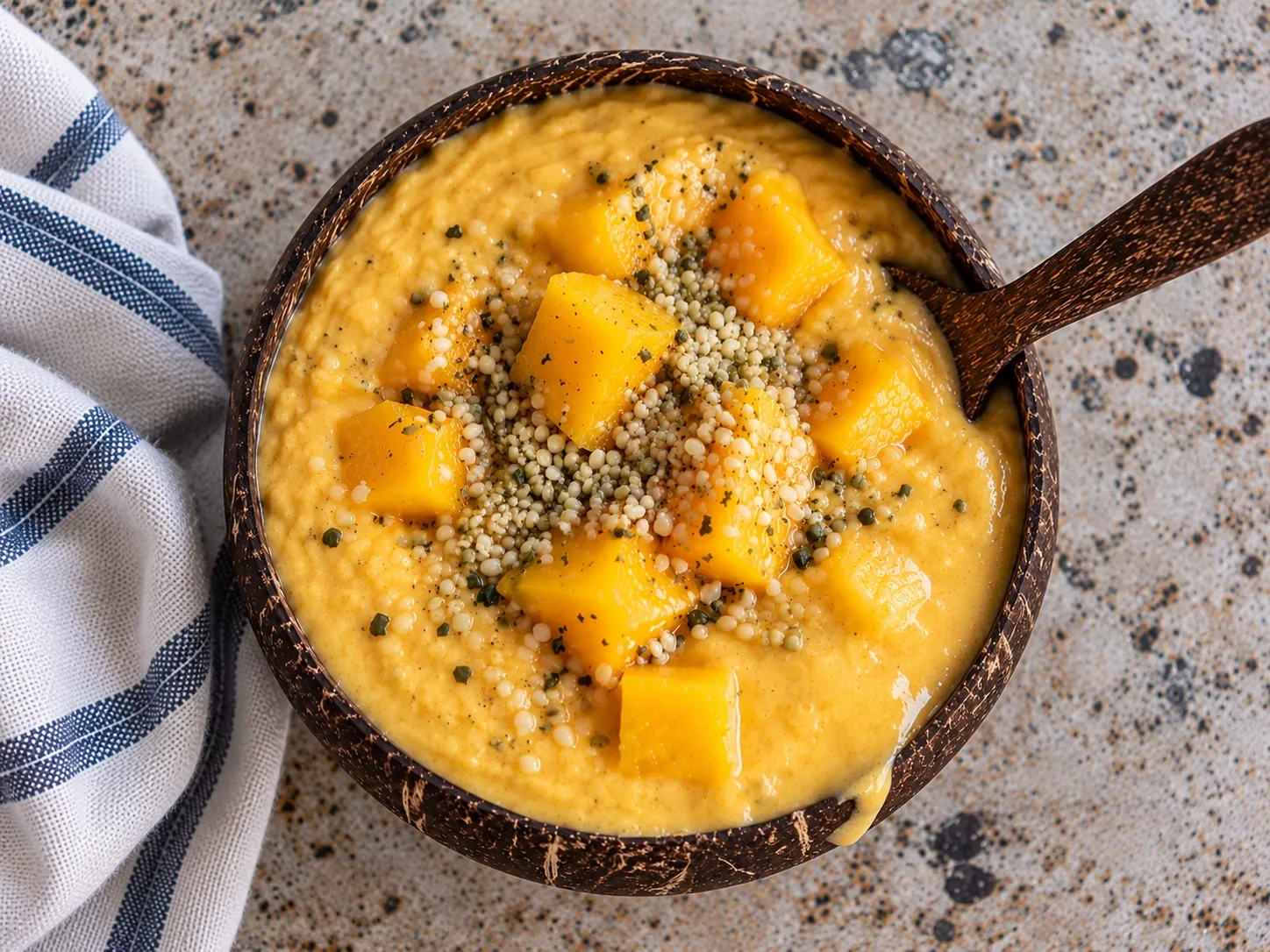
  • For a spoonable texture, reduce the liquid slightly and serve in a small bowl.
  • For gradual frozen portions, pour the smoothie into small freezer-safe popsicle molds and freeze. Best treated as a frozen snack rather than a substitute for the liquid serving.
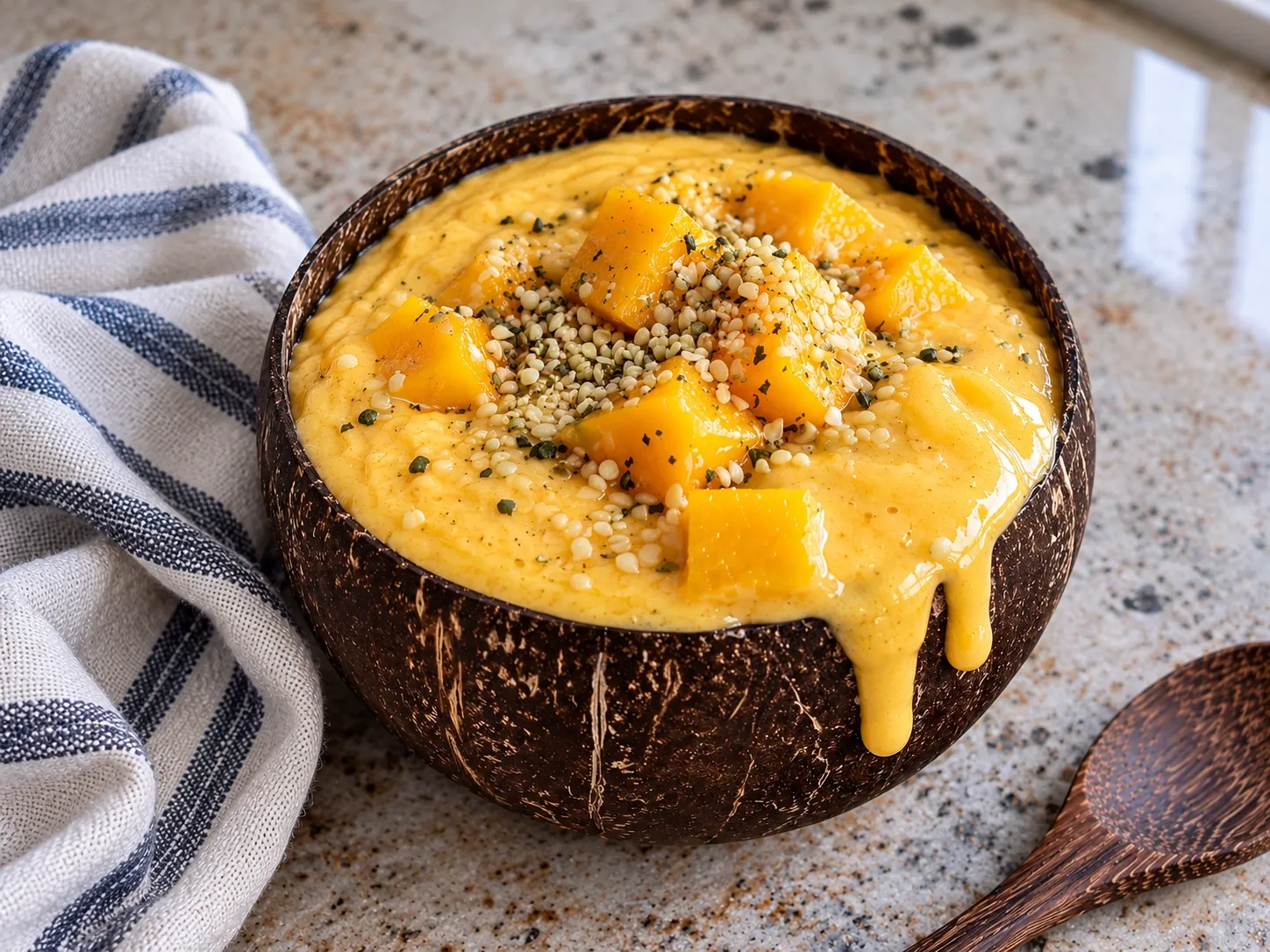
Side view of the creamy Silken Tofu Mango Protein Smoothie showing texture

GLP-1 Practical Notes

The useful GLP-1 feature of this recipe is its adjustable liquid format.

Rather than labeling a food as universally "GLP-1 friendly," consider the practical characteristics:

  • smooth texture;
  • small individual portions;
  • no chewing required;
  • moderate protein contribution;
  • cold serving option;
  • easy batch preparation;
  • easy portion division;
  • dairy-free base when soy milk and tofu are used as specified.

This does not mean the smoothie will prevent or relieve medication side effects.

If nausea, vomiting, inability to keep fluids down, severe abdominal pain, dehydration, or other concerning symptoms are persistent or significant, food substitutions should not be used as a substitute for appropriate medical care.

Common Mistakes

Using too much ginger

Excess ginger can overpower the mango and may be unpleasant for some people.

Adding ice instead of frozen mango

Ice can make the smoothie watery as it melts. Frozen mango provides both fruit and coldness.

Not blending long enough

Silken tofu should disappear into the mixture. Short blending can leave an uneven texture.

Making one oversized serving

The recipe deliberately makes four smaller portions. A large glass is not necessary.

Adding protein powder automatically

The recipe was developed around tofu and soy milk. Adding protein powder changes the texture, flavor, nutrition, and ingredient identity.

Frequently Asked Questions

Is silken tofu good in a protein smoothie?

Yes. Silken tofu blends into a smooth, creamy base and contributes plant-based protein without requiring whey protein powder. It is particularly useful when a neutral, soft texture is desired.

Is this smoothie good for GLP-1 nausea?

It is designed as a smooth, portion-flexible food option for people experiencing low appetite, but it should not be described as a treatment for GLP-1-related nausea. Individual food tolerance varies.

Can ginger help with nausea?

Ginger has been studied for several types of nausea and vomiting, but evidence varies by condition, and much of the research has involved ginger supplements rather than ginger as a food. (NCCIH)

Why use silken tofu instead of whey protein powder?

Silken tofu provides a creamy plant-based protein-containing base and blends naturally with mango. It is not nutritionally equivalent to whey protein powder, which can provide a more concentrated amount of protein.

Can I make this smoothie without soy milk?

Yes. Unsweetened almond milk can be substituted, although the smoothie will generally contain less protein.

Can I freeze this smoothie into popsicles?

Yes. Pour the finished smoothie into small freezer-safe popsicle molds and freeze until solid. The frozen version will have a different texture and should be treated as a frozen snack rather than a drink.

Can I make a smaller portion?

Yes. The recipe makes four approximately 10-fluid-ounce servings, allowing you to start with a smaller portion and save the remainder safely.

Can I use fresh mango instead of frozen mango?

Yes. The smoothie will generally be less cold and may be somewhat thinner. Chilling the mango beforehand can help preserve a cold texture.

How long does the smoothie keep?

For best quality, drink it soon after blending. If you make it ahead, keep it covered and refrigerated promptly at 40Β°F or below and handle it as a perishable prepared food.

Explore Another Silken Tofu Recipe

If you like the creamy texture of silken tofu, explore the GLPIANS chocolate mousse for a completely different high-protein dessert application.

Get the Recipe