


Spiced Roasted Chickpeas & Pepitas Crunch Mix | GLP-1 Snack

4.9 ★
0 people reviewed 🎉 Thanks for review!
Lauren Hayes
Written By Lauren Hayes ✓
Lauren Hayes
Recipe Developer & Culinary Editor

Lauren develops and reviews GLPIANS recipes with a focus on ingredient accuracy, cooking technique, texture, timing, portioning, and reliable home-kitchen execution.

Melissa Grant, MS, RDN
Reviewed By Melissa Grant, MS, RDN ✓
Melissa Grant, MS, RDN
Registered Dietitian Nutritionist

Melissa reviews GLPIANS content for nutrition accuracy, responsible GLP-1 framing, portion guidance, and evidence-based communication.

Daniel Harper, MPH
Fact Checked By Daniel Harper, MPH ✓
Daniel Harper, MPH
Food Safety & Health Fact Checker

Daniel reviews GLPIANS content for food-safety accuracy, including cooking temperatures, food handling, storage, reheating, and source-backed safety guidance.

GLPIANS
Spiced Roasted Chickpeas & Pepitas Crunch Mix — GLP-1 Recipe Handout

Spiced Roasted Chickpeas & Pepitas Make a Seriously Crunchy Snack

If you are looking for a crunchy savory snack that is easier to portion than a large bowl of chips, this roasted chickpea and pepita mix gives you two textures in one batch: crisp roasted chickpeas and toasted pumpkin seeds.

The recipe makes about 2 cups and uses approximately 1/3 cup as the standard serving.

The main technique is simple: dry the chickpeas thoroughly before roasting and give them enough room on the pan to crisp instead of steam.

Why This Crunch Mix Works

Chickpeas bring fiber and plant protein, while pepitas contribute a distinctly nutty crunch and additional nutrients.

The recipe also uses only 2 teaspoons of olive oil for the entire batch. The goal is not to make the chickpeas oily. The goal is to create a dry, roasted exterior with enough seasoning to make the snack satisfying.

Pepitas are particularly notable for their magnesium content. The NIH Office of Dietary Supplements lists roasted pumpkin seeds as a concentrated food source of magnesium, with 1 ounce providing 156 mg. (Office of Dietary Supplements)

Pumpkin seeds also provide zinc; NIH lists roasted pumpkin seeds at approximately 2.2 mg of zinc per ounce. (Office of Dietary Supplements)

Those nutrients are part of the food's composition; they should not be presented as a treatment for GLP-1 medication effects or digestive problems.
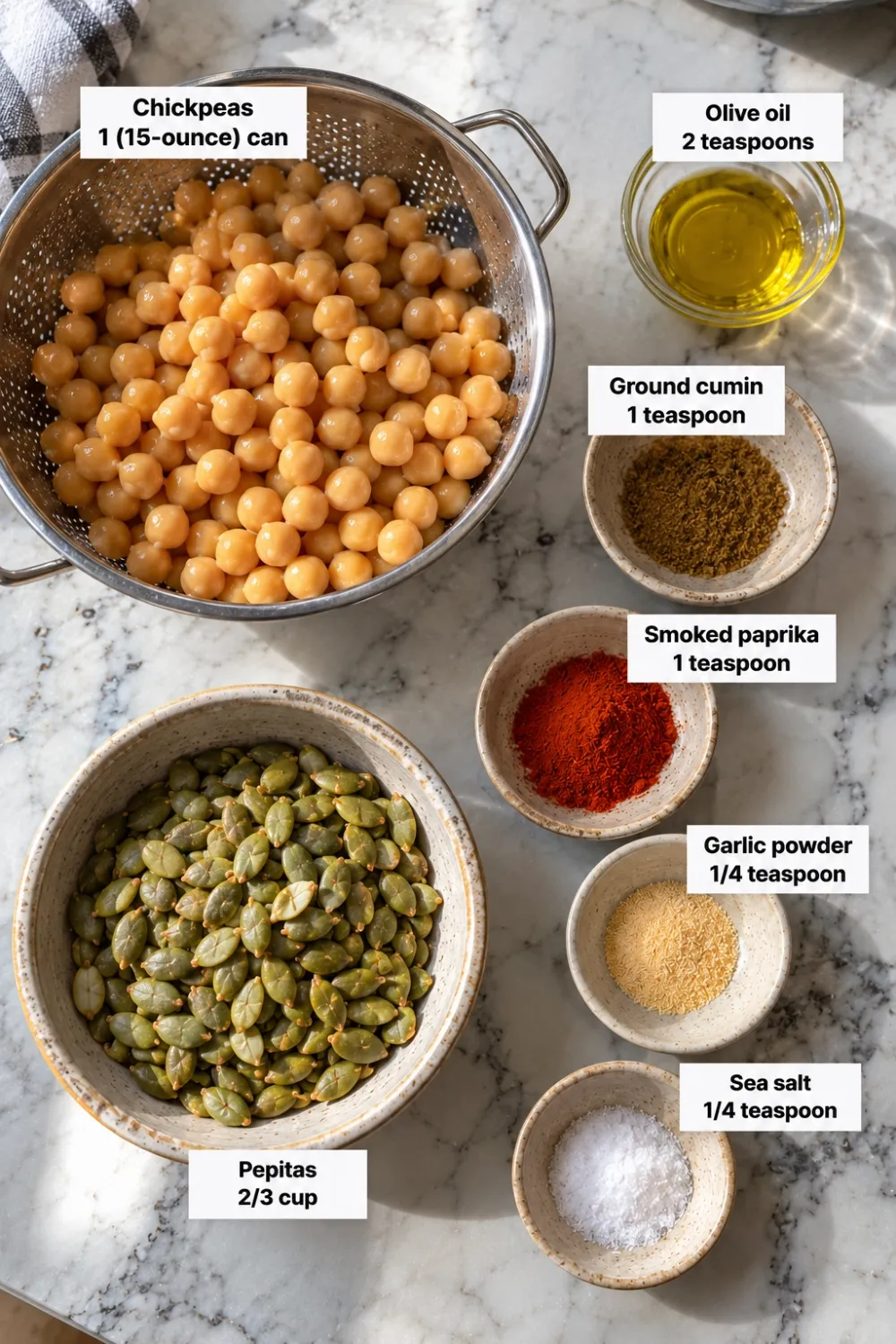
Spiced Roasted Chickpeas & Pepitas Crunch Mix Ingredients

The Most Important Step: Dry the Chickpeas

If roasted chickpeas repeatedly turn out chewy, the problem may start before the oven is even turned on.

Canned chickpeas contain surface moisture after rinsing. Pat them thoroughly dry with a clean towel or paper towels.

For an even drier surface:

  1. Spread the chickpeas out rather than leaving them in a pile.
  2. Pat them dry.
  3. Let them sit uncovered for several minutes.
  4. Remove only loose skins that come away easily.
  5. Season only after the surface is reasonably dry.

Do not rush this step.

The objective is to send chickpeas into the oven with as little surface moisture as practical.

How to Get Crisp Chickpeas Without Lots of Oil

The recipe uses three variables to build crunch:

Dry surface

Less surface moisture gives the oven more opportunity to develop a crisp exterior.

Open pan

Keep the chickpeas in one layer. If they are piled together, steam can accumulate between them.

Sufficient roasting time

Roast at 400°F for approximately 38 to 40 minutes, stirring once during the final third of cooking.

Start checking toward the end because canned chickpea size and moisture vary.

The chickpeas should look deeply roasted and feel crisp on the outside. Let them cool before making the final texture judgment.
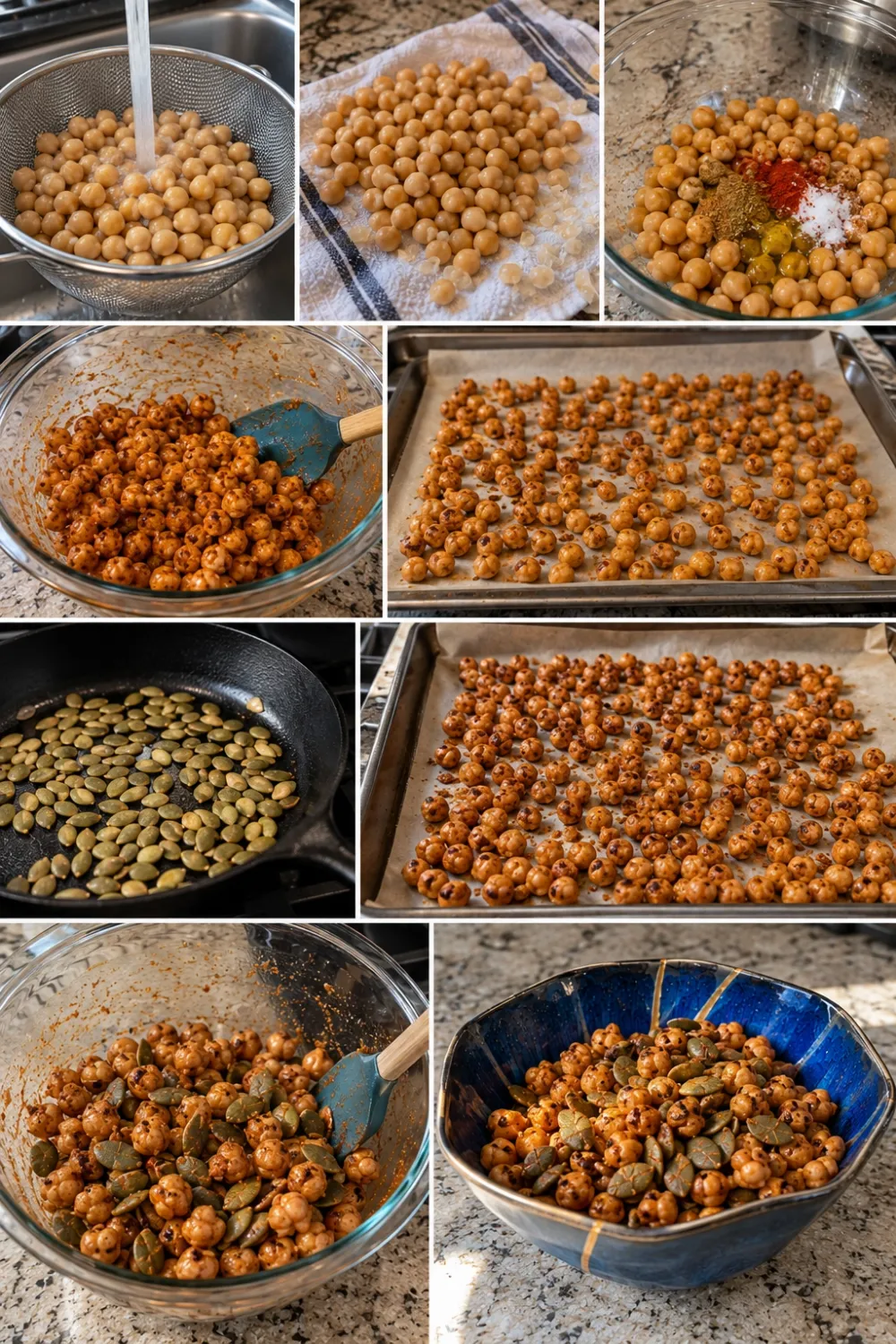
Spiced Roasted Chickpeas & Pepitas Preparation Process

Why the Pepitas Are Toasted Separately

It may seem easier to put the chickpeas and pepitas on the same pan for the entire roasting time.

That is not the best approach.

Chickpeas need a substantially longer roasting period than pepitas. The pepitas can toast quickly and can burn if exposed to the full chickpea cooking time.

A separate dry skillet gives you direct control.

Use medium-low heat, stir frequently, and remove the pepitas as soon as they become lightly golden and fragrant.

Is This Actually a High-Protein Snack?

The search strategy includes the keyword high protein roasted chickpea snack, but the recipe itself should be described accurately.

This recipe provides approximately 9 g of protein per serving based on the listed ingredients and standard food-composition estimates.

That is useful protein for a snack, but it is not comparable to a deliberately concentrated protein meal or shake.

The more defensible value proposition is the combination of:

  • crunch;
  • fiber;
  • plant protein;
  • pepitas;
  • portion flexibility;
  • simple preparation;
  • savory flavor.

That distinction helps keep the recipe useful without turning SEO terminology into an unsupported nutrition claim.

A Practical Portion for a Fiber-Rich Snack

The standard serving is approximately 1/3 cup.

That is not a medically established portion that will “prevent” gas or digestive symptoms. There is no universal amount that guarantees that result.

Chickpeas are legumes, and some people experience more gas after eating legumes or larger amounts of fiber. NIDDK notes that legumes and high-fiber foods can contribute to gas symptoms in some people and discusses smaller meals as one dietary strategy for some people with gas symptoms. (NIDDK)

If your usual diet is low in fiber, increasing fiber gradually may be more comfortable. NIDDK specifically recommends adding fiber gradually and identifies chickpeas among good sources of dietary fiber. (NIDDK)

For GLP-1 users, the useful takeaway is not “this portion prevents side effects.” It is simply that a smaller measured serving gives you an easier starting point for judging your own tolerance.

Can You Use It Instead of Croutons?

Yes.

The roasted chickpeas and pepitas work particularly well as a crunchy topping for:

  • tomato soup;
  • chicken soup;
  • lentil soup;
  • green salads;
  • grain bowls;
  • roasted vegetable bowls.

Add them shortly before eating so moisture from soup or dressing does not soften the crunch.

For another GLPIANS recipe focused specifically on pepitas, explore Roasted Garlic Pumpkin Seeds (Pepitas).

What About Travel and Work Snacks?

The dry texture makes this mix convenient to portion into a small container for a workday or short outing.

But there is an important distinction between portable and validated shelf-stable.

A homemade roasted chickpea mixture should not automatically be treated like a commercially packaged shelf-stable snack simply because it feels dry.

For short-term portability, keep the portion protected from moisture. If it will be carried alongside foods that require refrigeration, use an appropriate cooler and cold source.

USDA FSIS recommends keeping cold perishable foods at 40°F or below and limiting time in the 40°F–140°F danger zone. (Food Safety and Inspection Service)

How to Keep the Crunch After Storage

The biggest enemy is moisture.

Follow these steps:

  1. Cool the chickpeas completely.
  2. Cool the toasted pepitas completely.
  3. Combine only after both components are cool.
  4. Use a clean, dry container.
  5. Keep the container tightly closed.
  6. Avoid repeatedly opening the container in humid conditions.
  7. Re-crisp briefly in a 350°F oven when necessary.

Do not seal the mixture while it is still warm.

Warm food releases moisture into the enclosed container, and that moisture can migrate back onto the chickpeas.
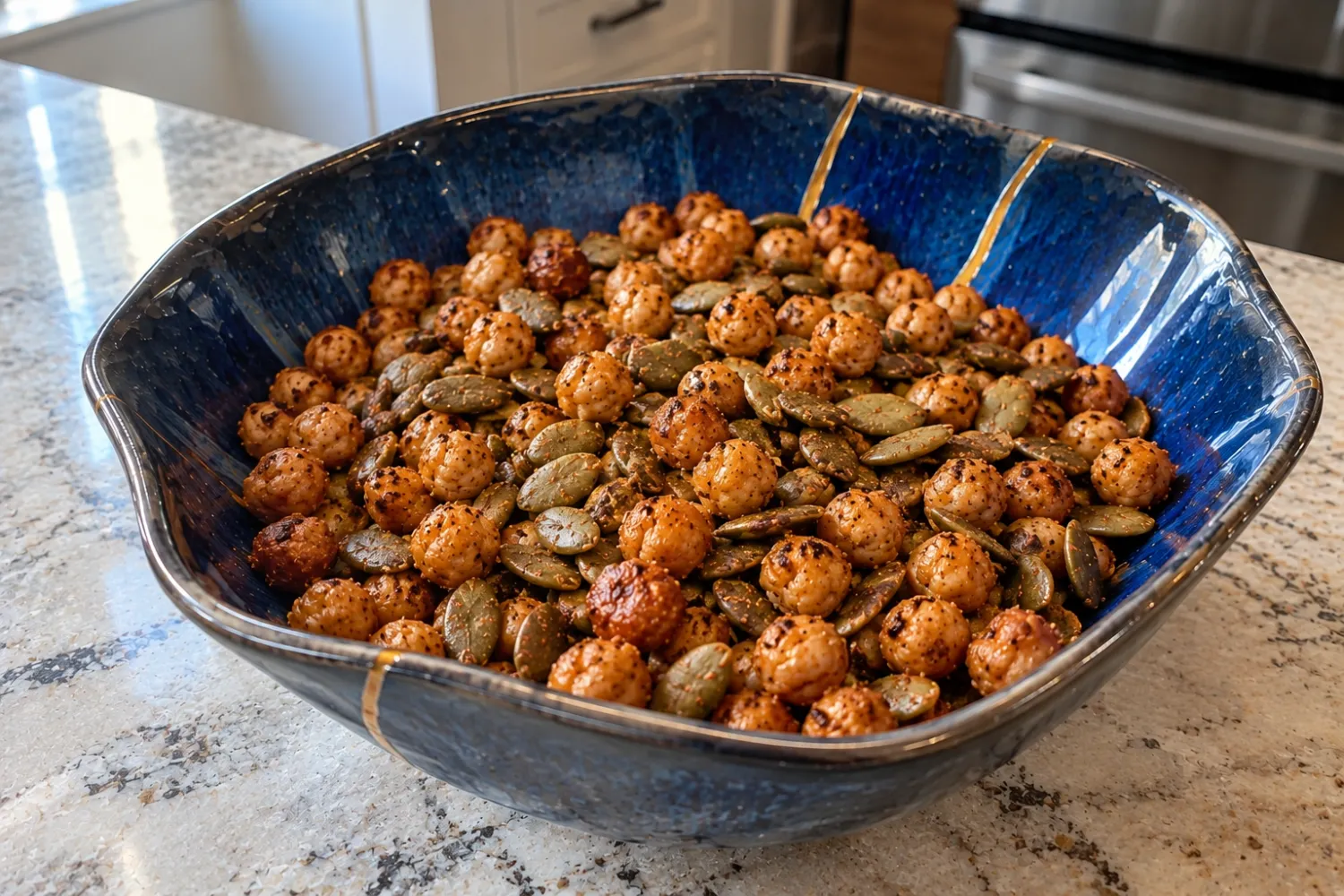
GLP-1 Snack

Spiced Roasted Chickpeas & Pepitas Crunch Mix

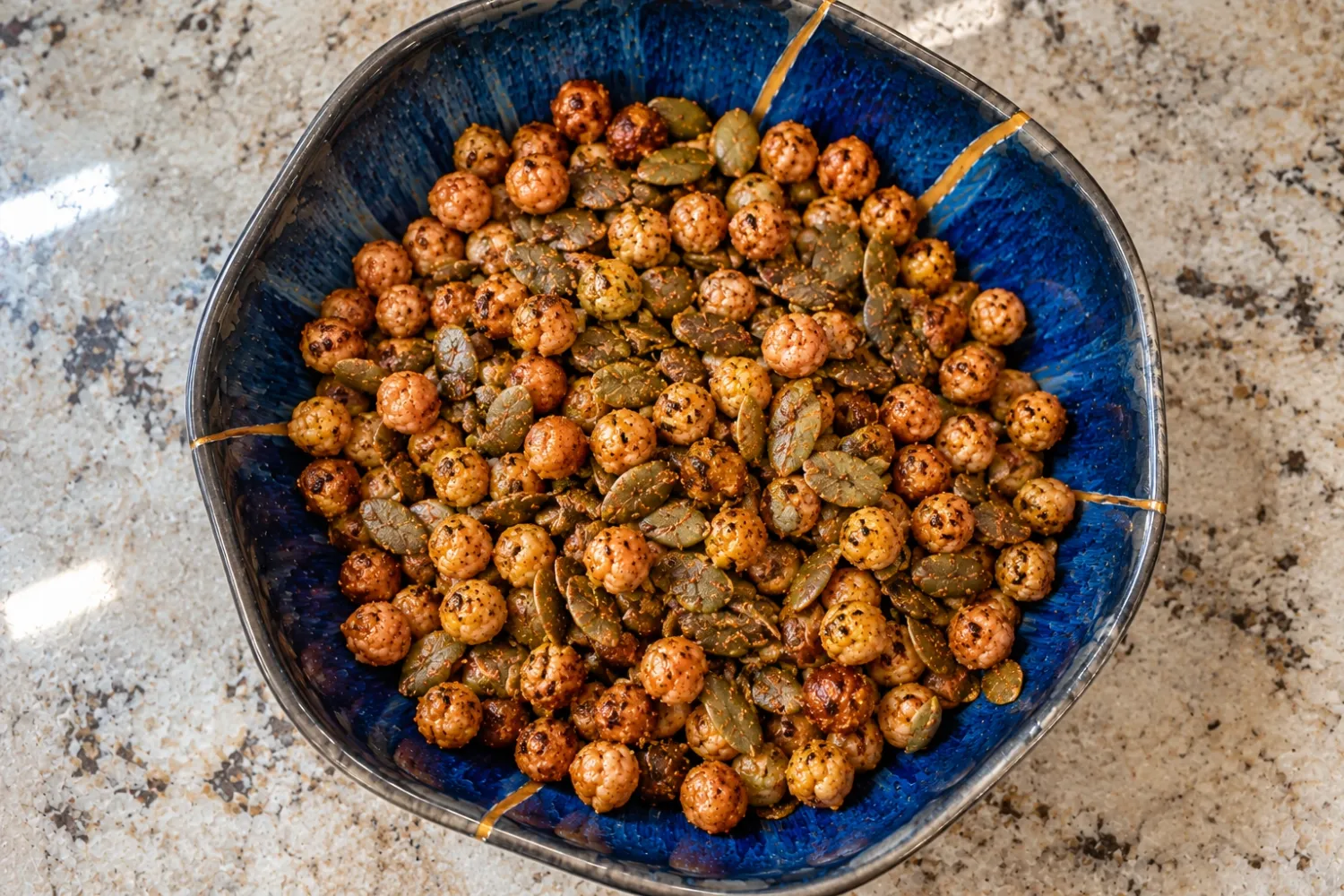
Crispy roasted chickpeas seasoned with cumin and smoked paprika, combined with toasted pepitas for a savory, crunchy snack with fiber and plant protein.

Crispy roasted chickpeas and toasted pepitas seasoned with cumin and smoked paprika in a bowl.
Prep Time 10 mins
Cook Time 40 mins
Total Time 50 mins
Servings
6
Yield About 2 cups
Serving Size About 1/3 cup
Course Snack

Ingredients

  • 1 (15-ounce) can no-salt-added chickpeas, drained, rinsed, and thoroughly dried (remove loose skins that come away easily)
  • 2 teaspoons extra-virgin olive oil
  • 1 teaspoon ground cumin
  • 1 teaspoon smoked paprika
  • 1/4 teaspoon garlic powder
  • 1/4 teaspoon fine sea salt
  • 2/3 cup raw, shelled pepitas, preferably unsalted (toasted separately)

Equipment Needed

Large rimmed sheet pan
Clean kitchen or paper towels
Mixing bowl
Spatula or spoon
Dry skillet
Measuring cups & spoons
Airtight storage container
Air fryer (Optional)

Instructions

  1. 1
    Preheat Oven & Prepare Pan Preheat the oven to 400°F. Line a large rimmed sheet pan with parchment paper if desired.
  2. 2
    Drain & Dry Chickpeas Thoroughly Drain and rinse the chickpeas thoroughly. Spread them over a clean kitchen towel or several layers of paper towels and pat them very dry. Leave them uncovered for 5 to 10 minutes if practical. Remove only the loose skins that come away easily.
  3. 3
    Season the Chickpeas Transfer the dried chickpeas to the sheet pan. Add the olive oil, cumin, smoked paprika, garlic powder, and sea salt. Toss thoroughly so the chickpeas are evenly coated.
  4. 4
    Initial Roasting Phase Spread the chickpeas into a single layer with space between them. Roast for 30 minutes.
  5. 5
    Stir & Finish Roasting Stir the chickpeas or shake the pan, then roast for another 8 to 10 minutes. Begin checking at 8 minutes because chickpea size and moisture can change the final roasting time. The finished chickpeas should be deeply roasted and crisp on the outside.
  6. 6
    Toast Pepitas Separately While the chickpeas roast, place the pepitas in a dry skillet over medium-low heat. Toast for 3 to 5 minutes, stirring frequently, until lightly golden and fragrant. Remove from the heat immediately if they begin browning rapidly.
  7. 7
    Initial Chickpea Cooling Remove the chickpeas from the oven and let them cool on the sheet pan for about 5 minutes. They should become firmer as they cool.
  8. 8
    Combine Components Combine the roasted chickpeas and toasted pepitas.
  9. 9
    Cool Completely Before Storing Cool the mixture completely before transferring it to a clean, dry storage container. Do not seal the mixture while it is still warm because trapped moisture can soften the crunch.
  10. 10
    Portion & Serve Serve approximately 1/3 cup per portion.

Air-Fryer Method Variation

  • Air-fry the thoroughly dried, seasoned chickpeas at 390°F for approximately 12 to 16 minutes, shaking the basket every 4 to 5 minutes.
  • Toast the pepitas separately in a dry skillet as directed above.
  • Air-fryer performance varies, so begin checking the chickpeas before the maximum time.

Recipe Notes & Success Tips

  • Thorough drying: The single most important preparation step for achieving genuinely crisp chickpeas.
  • Removing skins: Removing loose skins improves surface exposure, but stripping every single skin is unnecessary.
  • Pan spacing: Keep chickpeas in a single layer and avoid overcrowding the pan to prevent steaming.
  • Cooling dynamics: Chickpeas can seem slightly softer immediately out of the oven and firm up substantially as they cool.
  • Separate pepita timing: Pepitas need far less cooking time than chickpeas and will burn if roasted on the same pan for 40 minutes.
  • Sodium control: Use unsalted pepitas when possible so the sodium level remains closer to the stated estimate.
  • Troubleshooting soft texture: If chickpeas remain chewy after cooling, return them to a 400°F oven for 5 additional minutes and check again.
  • Storage nature: This is a crunchy homemade snack, not a commercially validated shelf-stable food product.
  • Fiber tolerance: Individual tolerance to legumes and higher-fiber foods varies.

Estimated Nutrition Facts

Per Serving (1/6 of recipe, approx. 1/3 cup)
Calories ~150 kcal
Protein ~9 g
Carbohydrates ~13 g
Dietary Fiber ~4 g
Total Fat ~9 g
Total Sugar ~2 g
Sodium ~115 mg

Serving & Topping Ideas

  • Standalone Crunch: Enjoy ~1/3 cup as a satisfying, pre-portioned savory snack.
  • Soup Crunch Topper: Sprinkle over tomato, chicken, or lentil soup right before serving.
  • Crouton Alternative: Toss into green salads or grain bowls for gluten-free crunch.
  • Protein Pairing: Pair with Greek yogurt, cottage cheese, or eggs for a larger meal.
Top view of spiced roasted chickpeas and toasted pepitas crunch mix.

Substitutions

  • Regular Canned Chickpeas: Use same amount; reduce added salt as canned sodium is higher.
  • Avocado Oil: Equal replacement for olive oil with a neutral flavor profile.
  • Sweet Paprika: Replaces smoked paprika for a milder, non-smoky result.
  • Ground Coriander: Equal swap for cumin for a warm, citrusy flavor.
  • Roasted Pepitas: Skip skillet toasting if seeds are pre-roasted.
  • Onion Powder: Equal swap for garlic powder if preferred.

Do not substitute shelled pepitas with whole in-shell pumpkin seeds without adjusting measurements.

Storage & Reheating

Storage: Cool completely before storing in a clean, dry, airtight container protected from humidity.

Refrigeration: Allowed for extended storage, though humidity may soften texture slightly. FSIS recommends keeping refrigerated foods at 40°F or below. (FSIS)

Reheating: Spread on a sheet pan at 350°F for 5–8 minutes to restore crispness. Avoid microwaving.

Make-Ahead & Prep

  • Small-Batch Prep: Excellent for small-batch weekly snack prep.
  • Cool First: Never combine or pack warm ingredients.
  • Portioning: Pre-portion into ~1/3-cup sealed containers for portable snacks.
  • Maximum Crunch: Prepare smaller 2-cup batches for peak crisp texture.
  • On-the-Go: Keep in a dry container; use ice packs if traveling alongside perishable foods.

Food Safety & Handling Practices

  • Begin with properly stored canned chickpeas and practice clean handwashing.
  • Drain and rinse canned legumes thoroughly prior to drying and preparation.
  • Cool the cooked snack completely before sealing in containers to prevent condensate buildup.
  • Do not assume home roasting creates commercial shelf stability.
  • When transporting alongside perishable foods, follow USDA FSIS guidelines by maintaining temperatures at 40°F or below and limiting time in the 40°F–140°F danger zone. (USDA FSIS, Ask USDA)

GLP-1 Practical Notes

The strongest GLP-1 relevance here is practical rather than medical.

The recipe provides a crunchy texture in a relatively small portion, which can be useful for someone who wants a savory snack without automatically preparing a full meal.

A practical approach is to:

  • start with a small serving;
  • eat slowly;
  • pay attention to your own tolerance;
  • use the mixture as a topping when you want crunch;
  • pair it with another protein-containing food when you need a more substantial snack;
  • avoid assuming that a larger portion is automatically better because the ingredients contain fiber.

If chickpeas or other legumes tend to cause digestive discomfort for you, portion size and gradual fiber increases may matter. NIDDK notes that legumes and higher-fiber foods can increase gas symptoms for some people. (NIDDK)

Common Mistakes

The chickpeas are chewy

The chickpeas may not have been dry enough before roasting, the pan may have been overcrowded, or the batch may simply need additional roasting.

The pepitas are bitter

They were probably toasted too aggressively. Lower the heat and stir frequently.

The snack becomes soft

Moisture is usually the issue. Cool the ingredients fully and store them in a dry, tightly sealed container.

The snack feels too rich

Pepitas are nutrient-dense and contain substantial fat. Measure the serving rather than eating directly from the container.

The snack causes gas

Chickpeas are legumes. Some people experience more gas from legumes or higher-fiber foods. A smaller portion may be more comfortable, and NIDDK recommends gradually increasing fiber rather than making a sudden large increase. (NIDDK)

Turn the Mix Into a Crunch Component

This recipe does not have to function only as a standalone snack.

A small amount can add textural contrast to a soft food.

Try it over:

  • soup;
  • salad;
  • a grain bowl;
  • roasted vegetables;
  • a small protein-focused meal.

This gives the recipe another practical use without changing its core identity.

A More Accurate Way to Think About “Chip Replacement”

This is not meant to taste exactly like potato chips.

Instead, it addresses one specific part of the chip experience: crunchy, salty, savory texture.

That makes the recipe more useful when the craving is primarily about texture rather than expecting a chickpea snack to reproduce a packaged potato chip.

Frequently Asked Questions

How do you make roasted chickpeas stay crunchy?

Dry the chickpeas thoroughly, roast them in a single layer at 400°F, avoid overcrowding the pan, and let them cool before judging the final texture. Store the cooled mixture in a dry container.

What portion should I start with?

The recipe uses approximately 1/3 cup as its standard serving. That is a recipe serving, not a medically established portion that prevents gas or other symptoms. Individual tolerance varies.

Can roasted chickpeas cause gas?

Yes. Chickpeas are legumes, and NIDDK notes that legumes and higher-fiber foods can contribute to gas symptoms in some people. (NIDDK)

Can I add this crunch mix to soup?

Yes. Add it immediately before eating so the chickpeas remain crunchy.

Can I use it instead of croutons?

Yes. It works particularly well over soup, salads, grain bowls, and roasted vegetables.

Can I make this in an air fryer?

Yes. Air-fry the thoroughly dried, seasoned chickpeas at approximately 390°F for 12 to 16 minutes, shaking every 4 to 5 minutes. Toast the pepitas separately.

Why are the pepitas toasted separately?

Pepitas toast much faster than chickpeas. Separate toasting helps develop their flavor without exposing them to the chickpeas' longer roasting time.

Is this recipe shelf-stable?

It should not be represented as a commercially validated shelf-stable food. It is dry and convenient to portion, but home preparation does not establish a validated room-temperature shelf life.

Is this a high-protein snack?

It provides approximately 9 g protein per serving based on the final recipe and standard nutrition estimates. That is meaningful protein for a snack, but the recipe should not be represented as an exceptionally concentrated protein source.

Are pepitas a good source of magnesium?

Yes. NIH's Office of Dietary Supplements lists roasted pumpkin seeds as a rich food source of magnesium, with 1 ounce providing 156 mg in its selected-food table. (Office of Dietary Supplements)

Looking for Another Crunchy Snack?

If you like the toasted pumpkin-seed crunch in this recipe, explore another GLPIANS pepita snack for a different savory flavor direction.

Explore Another Crunchy Pepita Snack →

For readers who want a broader look at practical GLP-1 habits, the free audit provides a separate next step.

Take the Free GLP-1 Success Audit
Action completed!