



High-Protein Cottage Cheese Flatbread Recipe | GLP-1 Friendly

4.9 ★
0 people reviewed 🎉 Thanks for review!
Lauren Hayes
Written By Lauren Hayes ✓
Lauren Hayes
Recipe Developer & Culinary Editor

Lauren develops and reviews GLPIANS recipes with a focus on ingredient accuracy, cooking technique, texture, timing, portioning, and reliable home-kitchen execution.

Melissa Grant, MS, RDN
Reviewed By Melissa Grant, MS, RDN ✓
Melissa Grant, MS, RDN
Registered Dietitian Nutritionist

Melissa reviews GLPIANS content for nutrition accuracy, responsible GLP-1 framing, portion guidance, and evidence-based communication.

Daniel Harper, MPH
Fact Checked By Daniel Harper, MPH ✓
Daniel Harper, MPH
Food Safety & Health Fact Checker

Daniel reviews GLPIANS content for food-safety accuracy, including cooking temperatures, food handling, storage, reheating, and source-backed safety guidance.

A High-Protein Cottage Cheese Flatbread for Bread and Bagel Cravings

If you want a small, protein-forward alternative to bread, this Blended Cottage Cheese Everything Bagel Flatbread turns cottage cheese and one egg into a thin baked flatbread with a savory bagel-style flavor.

The recipe makes one approximately 6 × 8-inch flatbread, so there is no need to bake a large sheet and divide it later. Blend the cottage cheese and egg until completely smooth, add baking powder and Everything Bagel seasoning, spread the mixture evenly on parchment, and bake until set.

The result is tender and flexible enough for a modest sandwich or wrap when cooled briefly.

Why This Cottage Cheese Flatbread Works

Cottage cheese is useful here because it contributes both moisture and protein while creating the creamy base needed for a flour-free batter.

The egg provides additional protein and helps the baked mixture set. Baking powder provides a small amount of lift, while Everything Bagel seasoning supplies onion, garlic, sesame, poppy-seed, and savory seasoning notes without requiring a long ingredient list.

The important distinction is that this recipe is not trying to imitate yeast bread exactly. It is a compact baked flatbread designed to provide some of the functionality of bread while using a very short ingredient list.

How to Get Rid of Cottage Cheese Curds

The most important technique is the blending step.

Do not simply whisk the cottage cheese and egg together by hand if you want a smooth flatbread. Cottage-cheese curds can remain visible and create an uneven texture after baking.

Instead, blend the cottage cheese and egg for approximately 30–60 seconds until the mixture looks creamy and uniform. Scrape down the blender or processor once if necessary.

Then add the baking powder and seasoning and pulse briefly.

That creates a much more consistent batter before it reaches the oven.

The Single-Serving Size Is Intentional

Many cottage cheese flatbread recipes are designed around a large sheet-pan preparation. This version takes a different approach.

The base recipe makes one flatbread approximately 6 × 8 inches.

That makes the recipe easier to portion and gives you a defined starting point for a small sandwich or wrap rather than requiring you to estimate how much of a large batch constitutes one serving.

For someone who prefers smaller meals, the entire flatbread can also be cut into smaller portions depending on appetite and what is served with it.

This does not mean the recipe is medically appropriate for every person taking a GLP-1 medication. Appetite, tolerance, dietary needs, and medical circumstances vary from person to person.

Is Cottage Cheese "Optimal" for GLP-1 Nutrition?

There is no single food that is universally optimal for people using GLP-1 medications.

Cottage cheese is useful in this recipe for a more practical reason: it provides protein in a relatively compact ingredient, and blending it creates a smooth base that can be baked into a bread-like format.

That combination makes it particularly useful for people who are looking for smaller portions or who simply want a high-protein way to recreate a bread or bagel experience.

The goal is not to claim that cottage cheese treats medication effects, guarantees satiety, or guarantees weight loss. It is simply a practical recipe choice that fits the user problem this recipe is designed to solve.

For another small-format recipe built around cottage cheese and eggs, see the high-protein cottage cheese egg bites with turkey bacon.

How Much Protein Does One Flatbread Provide?

The complete flatbread provides approximately 19 grams of protein per serving, based on standard reference values for the listed ingredients.

Most of that protein comes from the cottage cheese and egg.

Because brands vary, particularly in cottage cheese nutrition and Everything Bagel seasoning sodium, the recipe's nutrition should be considered an estimate rather than a substitute for checking the Nutrition Facts panel on the products you actually use.

What Makes This Different From a Traditional Bagel?

A traditional bagel is a yeast-raised bread product with a substantially different ingredient structure, cooking process, texture, and carbohydrate profile.

This flatbread is not intended to reproduce a traditional bagel one-for-one.

Instead, it addresses a similar craving from a different direction:

  • creamy cottage cheese provides the protein-rich base;
  • egg provides structure;
  • baking powder provides light lift;
  • Everything Bagel seasoning creates the familiar savory bagel flavor;
  • the thin shape provides a surface that can hold modest sandwich or wrap fillings.

That distinction is important because realistic expectations make the recipe more useful.

The Best Way to Bake It

Spread the batter evenly rather than making the center thick and the edges extremely thin.

An approximately 6 × 8-inch rectangle about 1/4 inch thick gives the single serving a practical size while helping it bake at a reasonably consistent rate.

Bake at 400°F for approximately 20–25 minutes.

The finished flatbread should look set rather than wet in the center, with lightly browned edges. Because it contains egg, the most reliable safety check is an internal temperature of 160°F. USDA guidance specifically recommends 160°F for dishes containing eggs. USDA egg-safety guidance

Let It Cool Before You Fill It

Do not immediately try to fold the flatbread straight from the oven.

Give it about five minutes on the pan, peel it from the parchment, and allow another minute or two before filling.

This short rest gives the structure time to settle and makes handling easier.

It is still a tender baked flatbread, so use reasonable fillings rather than treating it like a highly elastic flour tortilla.

Simple Ways to Use It

The most natural use is as a small sandwich or breakfast wrap.

Try it with:

  • sliced turkey and a small amount of avocado;
  • scrambled or sliced egg with vegetables;
  • a thin layer of cottage-cheese-based spread;
  • turkey with cucumber and tomato;
  • a small amount of smoked salmon with cucumber.

Keep the filling proportional to the flatbread. Overloading it can make the flatbread difficult to fold and can overwhelm its relatively delicate structure.

Storage and Reheating

Because the recipe contains both egg and dairy, refrigerate leftovers rather than storing them at room temperature.

USDA guidance recommends promptly refrigerating cooked egg dishes and using them within 3–4 days. (Ask USDA)

For the best texture, reheat the flatbread briefly in a dry skillet over medium-low heat. A short microwave reheat also works when speed matters, but long microwave heating can make the flatbread firmer.

A Practical GLP-1 Recipe, Not a Medical Claim

The strongest reason to consider this recipe in a GLP-1-focused recipe collection is practical rather than medical.

People using GLP-1 medications can have changing appetite, food preferences, meal sizes, and tolerance. A recipe that provides a clearly defined single portion can make it easier to experiment with an amount that works for the individual.

This flatbread also addresses a specific food problem: missing bread or bagel-style foods.

Instead of telling someone to eliminate the craving, the recipe offers another format that can be used as a bread substitute.

Individual tolerance still varies, and anyone with medical or dietary restrictions should follow advice from their healthcare professional.
GLPIANS
Professional Recipe Collection
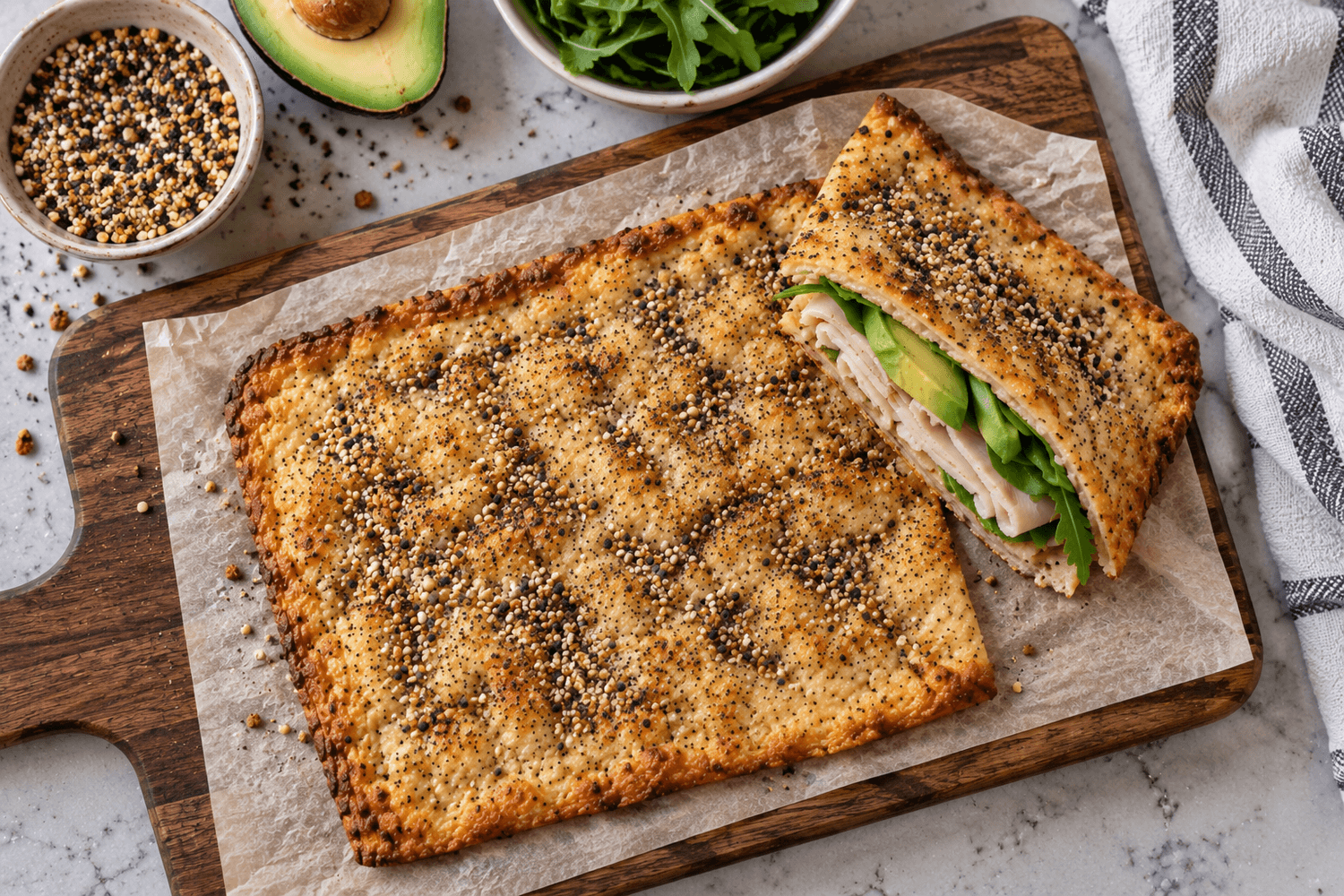
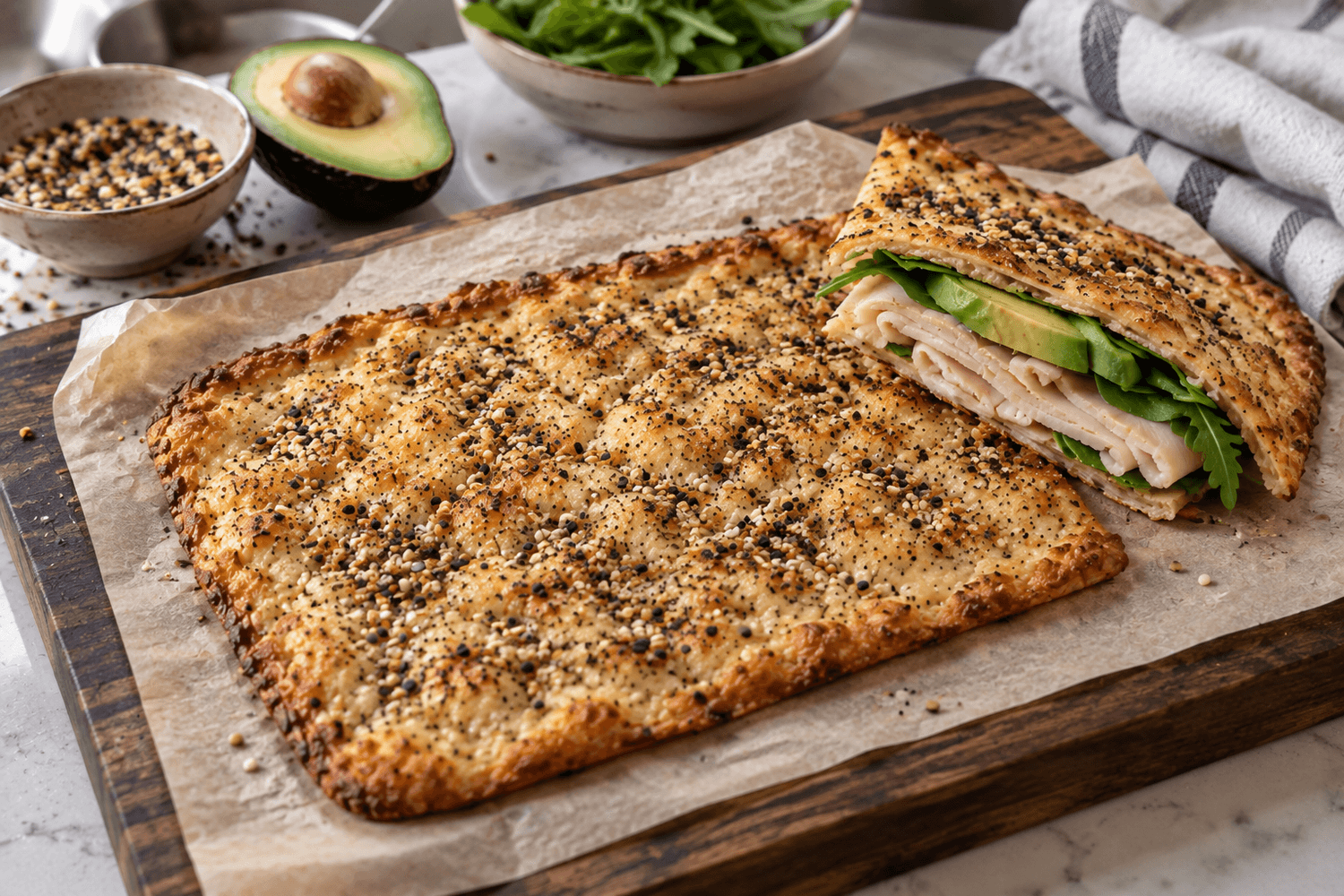
Single-serving blended cottage cheese Everything Bagel flatbread with lightly golden edges on parchment.
HIGH-PROTEIN FLATBREAD

Blended Cottage Cheese Everything Bagel Flatbread

A single-serving baked flatbread made by blending cottage cheese and egg until completely smooth, then seasoning it with Everything Bagel seasoning and baking it into a thin, flexible bread alternative.

Servings
1
Yield 1 flatbread
Prep Time 5 mins
Cook Time 25 mins
Total Time 30 mins
Course Breakfast, Snack, Lunch
Cuisine American

Ingredients

Ingredient Notes:
  • Cottage cheese should be refrigerated and used directly from the container; no draining is required.
  • Egg should be large.
  • Baking powder should be fresh enough to provide reliable lift.
  • Everything Bagel seasoning should be used according to the listed quantity (sodium content varies substantially by brand).

Equipment

Blender or food processor
Small rimmed baking sheet
Parchment paper
Small offset spatula or spoon
Food thermometer

Instructions

  • 1
    Heat the oven. Preheat the oven to 400°F. Line a small rimmed baking sheet with parchment paper.
  • 2
    Blend until completely smooth. Add the cottage cheese and egg to a blender or food processor. Blend for about 30–60 seconds, scraping down the sides once if needed, until the mixture is creamy and no obvious cottage-cheese curds remain. This step is important for a smoother, more bread-like finished texture.
  • 3
    Add the dry ingredients. Add the baking powder and Everything Bagel seasoning. Pulse or blend briefly, just until evenly incorporated. Do not overmix after the baking powder is distributed.
  • 4
    Spread into the single-serving shape. Pour the batter onto the center of the prepared parchment. Using the back of a spoon or small offset spatula, spread it into an approximately 6 × 8-inch rectangle with an even thickness of about 1/4 inch. Keep the thickness as uniform as possible; very thin edges can brown before the center sets.
  • 5
    Bake. Bake at 400°F for 20–25 minutes, until the flatbread is fully set, lightly golden around the edges, and no longer wet-looking in the center. Because this recipe contains egg, verify that the center reaches 160°F with a food thermometer when checking for food safety.
  • 6
    Cool before folding. Remove the pan from the oven and let the flatbread cool on the parchment for 5 minutes. Carefully peel it from the parchment. Allow it to rest for another 1–2 minutes before folding or filling.
  • 7
    Serve. Use the flatbread warm as a small sandwich base, breakfast wrap, or bread substitute. Avoid overfilling it, especially if a smaller portion is preferred.

Recipe Notes

  • Smooth texture is the key technique: Blend the cottage cheese and egg until genuinely smooth before baking. Short blending can leave visible curds and produce a less uniform flatbread.
  • Spread evenly: A consistent approximately 1/4-inch thickness is more important than achieving a perfectly rectangular shape.
  • Do not expect wheat-bread elasticity: This is a tender baked flatbread, not a yeast bread. It can be folded and used as a small wrap when handled after cooling, but it is not designed for very heavy fillings.
  • Let it cool briefly before folding: The structure becomes easier to handle after the initial cooling period.
  • Seasoning varies by brand: Everything Bagel seasoning can differ considerably in salt and sodium content, so the nutrition estimate is not brand-exact.
  • Single-serving design: The recipe intentionally makes one flatbread rather than a large sheet-pan batch, making portioning straightforward.

Nutrition Facts

Estimated nutrition per serving (1 complete flatbread):
NutrientAmount
Calories~180 kcal
Protein~19 g
Carbohydrates~7 g
NutrientAmount
Fat~8 g
Fiber~0 g
Sugar~4 g
NutrientAmount
Sodium~570 mg

Substitutions

  • 2% cottage cheese: Low-fat cottage cheese (similar structure) or full-fat cottage cheese (slightly richer).
  • Everything Bagel seasoning: Unsalted Everything Bagel-style seasoning for lower sodium. Alternatively, use 1/2 tsp dried onion + 1/4 tsp sesame seeds + 1/4 tsp poppy seeds.
  • Do NOT substitute flour for the cottage cheese; it fundamentally changes the structure.

Storage

Cool completely. Refrigerate in an airtight container for up to 3–4 days. Because the recipe contains egg and dairy, do not leave at room temperature for extended periods.

Reheating

Skillet: Warm in a dry nonstick skillet over medium-low heat for 30–60 seconds per side.
Microwave: 10–15 seconds; check and add short intervals if needed. Do not overheat.

Make Ahead / Meal Prep

  • The flatbread can be baked ahead, cooled completely, refrigerated, and reheated when needed.
  • For individual meal prep, store one flatbread per container or separate flatbreads with parchment if preparing multiple batches.
  • For best texture, use refrigerated flatbreads within the recommended 3–4-day storage window.

Food Safety

  • Because this recipe contains raw egg, bake the flatbread until the center reaches 160°F.
  • Use a food thermometer when checking the center for the most reliable safety confirmation.
  • Refrigerate leftovers promptly rather than leaving them at room temperature.
  • Use refrigerated leftovers within 3–4 days based on USDA guidance for dishes containing eggs.

Serving Suggestions

The flatbread is neutral enough for savory fillings, while the seasoning provides a recognizable bagel-style flavor:

  • Fill with sliced turkey and a small amount of avocado for a simple breakfast or lunch wrap.
  • Use as a base for a small egg-and-vegetable breakfast sandwich.
  • Spread with whipped cottage cheese or another compatible high-protein spread.
  • Cut into smaller pieces and serve alongside a protein-rich dip.
  • Keep fillings modest if the goal is a smaller-volume meal to prevent overloading the delicate structure.
Side view of the baked cottage cheese flatbread functioning as a wrap base

GLP-1 Practical Notes

This flatbread is best positioned as a small, protein-forward bread alternative, not as a medical food.

Its single-serving format makes portioning simple. The recipe can also be cut into smaller pieces if the full flatbread feels larger than desired.

Because cottage cheese and Everything Bagel seasoning can both contribute sodium, readers who need to manage sodium intake should check the Nutrition Facts labels on their chosen products.

Common Mistakes to Avoid

Leaving the cottage cheese chunky

This produces visible curds and a less uniform texture.

Fix: Blend the cottage cheese and egg until completely smooth.

Spreading the batter too thin

Very thin edges can brown or dry before the center has fully set.

Fix: Aim for an approximately 6 × 8-inch rectangle with relatively even thickness.

Trying to fold it immediately

A very hot flatbread is more delicate.

Fix: Let it cool for several minutes before folding.

Overfilling the flatbread

The structure is more delicate than a conventional flour tortilla.

Fix: Use a modest amount of filling and fold gently.

Treating it like traditional bread

This recipe creates a tender baked flatbread, not a yeast-raised bagel.

Fix: Use it for the functions it performs well: small sandwiches, breakfast wraps, snack portions, and bread-style cravings.

Portion Flexibility

The stated nutrition is calculated for the complete one-flatbread recipe.

If you eat only half, the nutrition values are approximately half as well, assuming the flatbread is divided evenly.

That flexibility is useful because the recipe does not require the eater to consume a predetermined amount simply because the recipe was designed as one serving.

Frequently Asked Questions

Is cottage cheese good for making high-protein flatbread?

Yes. Cottage cheese supplies protein and moisture while creating a smooth base when blended with egg. In this recipe, it allows the flatbread to be made without wheat flour.

How do you make cottage cheese flatbread without visible curds?

Blend the cottage cheese and egg together for approximately 30–60 seconds until completely smooth before adding the baking powder and seasoning.

Is this cottage cheese flatbread gluten-free?

The recipe contains no wheat or gluten-containing grain ingredients as written. However, ingredients such as Everything Bagel seasoning can vary by manufacturer, so anyone requiring strict gluten avoidance should verify the specific product's labeling and cross-contact information.

How much protein is in one cottage cheese flatbread?

This recipe provides approximately 19 grams of protein per complete flatbread, based on standard reference values and the listed ingredient quantities.

Can I make the flatbread larger?

The batter can be spread into a different shape, but changing the dimensions changes the thickness and therefore the baking behavior. For the most predictable result, use the approximately 6 × 8-inch target shape.

Can I use this as a sandwich wrap?

Yes, for modest fillings. Let it cool briefly before folding, and avoid overfilling because the flatbread is more delicate than a traditional flour tortilla.

Can I make it ahead?

Yes. Bake it ahead, cool it completely, refrigerate it in an airtight container, and use it within 3–4 days.

Why is my flatbread not flexible?

The most common causes are overbaking, spreading the batter too thin, or trying to fold it while it is extremely hot. Keep the batter evenly thick and begin checking the flatbread toward the end of the stated baking range.

Explore More High-Protein Cottage Cheese Recipes

If cottage cheese works well for you, explore another small-format GLPIANS recipe built around cottage cheese and eggs.

View Cottage Cheese Egg Bites
Link copied to clipboard!