


GLP-1 High-Protein White Bean Alfredo Chicken Bowl

4.9 ★
0 people reviewed 🎉 Thanks for review!
Lauren Hayes
Written By Lauren Hayes ✓
Lauren Hayes
Recipe Developer & Culinary Editor

Lauren develops and reviews GLPIANS recipes with a focus on ingredient accuracy, cooking technique, texture, timing, portioning, and reliable home-kitchen execution.

Melissa Grant, MS, RDN
Reviewed By Melissa Grant, MS, RDN ✓
Melissa Grant, MS, RDN
Registered Dietitian Nutritionist

Melissa reviews GLPIANS content for nutrition accuracy, responsible GLP-1 framing, portion guidance, and evidence-based communication.

Daniel Harper, MPH
Fact Checked By Daniel Harper, MPH ✓
Daniel Harper, MPH
Food Safety & Health Fact Checker

Daniel reviews GLPIANS content for food-safety accuracy, including cooking temperatures, food handling, storage, reheating, and source-backed safety guidance.

GLPIANSDinner · High-Protein Pasta Bowl

Creamy White Bean Alfredo With Shredded Chicken

This GLP-1 high protein white bean alfredo combines tender shredded chicken, mini pasta shells, Parmesan, garlic, and a creamy cannellini-bean sauce.

The defining technique is simple: blend the beans with chicken broth, garlic, Parmesan, and a small amount of olive oil until smooth, then gently warm the sauce and toss it with the cooked pasta and chicken.

The result is an Alfredo-style pasta dinner without making heavy cream the primary ingredient in the sauce.

For another GLPIANS recipe built around a lighter Alfredo-style dinner, explore Light Chicken Alfredo with Broccoli.

Jump to recipe

Why White Beans Work in an Alfredo-Style Sauce

Cannellini beans have a soft texture that becomes smooth when thoroughly blended.

That makes them useful for creating body in a sauce.

Here, the beans work together with:

  • Chicken broth for moisture

  • Parmesan for salty, savory flavor

  • Garlic for aromatic depth

  • A small amount of olive oil for additional richness

  • Pasta water for final consistency adjustment

The goal is not to make the beans taste like cream.

The goal is to use their blended texture to create a thick sauce that coats the pasta.
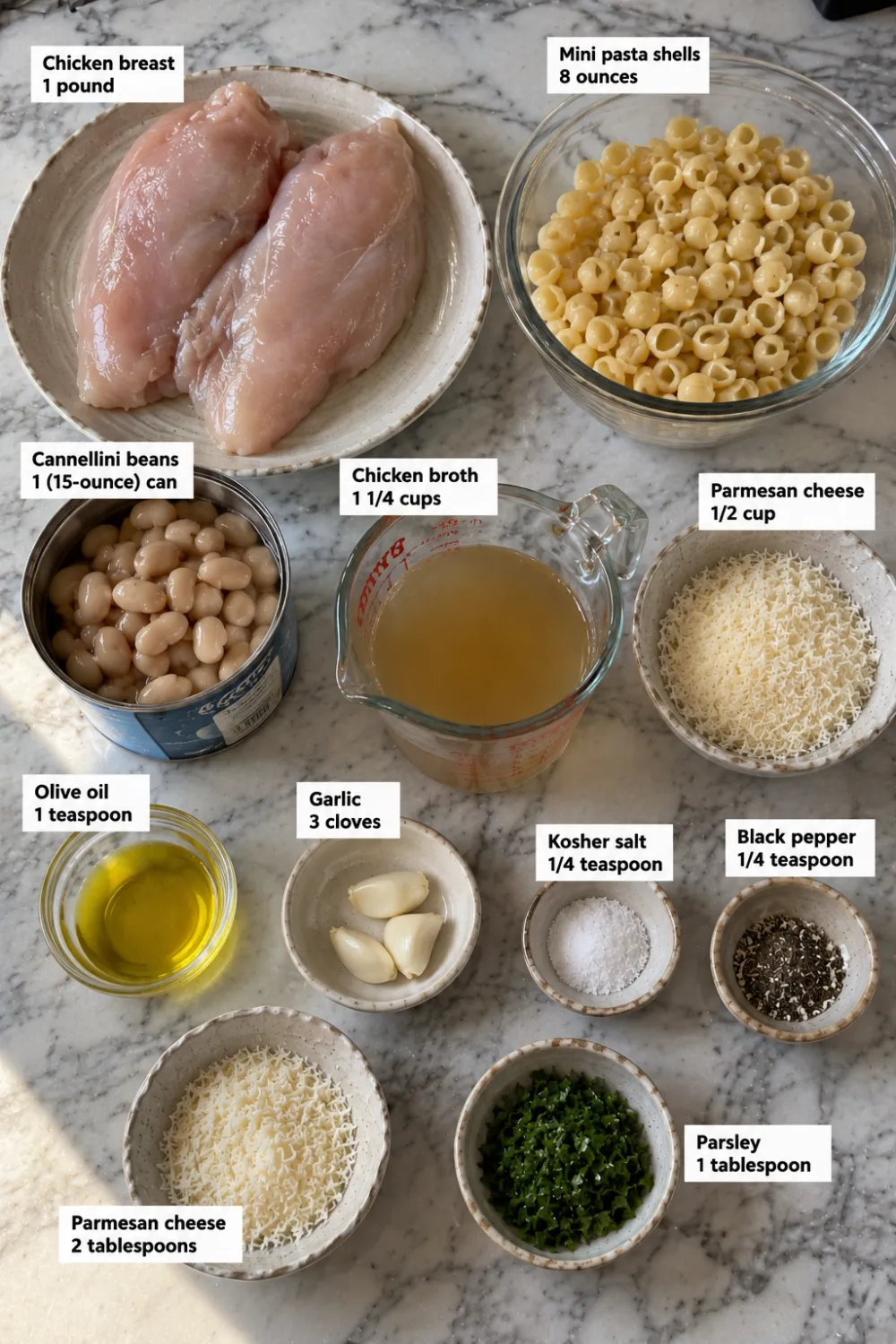
Recipe ingredients with names for the white bean Alfredo chicken bowl.

Why This Recipe Is Relevant to GLP-1 Meal Planning

There is no universal GLP-1 diet, and a recipe should not be described as medically capable of preventing nausea, reflux, vomiting, delayed gastric emptying, or other medication-related symptoms.

The practical GLP-1 connection here is portion flexibility and meal composition.

Some people experiencing delayed gastric emptying are advised by healthcare professionals to eat smaller meals and may be advised to choose foods lower in fat and fiber depending on their individual situation. NIDDK specifically notes that dietary recommendations for gastroparesis can include smaller, nutritious meals and, depending on the person, lower-fat and lower-fiber foods. (NIDDK)

That does not mean this recipe is automatically appropriate for anyone experiencing those symptoms.

In fact, cannellini beans contribute fiber, so someone who has specifically been advised to restrict fiber may need a different meal.

The useful feature is that the completed recipe can be divided into smaller portions rather than requiring everyone to eat the entire baseline serving.

The Sauce Is Creamy Without Heavy Cream

Traditional Alfredo sauces often obtain much of their richness and body from ingredients such as butter and heavy cream.

This recipe takes a different route.

The cannellini beans provide the bulk of the sauce's body. Chicken broth supplies liquid. Parmesan provides concentrated savory flavor. Garlic adds aroma.

That combination creates a sauce that can cling to small pasta shells without requiring heavy cream as its primary base.

It also makes the sauce easier to adjust.

If it is too thick, add a little broth or reserved pasta water.

If it is too thin, allow it to warm gently for a little longer before combining it with the pasta.

Why Mini Pasta Shells Work Well

Mini shells are particularly useful because their shape captures the thick sauce.

That creates a more consistent bite with pasta, sauce, and chicken rather than leaving large pieces of pasta relatively uncovered.

Other compact pasta shapes can work too.

Small elbows and ditalini are practical alternatives, but cooking times vary by product, so use the package directions for the replacement pasta.

How to Get a Smooth White Bean Alfredo

The blender step is the most important texture step in the recipe.

Start with thoroughly drained and rinsed beans.

Blend them with the broth before adding the sauce to the skillet.

Continue blending until the mixture looks uniformly smooth.

A partially blended bean sauce will retain small particles and will not have the same Alfredo-style texture.

The second important step is gentle heating.

Once the blended sauce reaches the skillet, warm it over medium-low heat rather than aggressively boiling it.

How to Control the Sauce Consistency

The recipe deliberately reserves part of the broth for adjustment.

This gives you more control than putting all of the liquid into the blender immediately.

After blending:

  1. Check the sauce consistency.

  2. Add the remaining broth gradually.

  3. Warm the sauce gently.

  4. Add the cooked pasta and chicken.

  5. Use reserved pasta water one tablespoon at a time if additional loosening is necessary.

This approach is particularly useful for meal prep because the sauce becomes thicker after refrigeration.
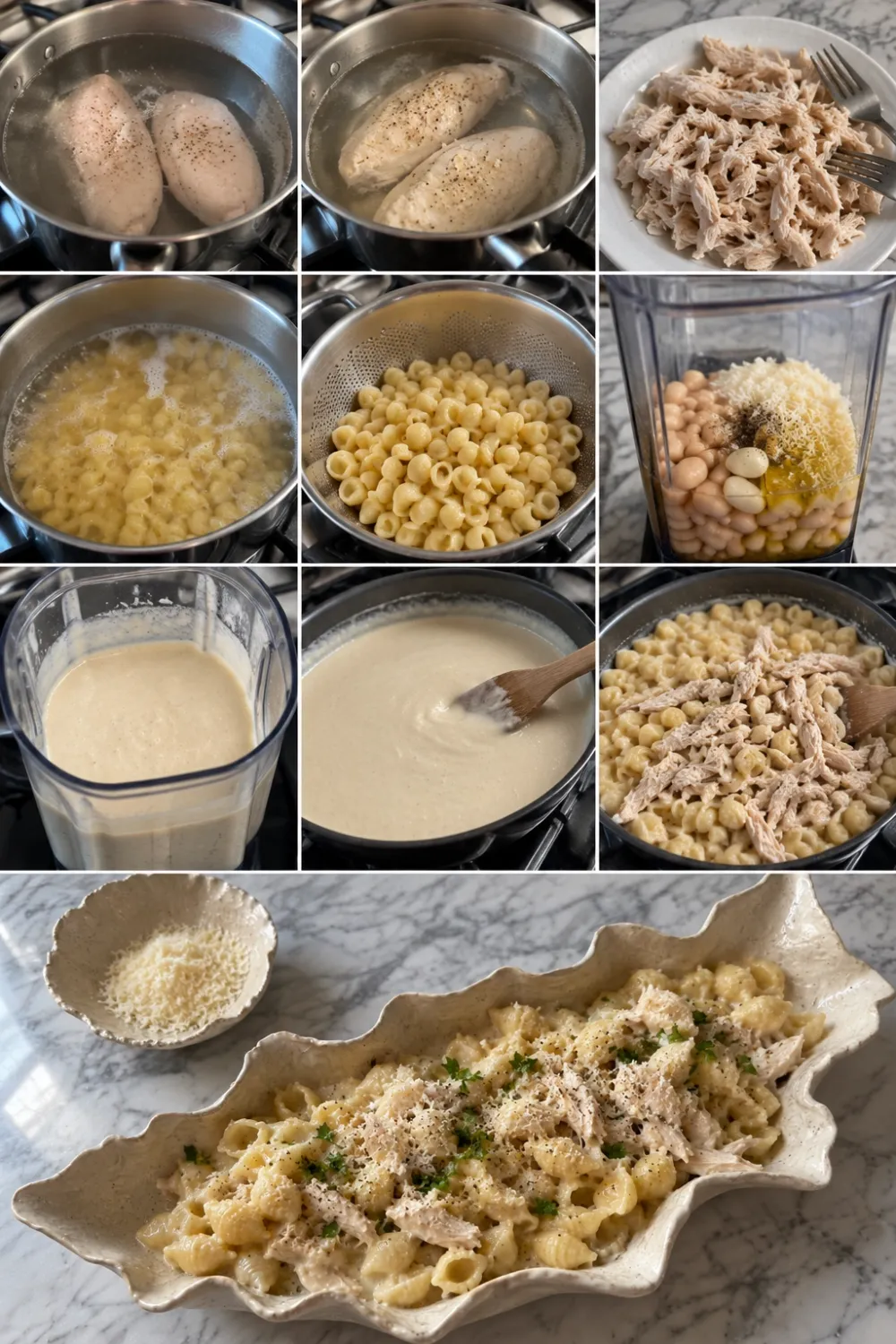
Recipe process for the white bean Alfredo chicken bowl.

Protein and Fiber

The chicken provides most of the recipe's protein.

The cannellini beans contribute additional protein and fiber.

Based on the final ingredient quantities and standard food-composition references, one of the six equal servings provides approximately:

  • 330 calories

  • 29 grams protein

  • 38 grams carbohydrates

  • 7 grams fat

  • 4 grams fiber

  • 2 grams sugar

Nutrition remains an estimate because chicken, pasta, Parmesan, canned beans, and especially broth can vary by brand.

USDA FoodData Central provides standardized food-composition information that can be used when developing and checking recipe nutrition. (FoodData Central)

Portion Flexibility

The recipe makes six equal portions.

The stated serving size is approximately 1 1/2 cups, but this should be treated as a recipe-planning baseline rather than an individualized eating prescription.

If a smaller amount is more comfortable, serve less and refrigerate the remaining food promptly.

Changing the portion changes the amount of calories, protein, carbohydrates, fat, fiber, sugar, and sodium consumed.

Can You Meal Prep White Bean Alfredo?

Yes.

The completed recipe can be divided into six containers for short-term meal preparation.

The sauce will become thicker after refrigeration because the beans and pasta continue absorbing moisture.

That is why reheating should include a small amount of broth or water.

For the best texture, another option is to store the sauce and pasta separately and combine them during reheating.

How to Reheat Without Losing the Creamy Texture

The main mistake is adding too much liquid at once.

Start with 1 tablespoon of broth or water.

Heat briefly.

Stir.

Then add another tablespoon only if needed.

This gradually restores the sauce instead of turning it into a thin broth-like coating.

For food safety, leftovers should be reheated to 165°F. USDA FSIS identifies 165°F as the safe minimum temperature for leftovers. (Food Safety and Inspection Service)

A Important GLP-1 Tolerance Note

This recipe should not be marketed as a treatment for GLP-1 medication side effects.

Individual tolerance is more important than the phrase "GLP-1 friendly."

NIDDK dietary guidance for gastroparesis demonstrates why this matters: some people may be advised to reduce fat and fiber and eat smaller meals, while dietary recommendations depend on the individual's condition and nutritional needs. (NIDDK)

This recipe contains beans and therefore is not automatically suitable for someone who has been advised to follow a low-fiber diet.

If you experience persistent vomiting, significant abdominal symptoms, dehydration, or difficulty maintaining adequate nutrition while using a GLP-1 medication, discuss the symptoms with an appropriate healthcare professional rather than relying on a particular recipe.
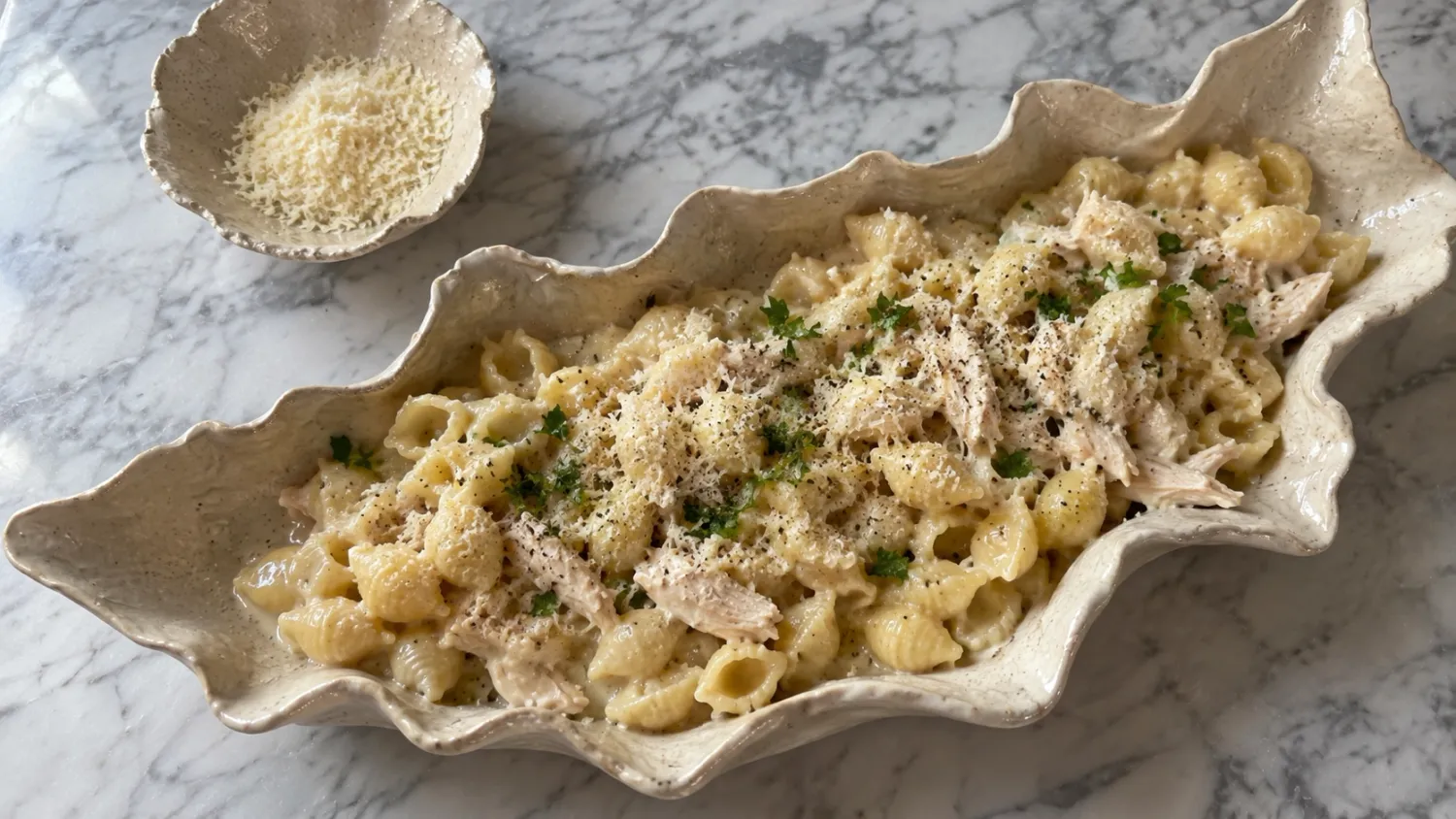
GLPIANSRecipe card
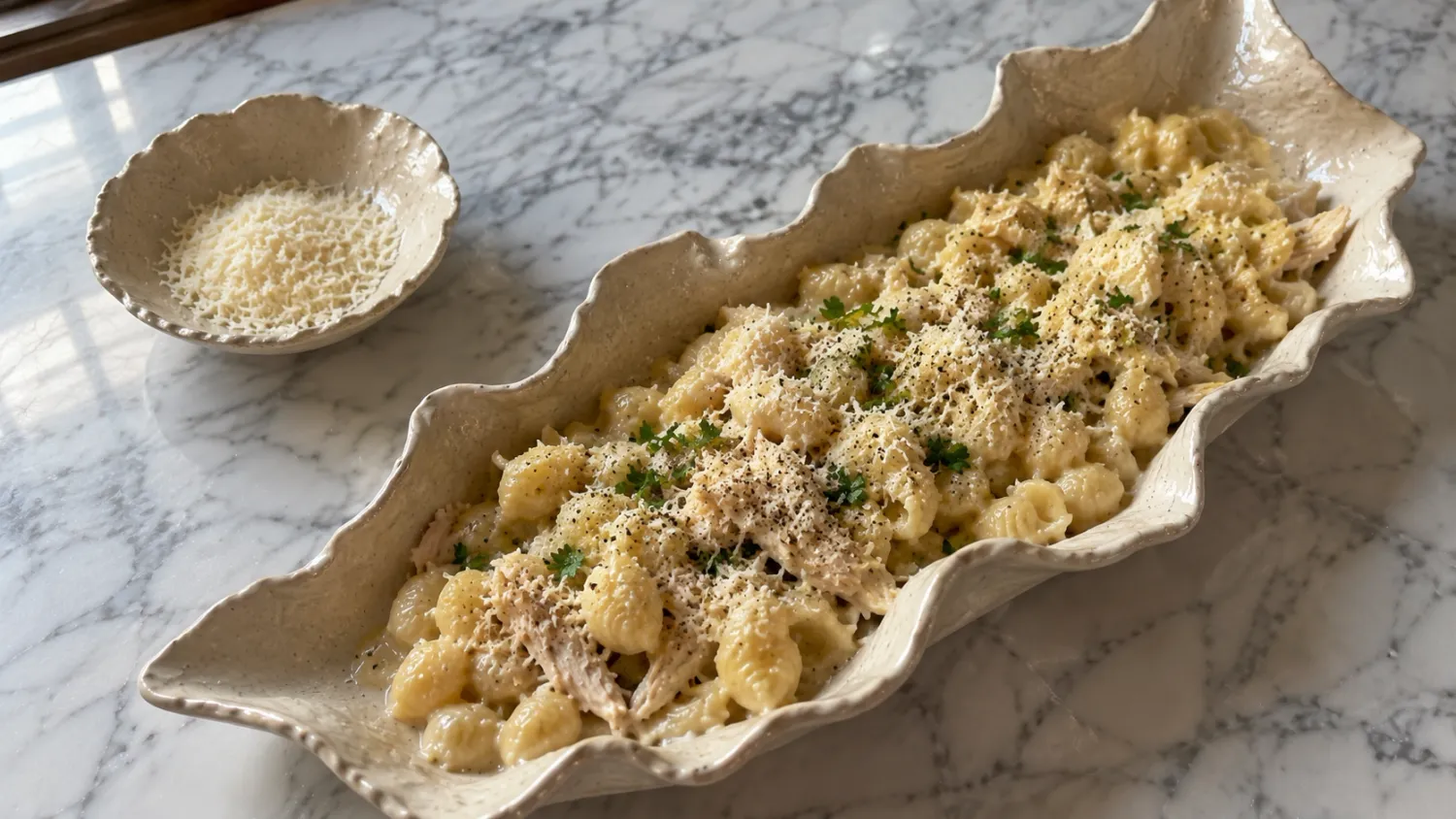
Mini pasta shells with creamy white bean Alfredo sauce and shredded chicken topped with Parmesan and parsley.
Creamy white bean Alfredo pasta with shredded chicken and Parmesan.
High-Protein GLP-1 Dinner / Pasta Bowl

Blended White Bean & Garlic Alfredo Shredded Chicken Mini Bowl

A creamy Alfredo-style pasta bowl made with blended cannellini beans, garlic, Parmesan, and low-sodium chicken broth, tossed with tender shredded chicken breast and mini pasta shells. The sauce gets its creamy body primarily from blended white beans rather than heavy cream.

Prep time
15 minutes
Cook time
25 minutes
Total time
40 minutes
Servings
66
Yield
6 mini bowls
Course
Dinner
Cuisine
Italian-American
Serving size (base recipe)
Approximately 1 1/2 cups per serving

Base recipe: 6 servings. Adjust ingredient quantities below.

Ingredient quantities scale with servings. Prep time, cook time, total time, and nutrition remain unchanged unless the recipe source explicitly says otherwise.

Nutrition is shown per serving.

Ingredients

Chicken
White Bean Alfredo Sauce
Pasta
Finishing

Instructions

  1. Cook the chicken. Season the chicken breast with 1/4 teaspoon kosher salt and 1/4 teaspoon black pepper. Place the chicken in a medium saucepan and add enough water to cover it. Bring to a gentle simmer over medium heat, then reduce the heat and continue cooking until the thickest part reaches 165°F on a food thermometer.
  2. Rest and shred the chicken. Transfer the cooked chicken to a plate and rest for 5 minutes. Shred it finely with two forks. For a more uniform mini-bowl texture, chop the shredded chicken into smaller pieces after shredding.
  3. Cook the pasta. Bring a large pot of salted water to a boil. Cook the mini shells according to the package directions until just tender. Reserve 1/2 cup of pasta water, then drain the pasta well.
  4. Blend the white bean sauce. Add the drained cannellini beans, 1 cup chicken broth, garlic, 1/2 cup Parmesan, olive oil, 1/4 teaspoon kosher salt, and 1/4 teaspoon black pepper to a high-speed blender. Blend until very smooth.
  5. Adjust the sauce. Add the remaining 1/4 cup chicken broth gradually while blending until the sauce is thick but pourable. Do not make the sauce unnecessarily thin because the pasta will absorb some of the liquid.
  6. Warm the sauce. Transfer the blended sauce to a large skillet. Heat over medium-low heat for about 3 to 4 minutes, stirring frequently. Do not bring the sauce to a vigorous boil.
  7. Combine the pasta and chicken. Add the drained pasta and shredded chicken to the skillet. Toss gently until the pasta and chicken are evenly coated and heated through.
  8. Adjust the consistency. If the sauce is thicker than desired, add reserved pasta water 1 tablespoon at a time, stirring after each addition. Stop when the sauce coats the pasta smoothly.
  9. Finish the bowls. Divide the pasta and chicken mixture evenly among 6 portions. Top with the remaining 2 tablespoons Parmesan and optional chopped parsley.
  10. Serve. Serve warm. If a smaller amount better matches your appetite, take a smaller portion and refrigerate the remainder promptly rather than leaving the food at room temperature.

Equipment

  • Medium saucepan
  • Large pasta pot
  • High-speed blender or food processor
  • Large skillet
  • Colander
  • Measuring cups and spoons
  • Cutting board
  • Chef's knife
  • Food thermometer
  • Two forks for shredding chicken

Recipe Notes

  • Blend the cannellini beans completely smooth for the best Alfredo-style texture.
  • Rinse and drain the beans thoroughly before blending.
  • Use low-sodium broth because Parmesan and added salt already contribute sodium.
  • Keep the sauce at a gentle heat after blending rather than boiling it aggressively.
  • Reserve pasta water before draining. It provides a useful way to loosen the finished sauce without adding extra oil or cream.
  • The sauce naturally becomes thicker after refrigeration because the beans and pasta continue absorbing moisture.
  • For the most uniform texture, shred the chicken finely rather than leaving it in large pieces.
  • The approximately 1 1/2-cup serving is a recipe-planning baseline, not a required amount for every individual.

Nutrition

1 of 6 equal servings

NutrientPer serving
CaloriesApproximately 330 kcal
ProteinApproximately 29 g
CarbohydratesApproximately 38 g
FatApproximately 7 g
FiberApproximately 4 g
SugarApproximately 2 g
SodiumApproximately 500 mg

NUTRITION_BASIS:
Estimated from the final ingredient quantities using standard food-composition data, including USDA FoodData Central references for cannellini beans, chicken breast, Parmesan, and pasta, with a standard low-sodium chicken-broth assumption. USDA FoodData Central

NUTRITION_SERVING_BASIS:
1 of 6 equal servings

Nutrition is an estimate based on the listed ingredients, standard food-composition data, and a representative low-sodium broth. Actual values will vary by specific brands, broth sodium level, Parmesan quantity, pasta product, preparation, and final serving size.

The USDA FoodData Central database provides food-composition data from multiple food-data systems and is updated over time. (FoodData Central)

Substitutions

Cannellini beans → Great Northern beans:
Use the same drained amount. The resulting sauce should remain creamy, although the flavor may differ slightly.

Mini shells → small elbow macaroni or ditalini:
Use the same 8-ounce dry weight. Follow the cooking time on the replacement pasta package.

Chicken breast → cooked turkey breast:
Use approximately 1 pound cooked shredded turkey breast. Protein and nutrition values will change.

Parmesan → Pecorino Romano:
Use a slightly smaller amount initially because Pecorino Romano is generally saltier and sharper.

Chicken broth → low-sodium vegetable broth:
This works if a non-chicken base is preferred, but the finished flavor will be less chicken-forward.

Heavy cream:
Not recommended as a direct substitution because it changes the recipe's intended sauce structure and nutritional profile.

Storage

Transfer leftovers to shallow airtight containers and refrigerate promptly.

Perishable food should not remain at room temperature for more than 2 hours, or more than 1 hour when the ambient temperature is above 90°F. Cooked leftovers are generally best used within 3 to 4 days. (Food Safety and Inspection Service)

The USDA also recommends shallow containers to promote rapid cooling of leftovers. (Food Safety and Inspection Service)

For best quality, use this recipe within 3 to 4 days when refrigerated properly.

The sauce will thicken after chilling. This is expected and does not necessarily indicate a problem with the recipe.

For freezing, divide the cooled recipe into individual freezer-safe containers. Texture may become somewhat softer after thawing.

Reheating

Microwave:
Place one refrigerated portion in a microwave-safe bowl. Add 1 to 2 tablespoons chicken broth or water. Cover loosely and heat in short intervals, stirring between intervals. Reheat leftovers until they reach 165°F.

Stovetop:
Place the portion in a skillet over low to medium-low heat. Add 1 to 2 tablespoons broth or water and stir frequently until heated throughout.

Frozen portion:
Thaw safely in the refrigerator before reheating. If using a microwave to thaw, continue reheating immediately until the food reaches 165°F.

USDA guidance identifies 165°F as the safe reheating temperature for leftovers. (Food Safety and Inspection Service)

Texture adjustment:
If the sauce becomes very thick, add broth gradually rather than adding a large amount at once.

Make-Ahead / Meal Prep

This recipe is suitable for short-term meal preparation.

  • Cook and shred the chicken ahead of time.

  • Prepare the white bean sauce ahead of time if desired.

  • Cook the pasta until just tender rather than very soft.

  • Divide the finished recipe into 6 equal containers.

  • Refrigerate portions promptly.

  • Keep a small amount of broth available for reheating.

For the best texture, the sauce can be stored separately from the pasta and combined during reheating.

If the entire recipe is prepared together, adding broth during reheating helps compensate for moisture absorbed by the pasta and bean sauce.

Serving Suggestions

  • Finish with finely grated Parmesan and fresh parsley.

  • Add freshly cracked black pepper if desired.

  • Pair with a simple cooked vegetable if a larger meal is appropriate.

  • For a smaller meal, serve a partial portion and refrigerate the remainder promptly.

  • Avoid adding a large amount of additional oil or heavy cream if the goal is to retain the recipe's original sauce profile.

Mini pasta shells with creamy white bean Alfredo sauce and shredded chicken topped with Parmesan and parsley.

Food Safety

Cook the chicken to a minimum internal temperature of 165°F, measured in the thickest part with a food thermometer. USDA FSIS identifies 165°F as the safe minimum internal temperature for all poultry. (Ask USDA)

Refrigerate the finished dish promptly. Perishable food should not remain at room temperature for more than 2 hours, or more than 1 hour when the temperature is above 90°F. (Food Safety and Inspection Service)

Reheat leftovers to 165°F before serving. (Food Safety and Inspection Service)

Do not rely solely on the color or appearance of chicken to determine whether it is safely cooked; use a food thermometer. (Food Safety and Inspection Service)

GLPIANS

GLP-1 Practical Notes

The strongest GLP-1-specific feature of this recipe is flexible portioning, not a claimed medical effect.

The recipe provides a defined six-serving baseline, but an individual can choose a smaller portion according to appetite and personal tolerance.

The second practical feature is the bean-based sauce.

Instead of making heavy cream the primary sauce ingredient, the recipe uses blended cannellini beans and broth for body.

The third practical feature is reheating control.

Because the sauce thickens after chilling, adding broth gradually during reheating is part of the intended recipe technique.

Common Mistakes

The Sauce Is Grainy

The beans were probably not blended long enough.

Blend until the sauce is completely smooth before transferring it to the skillet.

The Sauce Is Too Thick

Add broth or reserved pasta water one tablespoon at a time.

The Sauce Is Too Thin

Warm it gently for a few additional minutes before adding the pasta.

Do not immediately add more Parmesan simply to thicken it because that also increases the recipe's sodium and fat.

The Pasta Becomes Too Soft

Do not overcook the pasta initially.

It will continue absorbing moisture from the sauce during storage and reheating.

The Chicken Is in Large Pieces

Shred it more finely.

The smaller pieces integrate more naturally into the mini-bowl format.

The Recipe Feels Too Heavy

Start with a smaller portion rather than assuming the full recipe serving must be eaten.

Individual appetite and tolerance vary.

Storage and Reheating Reminder

Refrigerate the finished food promptly in shallow containers.

USDA food-safety guidance recommends using most cooked leftovers within 3 to 4 days and reheating leftovers to 165°F. (Food Safety and Inspection Service)

Related GLPIANS Dinner Ideas

If you want to compare this recipe with other high-protein dinner formats, the GLPIANS collection of 10 High-Protein GLP-1 Dinner Recipes for Easy Meal Planning provides a broader set of dinner options.

Frequently Asked Questions

It can be a practical meal option for some people using GLP-1 medications because it provides a defined portion and substantial protein, but individual food tolerance varies. It should not be presented as a treatment for medication side effects.

Blended cannellini beans provide the body and thickness of the sauce while contributing protein and fiber. They allow the recipe to achieve an Alfredo-style texture without using heavy cream as the primary sauce base.

When the beans are thoroughly blended with garlic, Parmesan, and broth, their flavor becomes much less prominent. The Parmesan and garlic provide the main savory character of the sauce.

The recipe makes 6 equal servings.

The recipe is designed around approximately 1 1/2 cups per serving, although the exact volume can vary slightly depending on pasta cooking, sauce reduction, and chicken moisture.

Yes. The finished recipe can be divided into smaller portions. The nutrition values listed in the recipe card are based on six equal servings, so eating a smaller portion also means consuming less of each listed nutrient.

Yes. Small elbow macaroni or ditalini can replace the mini shells at the same dry weight. Follow the cooking directions for the replacement pasta.

Yes, but the texture may change after freezing and thawing. The sauce can become thicker or slightly less smooth. Add broth gradually while reheating to improve the consistency.

The blended beans and cooked pasta continue absorbing moisture as the dish cools. Adding a small amount of broth during reheating helps restore the sauce's texture.

Blend the beans thoroughly, use enough broth to create a smooth puree, and heat the sauce gently rather than boiling it aggressively.

Yes. Use approximately the same amount of cooked shredded chicken, but check the product's Nutrition Facts panel because rotisserie chicken can differ substantially in sodium and fat.

Chicken should reach 165°F internally when measured with a food thermometer. USDA FSIS identifies 165°F as the safe minimum internal temperature for poultry.

Use refrigerated leftovers within 3 to 4 days when stored appropriately. Keep the refrigerator at 40°F or below and refrigerate perishable food promptly.

Explore More High-Protein GLP-1 Dinner Recipes

Looking for more protein-focused dinner ideas? Explore practical GLPIANS recipes built around different ingredients, portion formats, cooking methods, and everyday meal-planning needs.

Explore More High-Protein GLP-1 Dinner Recipes

A Free GLP-1 Success Audit may be used as a broader GLPIANS resource when the reader is looking for additional GLP-1 planning support.