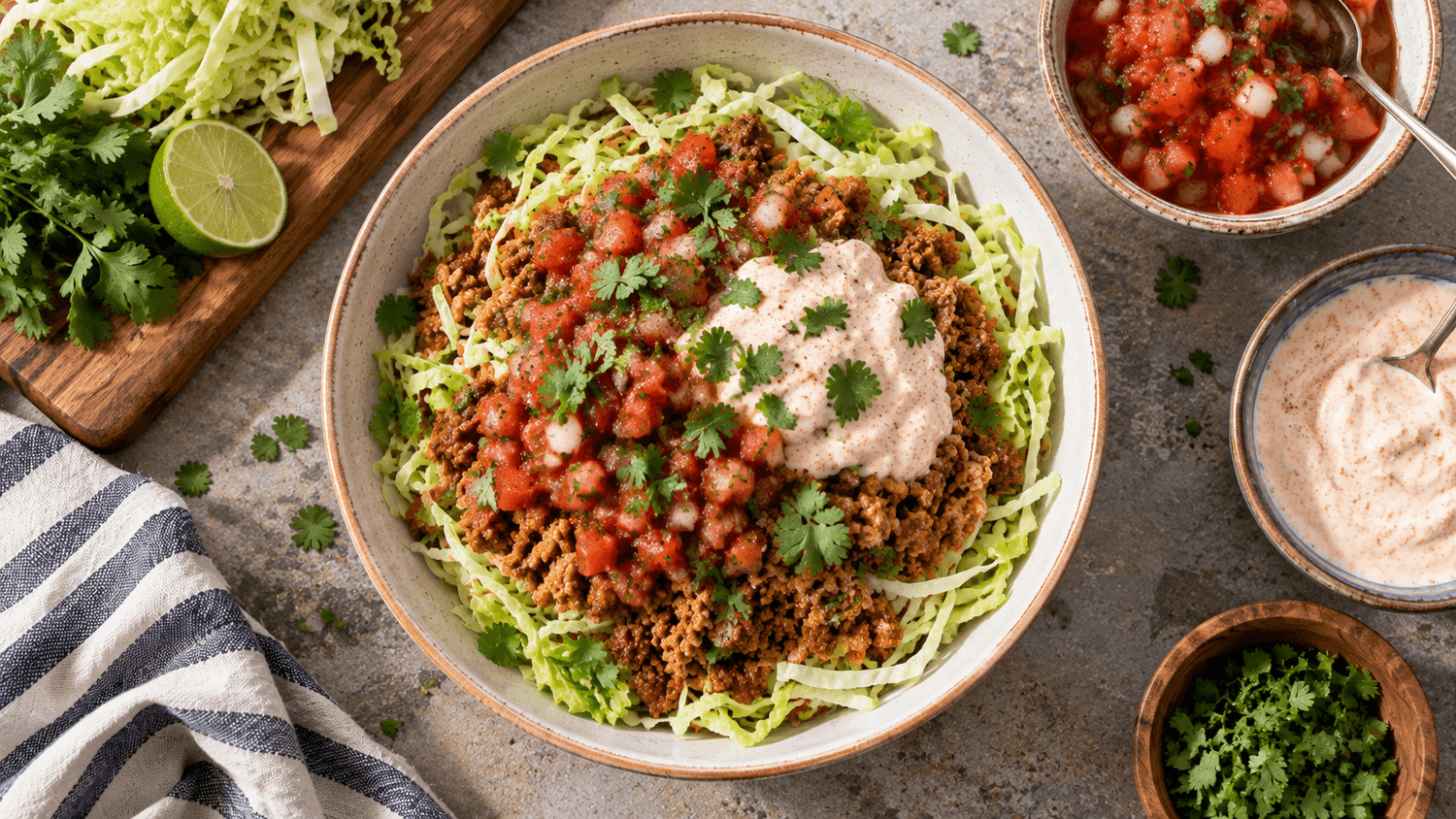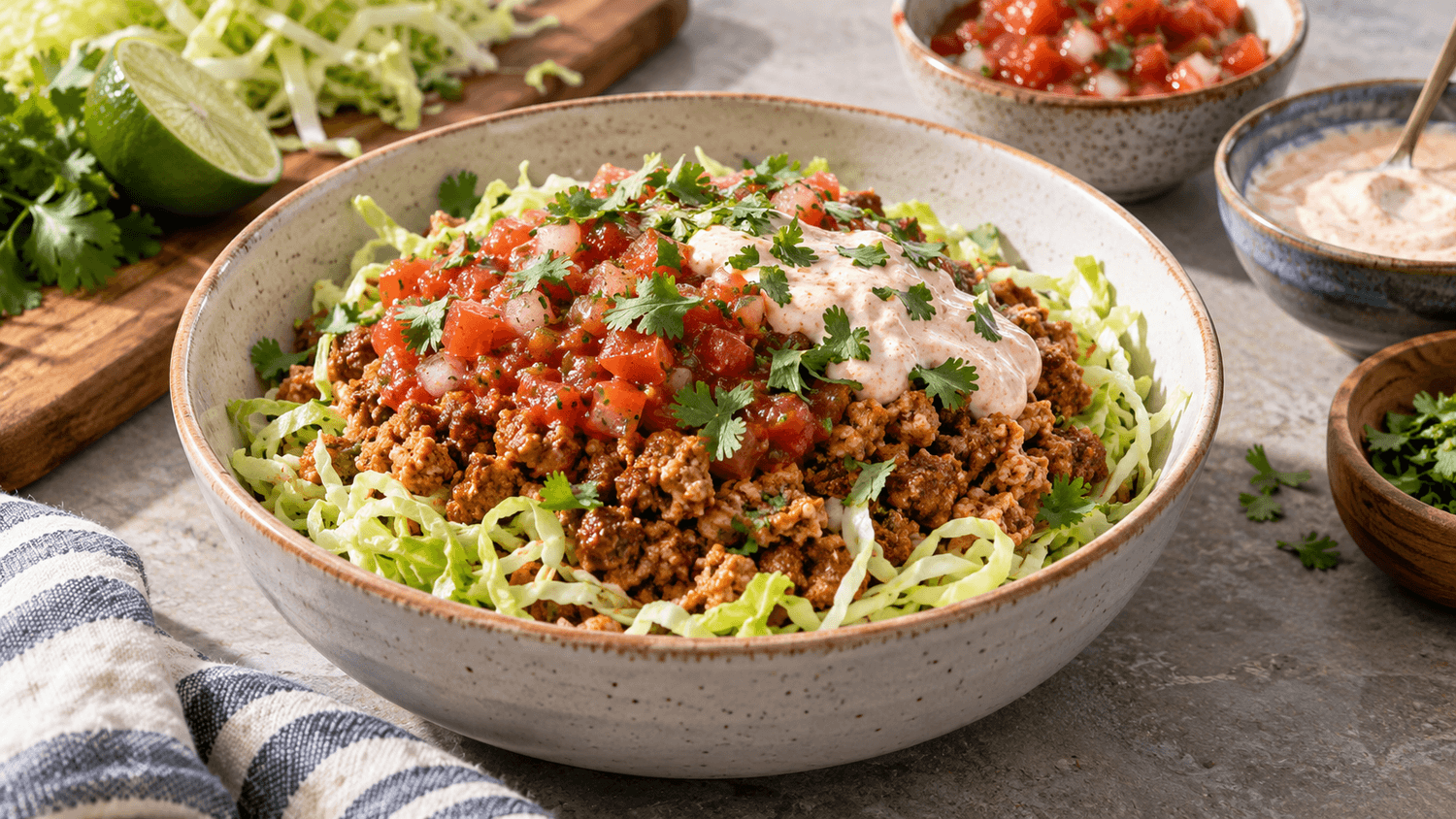



A Taco Bowl Built Around Crisp Cabbage
This GLP-1 taco bowl recipe swaps the traditional rice- or tortilla-centered base for finely shredded raw cabbage, then layers it with seasoned lean ground turkey, fresh salsa, and a creamy Greek yogurt salsa crema.
The goal is simple: keep the recognizable flavors of taco night while making the meal easier to portion and giving the bowl a crisp, fresh texture.
It makes 4 bowls and provides approximately 45 grams of protein per serving based on the final ingredient list and estimated nutrition.
Why Use Cabbage Instead of Rice?
Cabbage changes the structure of the bowl without requiring the meal to become a salad.
The finely shredded leaves provide crunch underneath the warm taco-seasoned turkey, while salsa and Greek yogurt crema bring acidity and creaminess.
That makes the bowl feel more substantial than simply serving taco meat by itself, while avoiding a large rice-centered base.
However, it is important not to turn that difference into a medical claim.
Raw cabbage is not universally easier to digest than rice. Cabbage can cause gas or bloating in some people. For someone using a GLP-1 medication, individual gastrointestinal tolerance can matter because these medicines can affect gastrointestinal motility and can be associated with gastrointestinal adverse reactions. (FDA Access Data)
So the practical reason to use cabbage is flexibility, texture, and meal composition—not a promise that it will prevent digestive discomfort.
The Turkey Keeps the Bowl Protein-Focused
The recipe starts with 1 1/2 pounds of 93% lean ground turkey and divides the finished mixture across four bowls.
That gives each baseline serving a substantial turkey portion while keeping the other components relatively simple.
You do not have to eat the entire baseline serving at once.
If your appetite is smaller, begin with a portion that feels comfortable and save the remaining components. Because the turkey, cabbage, salsa, and crema are stored separately, adjusting the amount at mealtime is straightforward.
The 3-Ingredient Greek Yogurt Salsa Crema
The crema is one of the easiest parts of the recipe.
Combine:
- 1/2 cup plain nonfat Greek yogurt
- 2 tablespoons salsa
- 1 tablespoon fresh lime juice
The Greek yogurt supplies the creamy base, the salsa adds tomato and chile flavor, and lime provides acidity.
The result is closer to a seasoned taco topping than plain yogurt, which helps the bowl feel complete without requiring a separate sour-cream sauce.
For a thicker crema, use a thick Greek yogurt. For a thinner drizzle, stir in a very small amount of water.
How Much Turkey Is in One Serving?
The recipe begins with 1 1/2 pounds of raw ground turkey and divides the cooked mixture equally among four bowls.
Because ground turkey loses moisture during cooking, the exact cooked weight of an individual portion will vary.
That is why the recipe defines the serving primarily by one-quarter of the finished turkey mixture, rather than pretending that every batch will produce an identical cooked weight.
For a reduced appetite, simply serve less than the baseline portion and refrigerate the remaining components.
Is Raw Cabbage Actually "Gentle" on a GLP-1?
There is no universal answer.
GLP-1 medications can delay gastric emptying and may cause gastrointestinal adverse reactions, including nausea, vomiting, abdominal pain, diarrhea, and constipation in some users. (FDA Access Data)
That does not establish that one particular vegetable base will work better for everyone.
Raw cabbage may work well for someone who prefers its crisp texture and lighter meal structure. Another person may find raw cabbage increases gas or bloating.
That is why this recipe deliberately gives you an adjustment path:
If raw cabbage feels uncomfortable, lightly cook it.
You keep the same turkey, salsa, and Greek yogurt crema while changing the cabbage texture.
For broader information about how GLP-1 medicines can affect gastrointestinal function, the FDA prescribing information is the appropriate medical reference rather than a recipe blog.
Why the Bowl Is Built in Separate Components
A traditional taco bowl can become very large once rice, beans, meat, cheese, sour cream, and toppings are all layered together.
This recipe takes a more modular approach:
- Ground turkey: main protein
- Cabbage: crisp vegetable base
- Salsa: acidity and fresh flavor
- Greek yogurt crema: creamy taco-style topping
- Lime and spices: brightness and seasoning
That structure makes portion adjustment much easier.
It also makes meal prep better because the cabbage stays crisp when stored separately from the warm turkey.
If You Want Another Turkey Taco Format
If you like the flavor profile but want a different format, GLPIANS has a closely related Mini Turkey Taco Cups: High-Protein GLP-1 Recipe.
That recipe is especially relevant when you want the same broad taco-and-turkey direction in a smaller individual format.
What Makes This a Practical GLP-1 Dinner?
The most useful feature is not a special "GLP-1 ingredient."
It is the ability to control the meal.
You can:
- reduce the cabbage portion;
- reduce the turkey portion;
- keep the components separate;
- adjust the amount of salsa;
- change raw cabbage to lightly cooked cabbage;
- save the rest for another meal.
That flexibility matters more than assigning a blanket digestive label to any one ingredient.
A Note on Food Safety
Ground poultry should be cooked to a minimum internal temperature of 165°F as measured with a food thermometer. USDA guidance recommends using a thermometer rather than relying only on appearance.
For the complete food-safety guidance used in developing this recipe, consult the USDA guidance on safe internal temperatures for meat and poultry.
The Bottom Line
This taco bowl is designed around a simple idea: keep taco-night flavor while making the meal easier to portion and giving the traditional rice-centered bowl a crisp cabbage alternative.
It does not claim that cabbage treats GLP-1 side effects or is universally easier to digest.
Instead, it gives you a high-protein taco dinner with separate components that can be adjusted according to appetite, texture preference, and individual tolerance.