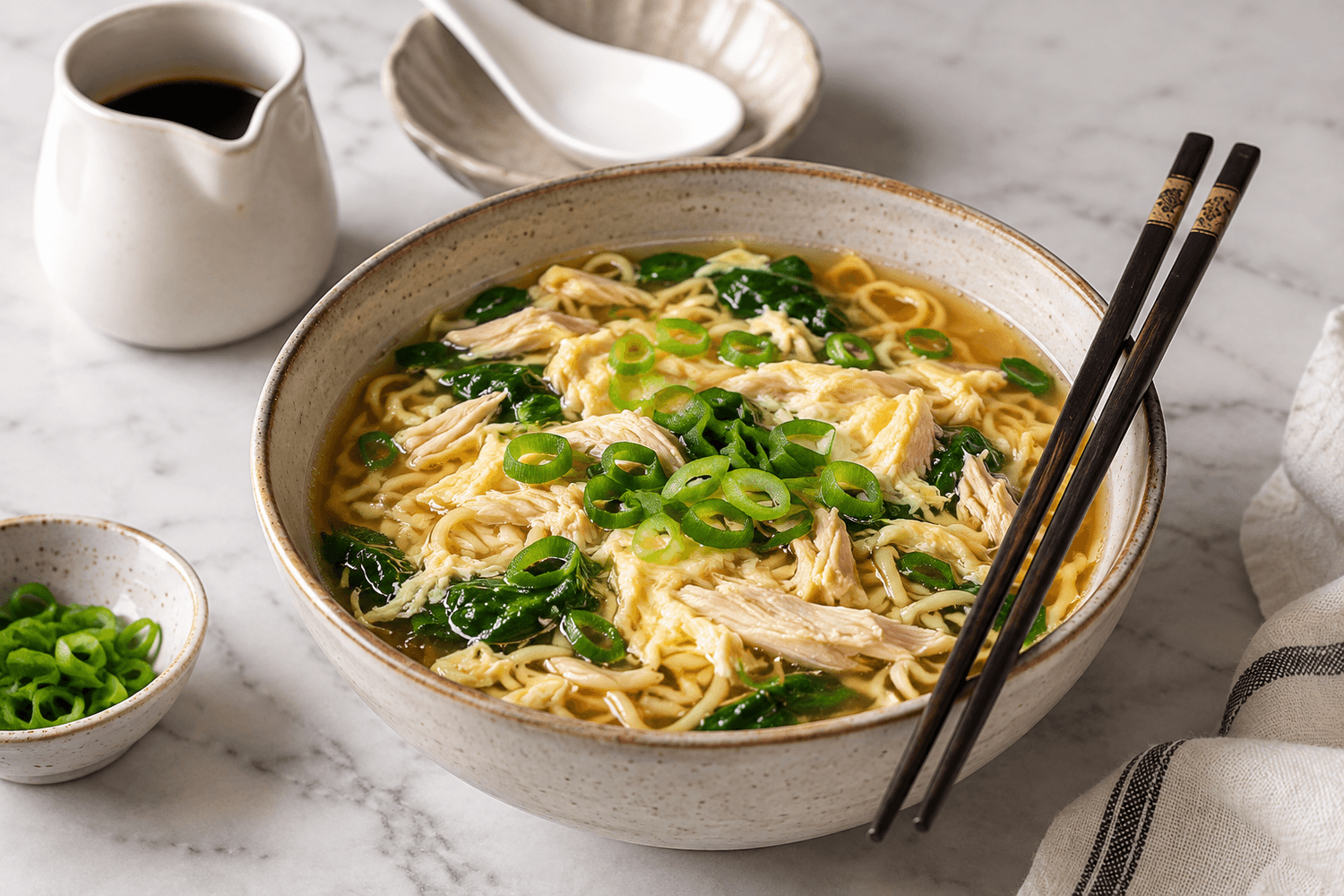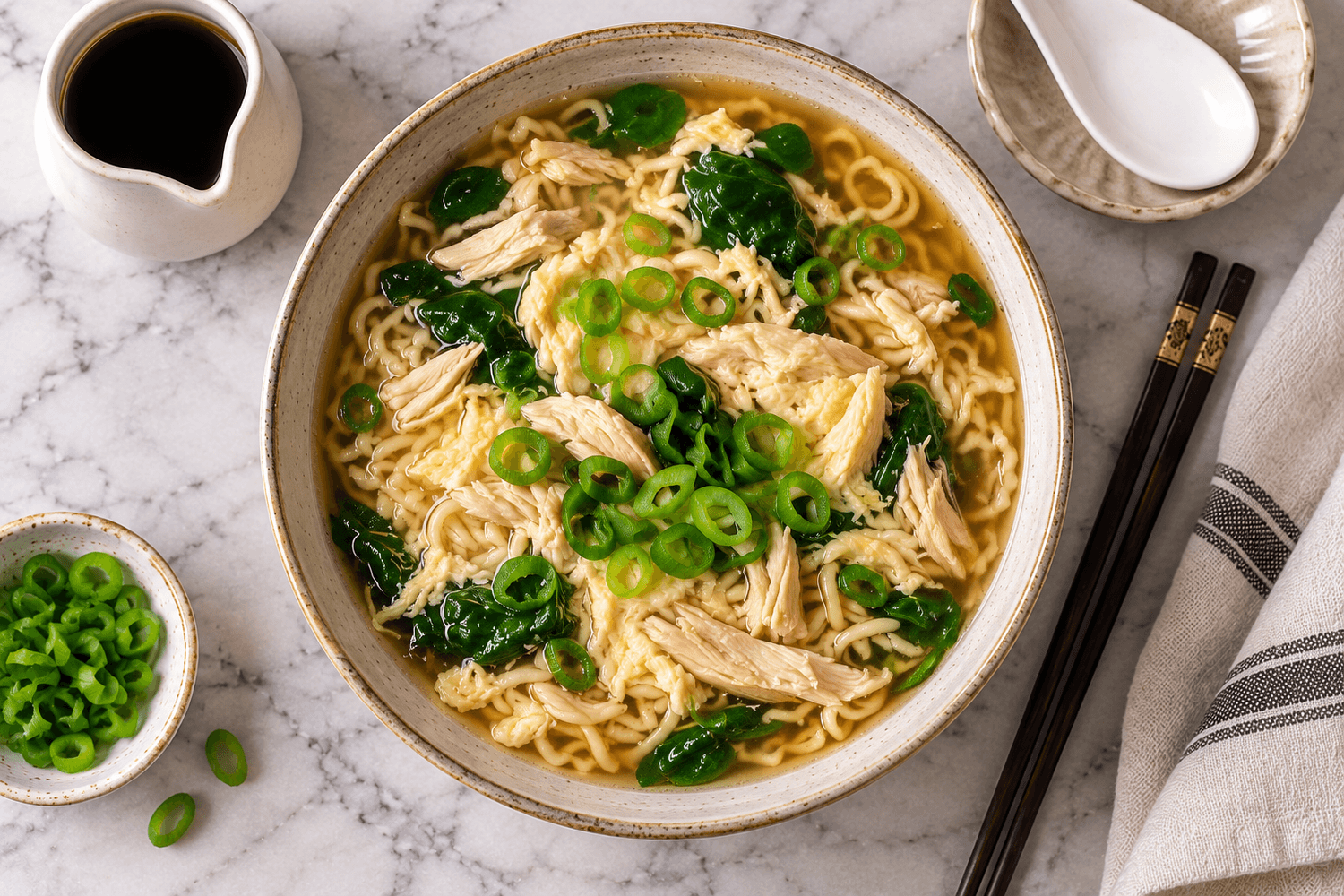



Bone Broth Egg Drop Protein Ramen in 10 Minutes
Bone Broth Egg Drop Protein Ramen is a warm, savory bowl made with high-protein ramen noodles, chicken bone broth, shredded chicken, egg whites, baby spinach, ginger, and scallion.
The recipe takes about 10 minutes when cooked chicken is already available and provides approximately 36 grams of protein per bowl based on the specified ingredient framework.
The goal is not to claim that ramen treats GLP-1 medication side effects. Instead, this recipe focuses on practical characteristics that can make a warm meal easier to adapt when appetite is reduced: a brothy format, a single-serving yield, multiple protein sources, and a short cooking process.
Why This Ramen Fits a GLP-1 Meal Strategy
GLP-1 medications can be associated with gastrointestinal adverse reactions such as nausea and vomiting, and current FDA labeling also warns about volume depletion associated with gastrointestinal reactions. (FDA Access Data)
That does not mean a particular food can prevent or treat those effects.
This recipe simply offers a practical meal format that some people may find useful when they want something warm and savory:
- Brothy: The meal contains a substantial amount of liquid.
- Protein-forward: Chicken, egg whites, and high-protein noodles contribute protein.
- Quick: The recipe is designed around pre-cooked chicken.
- Single-serving: There is no need to prepare a large batch.
- Adjustable: The noodle quantity can be reduced without removing the rest of the meal.
- Savory: Ginger, chicken broth, soy sauce, and scallion create flavor without a heavy cream-based sauce.
Individual tolerance varies. If eating or drinking becomes difficult, or nausea/vomiting is persistent or severe, contact your healthcare professional rather than relying on a recipe as treatment.
How Much Protein Is in This Ramen?
This bowl provides approximately 36 grams of protein using the specified ingredients.
The high-protein ramen contributes approximately 10 grams from the half-package portion. The cooked chicken and egg whites provide the remainder.
The exact total will vary slightly with the chicken, broth, and egg-white products used.
The important distinction is that this recipe does not depend on bone broth alone for its protein content. The protein comes from several components working together.
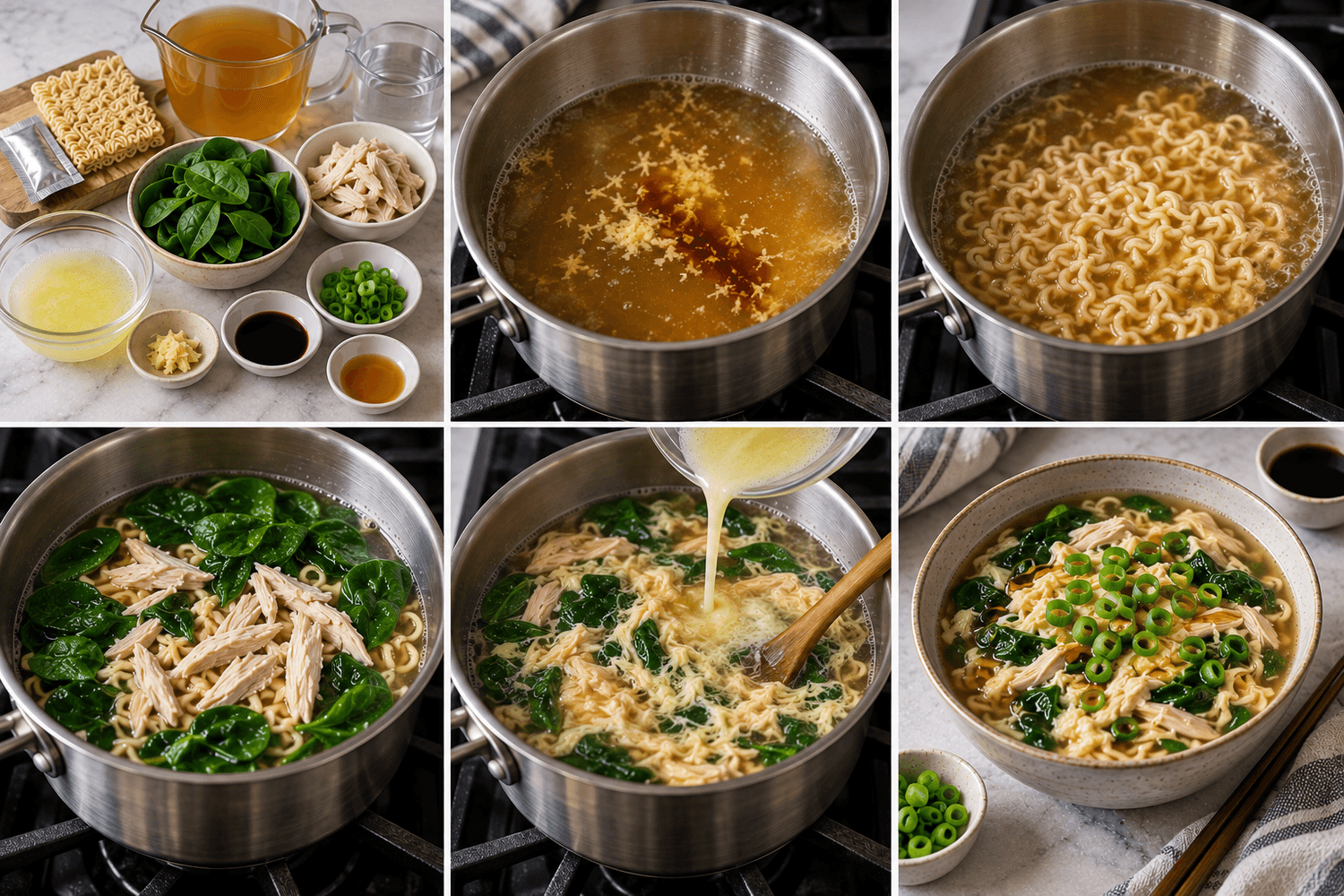
How to Make Egg-Drop Ribbons
The egg technique is simple but heat control matters.
Start with a gentle simmer rather than a hard boil.
Then:
- Lightly whisk the egg whites.
- Reduce the broth to a gentle simmer.
- Slowly drizzle the egg whites into the broth.
- Stir gently in one direction.
- Let the egg whites set for 30 to 60 seconds.
The result should be soft ribbons suspended throughout the broth.
You are looking for delicate cooked egg pieces, not large scrambled chunks.
Why Use High-Protein Ramen?
The noodle choice is one of the biggest differences between this bowl and conventional instant ramen.
The specified high-protein ramen provides 20 grams of protein per 71-g package according to its published Nutrition Facts information. (ShopRite)
Using half the package keeps the noodle portion moderate while allowing the chicken and egg whites to supply additional protein.
This also makes the recipe easier to adapt.
If you prefer more noodles, increase the amount and recalculate the nutrition. If a smaller noodle portion feels more comfortable, reduce it.
There is no single noodle that is automatically best for every person using a GLP-1 medication.
What If High-Protein Ramen Is Not Available?
You have several practical alternatives.
Conventional Ramen
Use approximately half a conventional ramen block and keep the chicken and egg whites.
This lowers the protein contribution from the noodles, so the finished bowl will not have the same protein total.
Chickpea or Lentil Noodles
These can provide a different protein and fiber profile, but texture varies substantially by product.
Follow the package cooking directions rather than assuming they cook exactly like wheat ramen.
Shirataki Noodles
These provide a substantially different texture and are better considered an alternative noodle format rather than a direct ramen substitute.
The best option is the one that provides a texture and portion you actually enjoy and tolerate.
Why Use Only Half the Ramen Package?
The half-package approach is deliberate.
A complete package of high-protein ramen already contains a substantial amount of noodles, and adding chicken and egg whites on top can make the finished bowl larger than necessary for someone who prefers smaller meals.
Using half the noodles allows the recipe to retain the ramen experience while leaving room for protein from chicken and egg whites.
If you want a larger bowl, the recipe can be scaled.
Why the Seasoning Packet Is Flexible
The included seasoning is optional rather than essential to the recipe's structure.
The broth already contains chicken flavor, ginger, soy sauce, and the savory components contributed by the chicken.
Using approximately half the seasoning packet provides additional ramen flavor.
Omitting the packet gives you more control over sodium.
This matters because the full high-protein ramen package itself contains 1,120 mg sodium according to its listed Nutrition Facts. (ShopRite)
For that reason, this recipe should not be marketed as inherently low-sodium.
Instead, the preparation provides a way to control how much additional seasoning is added.
Can You Use Leftover Chicken?
Yes.
Pre-cooked chicken is actually one of the most useful shortcuts in this recipe.
Keep cooked chicken refrigerated, portion it into small amounts, and add 2 ounces to the simmering broth.
If you are cooking chicken specifically for the recipe, poultry should reach 165°F internally. USDA identifies 165°F as the safe minimum internal temperature for poultry. (Ask USDA)
A Similar GLP-1 Soup Option
If you want another warm, brothy chicken meal with a more traditional noodle-soup format, try the GLP-1 Shot Day Soup Recipe: Gentle Chicken Noodle Soup.
That gives readers a genuinely different option within the same broader warm-soup and quick-meal cluster rather than sending them to an unrelated recipe.
How to Adjust the Bowl for a Smaller Appetite
Start with the noodle portion.
You can reduce the amount of noodles while keeping the chicken, egg whites, and broth relatively consistent.
That approach changes the bulk of the meal without removing the principal protein components.
You can also eat part of the finished bowl and refrigerate the remainder promptly rather than forcing yourself to finish a portion that feels too large.
Individual tolerance should guide the portion you actually eat.
Is Bone Broth Enough to Make Ramen High-Protein?
Usually, no.
Bone broth can contribute protein, but the amount varies substantially among products.
This recipe therefore does not rely on bone broth as the primary protein source.
Instead, the bowl combines:
- high-protein ramen noodles;
- cooked chicken;
- egg whites;
- chicken bone broth.
That combination is what creates the approximately 36-g protein target.
How to Store the Ramen
The best texture comes from eating the ramen immediately.
If you need to store it, keep the noodles separate from the broth when practical.
The noodles will continue absorbing liquid during refrigeration, so a previously assembled bowl will generally become softer.
USDA recommends refrigerating cooked leftovers within two hours and using them within three to four days. (Ask USDA)
A Practical GLP-1 Note
This recipe is designed around a meal format, not a medical promise.
A warm, savory, brothy meal may be appealing when a large dry or heavily textured meal does not sound good, but individual food tolerance varies.
Do not assume that a food labeled “GLP-1-friendly” will automatically relieve nausea or other medication effects.
The useful question is simpler:
Does this particular food work well for you right now?
If yes, keep it in your rotation.
If not, change the texture, portion, ingredients, or meal altogether.