

High-Protein Cottage Cheese Bolognese with Banza Pasta | GLP-1 Dinner

4.9 ★
0 people reviewed 🎉 Thanks for review!
Lauren Hayes
Written By Lauren Hayes ✓
Lauren Hayes
Recipe Developer & Culinary Editor

Lauren develops and reviews GLPIANS recipes with a focus on ingredient accuracy, cooking technique, texture, timing, portioning, and reliable home-kitchen execution.

Melissa Grant, MS, RDN
Reviewed By Melissa Grant, MS, RDN ✓
Melissa Grant, MS, RDN
Registered Dietitian Nutritionist

Melissa reviews GLPIANS content for nutrition accuracy, responsible GLP-1 framing, portion guidance, and evidence-based communication.

Daniel Harper, MPH
Fact Checked By Daniel Harper, MPH ✓
Daniel Harper, MPH
Food Safety & Health Fact Checker

Daniel reviews GLPIANS content for food-safety accuracy, including cooking temperatures, food handling, storage, reheating, and source-backed safety guidance.

High-Protein Cottage Cheese Turkey Bolognese with Chickpea Pasta

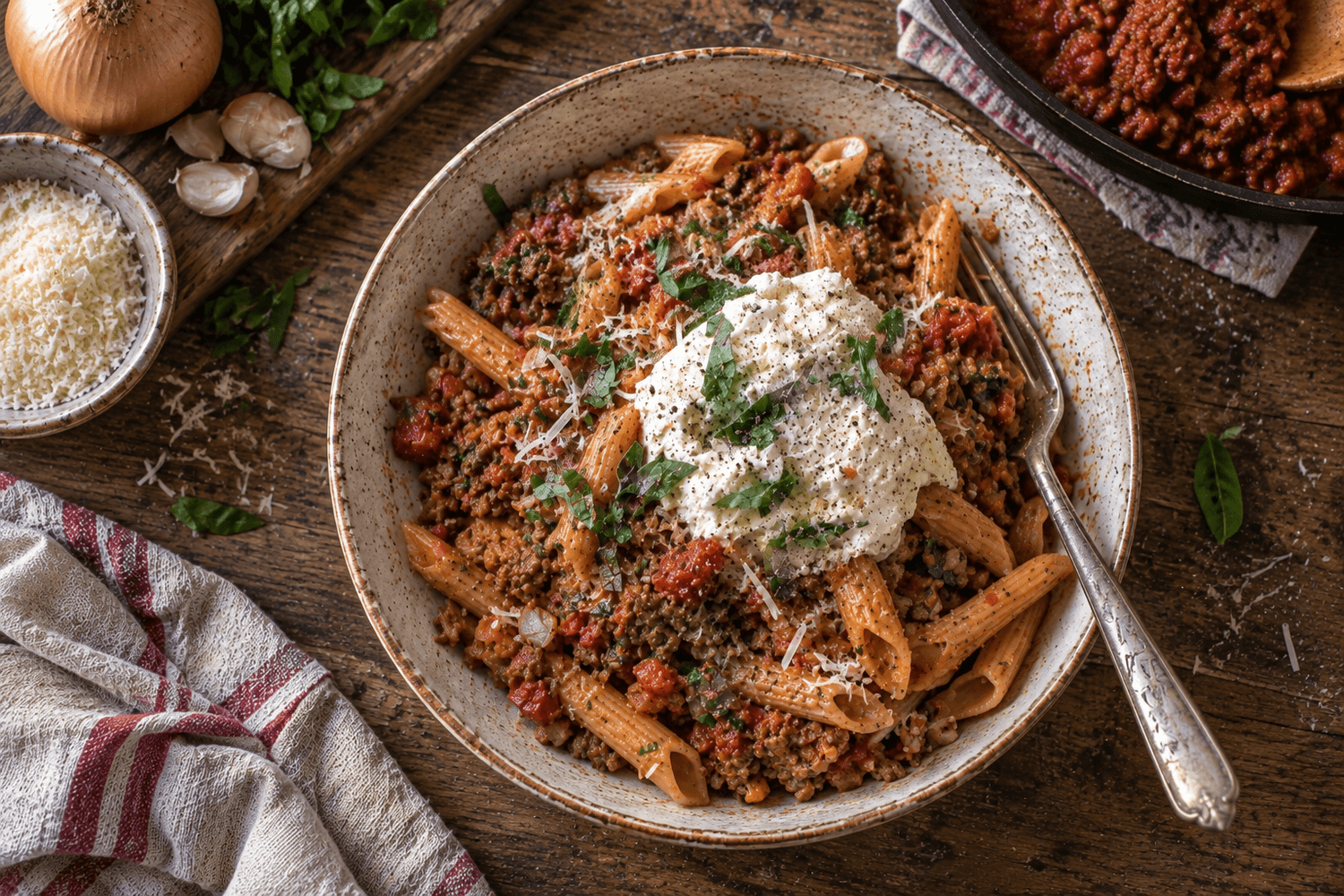
This high-protein cottage cheese turkey Bolognese pairs lean ground turkey, chickpea pasta, marinara, and a smooth cottage-cheese topping for a familiar Italian-American dinner with a more protein-forward structure.

The recipe makes 4 servings and takes about 35 minutes.

It is especially useful if you want pasta night to remain part of your routine while keeping the meal flexible enough to adjust the pasta portion according to appetite.

Why This Bolognese Is Different

A traditional Bolognese-style dinner can put most of the meal's structure around a relatively large pasta portion.

This version distributes the meal across three components:

  • Lean ground turkey provides the savory meat base.
  • Chickpea pasta provides the pasta experience plus protein and fiber.
  • Blended cottage cheese creates a creamy finishing component.

The cottage cheese is not cooked into the marinara. Instead, it is blended smooth and spooned over the finished pasta. That gives the dish a creamy element without turning the entire tomato sauce into a dairy sauce.

How to Cook Chickpea Pasta Without Making It Mushy

Chickpea pasta deserves slightly different treatment from conventional wheat pasta.

Banza's current cooking guidance recommends starting with a large pot of salted boiling water, stirring the pasta, cooking to the desired firmness, draining and rinsing it, and keeping sauce separate when meal prepping. Its current spaghetti instructions list approximately 8 to 10 minutes, while different shapes have different ranges. (Banza)

The most useful rule is simple:

Start tasting before the maximum package cooking time.

Once chickpea pasta crosses from firm to soft, the texture can change quickly. For meal prep, cooking toward the firmer end of the package range is especially useful.

Why Blend the Cottage Cheese?

Cottage cheese straight from the container has visible curds.

Blending it transforms those curds into a smooth, spoonable topping. Parmesan and black pepper give it a more savory profile so it works naturally with tomato sauce and turkey.
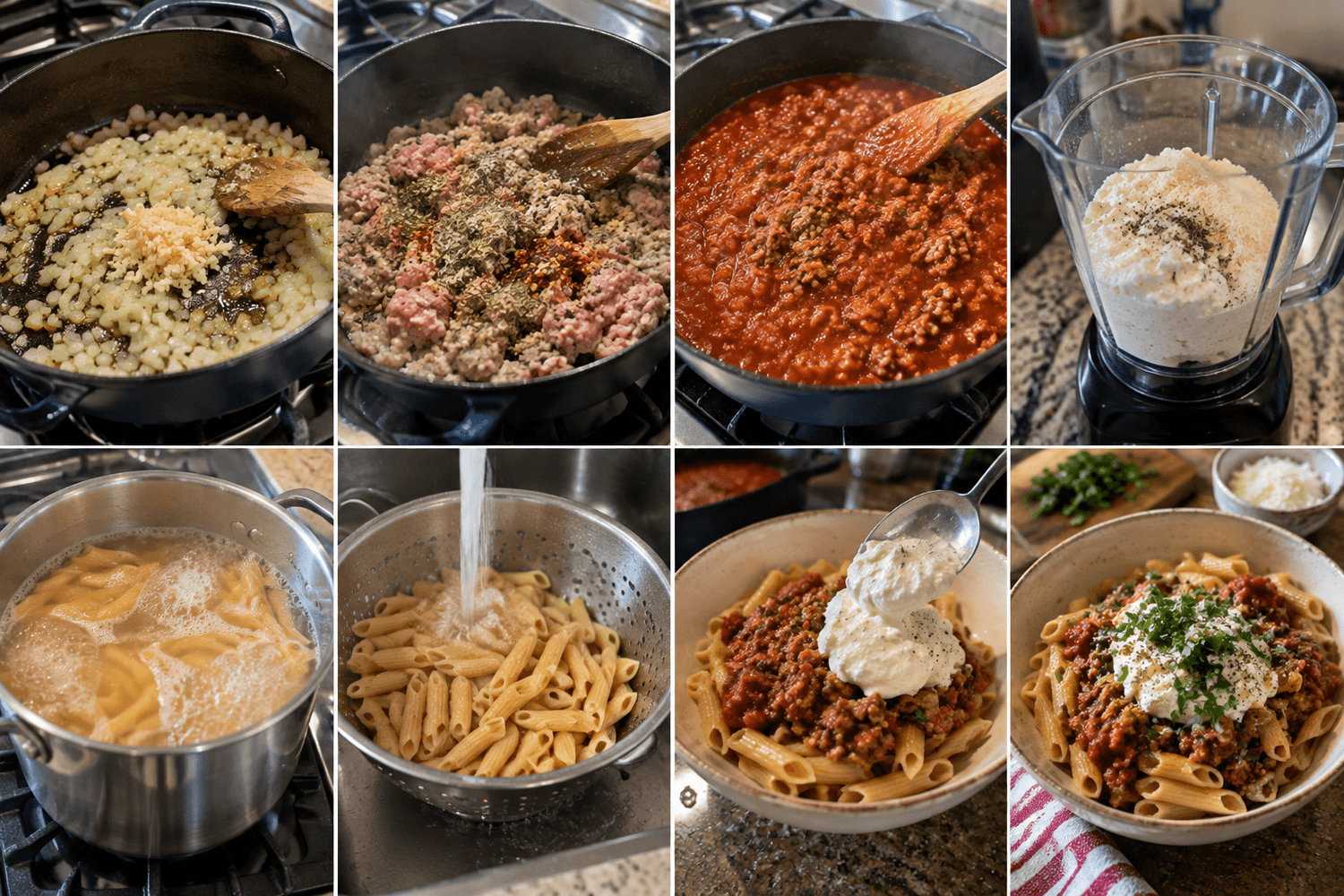
Turkey Bolognese cooking process and assembly steps

It can function as a practical alternative to ricotta in this particular application, but it should not be treated as an identical ingredient. Ricotta has a different moisture, texture, and flavor profile.

Is Chickpea Pasta Easy to Digest on GLP-1s?

There is no universal answer.

GLP-1-based therapies can affect appetite and gastrointestinal tolerance differently from person to person. Current nutrition guidance emphasizes individualized eating patterns, adequate protein, appropriate portions, and attention to individual tolerance rather than declaring one specific food universally suitable. (PubMed Central (PMC))

Chickpea pasta is a higher-fiber pasta option, so someone who is sensitive to larger amounts of fiber may prefer a smaller portion.

The practical approach is to use the food if it agrees with you and adjust the amount if it does not.

A Practical Portion Strategy

The recipe makes four servings using 8 ounces of dry chickpea pasta.

For someone who prefers a smaller pasta portion, about 1/2 cup cooked chickpea pasta can be used as a starting point, with the amount adjusted based on appetite and tolerance.

That is a practical serving suggestion, not a universal medical prescription.

There is no single pasta portion that is medically correct for every person using a GLP-1 medication. Individual appetite, nutritional needs, gastrointestinal tolerance, and clinician guidance all matter.

Why Use Ground Turkey?

Ground turkey gives the sauce the familiar savory structure of a meat-based Bolognese while fitting naturally into a protein-forward recipe.

Brown it thoroughly before adding the marinara. That creates a more developed flavor and keeps the sauce from tasting like meat simply simmered in tomato sauce.

Because this recipe uses ground poultry, the turkey should reach 165°F internally. (U.S. Food and Drug Administration)

Cottage Cheese vs. Ricotta

Cottage cheese and ricotta can both provide a creamy Italian-inspired component, but they are not nutritionally or texturally identical.

Blended cottage cheese:
Smooth, tangy, protein-forward, and relatively light in texture.

Ricotta:
Creamy, milder, richer, and more traditional in many Italian pasta preparations.

For this recipe, cottage cheese is deliberately blended to create a smooth topping rather than being presented as a direct one-for-one culinary clone of ricotta.

How to Make the Meal More Portion-Flexible

One of the advantages of keeping the pasta, Bolognese, and cottage cheese visually distinct is that the finished meal is easy to adjust.

If a full pasta portion feels too large:

  1. Start with less pasta.
  2. Keep a satisfying amount of turkey Bolognese.
  3. Add the cottage-cheese topping after plating.
  4. Stop eating when comfortably satisfied rather than forcing the entire planned portion.

This is a practical meal-structure strategy, not a medical rule.

Meal-Prep This Bolognese the Right Way

For the best texture, prepare the components separately.

Banza specifically recommends storing its cooked pasta separately from sauce and combining them immediately before eating. (Banza)

That approach also improves portion flexibility. You can decide how much pasta you want at the moment you eat instead of having every container locked into one fixed pasta-to-sauce ratio.

For another turkey-and-marinara option, see Moist Air-Fryer Turkey Meatballs in Light Marinara.

For a different protein-focused pasta comfort meal, see Light Chicken Alfredo with Broccoli.

Food-Safety Basics for the Finished Meal

Ground turkey should reach 165°F.

Refrigerate leftovers promptly, and keep the refrigerator at 40°F or below. FDA guidance recommends refrigerating perishable foods within two hours and using refrigerated leftovers within three to four days. (U.S. Food and Drug Administration)

When reheating, bring the leftovers to 165°F.
GLPIANS
Professional Recipe Collection
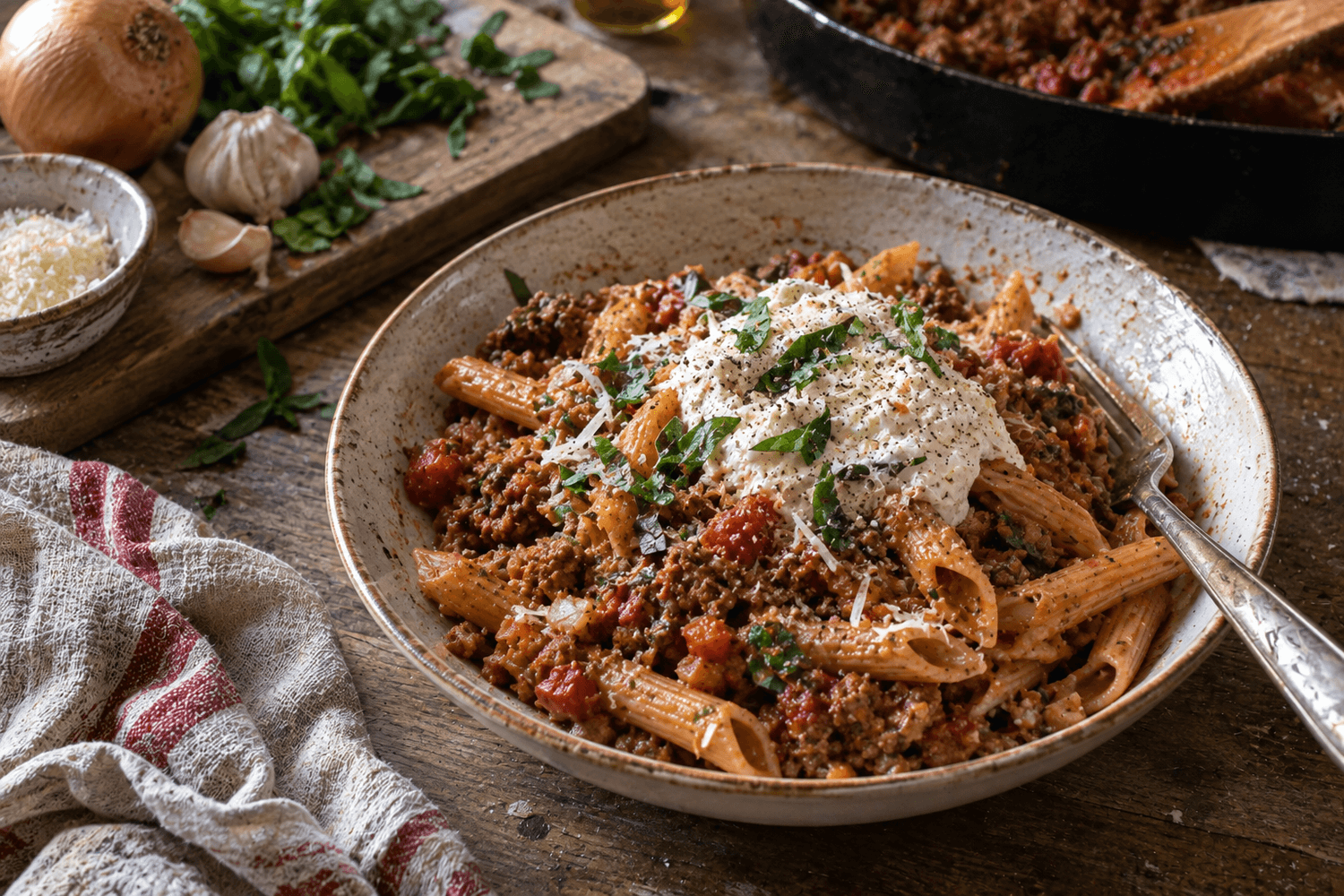
Turkey Bolognese over chickpea pasta topped with smooth whipped cottage cheese and fresh basil.
GLP-1 COMFORT FOOD

High-Protein Cottage Cheese Turkey Bolognese with Chickpea Pasta

A hearty turkey Bolognese made with lean ground turkey and marinara, served over chickpea pasta and finished with a smooth whipped cottage-cheese topping.

Servings
4
Yield 4 servings
Prep Time 10 mins
Cook Time 25 mins
Total Time 35 mins
Course Dinner
Cuisine Italian-American

Ingredients

Equipment

Large skillet or Dutch oven
Large pot
Colander
Blender or food processor
Wooden spoon or spatula
Measuring cups and spoons
Food thermometer

Instructions

  • 1
    Start the Bolognese. Heat the olive oil in a large skillet or Dutch oven over medium heat. Add the onion and cook for 3 to 4 minutes, until softened. Add the garlic and cook for 30 seconds.
  • 2
    Brown the turkey. Add the ground turkey, Italian seasoning, salt, black pepper, and optional red pepper flakes. Cook for 6 to 8 minutes, breaking the turkey into small pieces, until it is no longer pink and reaches 165°F internally when checked with a food thermometer.
  • 3
    Simmer the sauce. Stir in the marinara and water. Bring to a gentle simmer, then reduce the heat to medium-low. Simmer uncovered for 10 to 12 minutes, stirring occasionally, until the sauce is hot and slightly thickened.
  • 4
    Blend the cottage cheese. While the sauce simmers, place the cottage cheese, Parmesan, and black pepper in a blender or food processor. Blend until smooth and creamy.
  • 5
    Cook the chickpea pasta. Bring about 8 cups of salted water to a rolling boil. Add the chickpea pasta, stir, and reduce to a steady simmer. Cook according to the package directions, checking the pasta before the upper end of the cooking range. For Banza spaghetti, the manufacturer's current guidance is approximately 8 to 10 minutes; other shapes can differ.
  • 6
    Drain promptly. Drain and rinse the pasta thoroughly. Do not leave the cooked pasta sitting in hot water.
  • 7
    Assemble. Divide the pasta among 4 bowls. Top each portion with 1/4 of the turkey Bolognese and approximately 1/4 of the whipped cottage cheese.
  • 8
    Finish. Sprinkle with fresh basil or parsley if using. Serve immediately.

Recipe Notes

  • Chickpea pasta texture is the key variable: Begin checking it before the package's maximum cooking time and remove it when it reaches the firmness you prefer.
  • Keep the cottage cheese separate: Blending it independently gives the topping a smoother texture and avoids unnecessarily cooking the dairy into the tomato sauce.
  • Use Banza or another chickpea pasta: Different shapes and brands have different cooking times, so the package directions take priority.
  • Rigatoni or penne can work especially well with a hearty tomato-meat sauce.
  • For smaller meals, adjust the pasta portion first. The turkey Bolognese and cottage-cheese components can remain central to the meal.
  • The nutrition calculation should be updated if the exact pasta, marinara, cottage cheese, or Parmesan brand changes.

Nutrition Facts

Estimated nutrition per serving (1 of 4 servings):
NutrientAmount
Calories~550 kcal
Protein~45 g
Carbohydrates~50 g
NutrientAmount
Fat~19 g
Fiber~10 g
Sugar~10 g
NutrientAmount
Sodium~1,000 mg

Substitutions

  • Ground turkey: 93% lean ground chicken (1 pound). Flavor and nutrition will change slightly.
  • 2% cottage cheese: Low-fat cottage cheese (same amount). The topping will be slightly lighter.
  • Cottage cheese: Ricotta (1 cup). The topping will be richer and less protein-focused.
  • Chickpea pasta: Another chickpea/legume pasta or conventional wheat pasta (nutrition will change drastically).
  • Parmesan: Pecorino Romano (1 tablespoon, sharper and saltier).

Storage

Store cooked Bolognese, pasta, and whipped cottage cheese separately in airtight containers. Refrigerate perishable leftovers within 2 hours. Use within 3 to 4 days. Keeping pasta separate from sauce preserves texture.

Reheating

Reheat Bolognese gently in a skillet over medium-low heat. Add a splash of water if thickened. Reheat pasta separately. Add the whipped cottage cheese after reheating. Reheat all leftovers to 165°F.

Make Ahead / Meal Prep

  • Prepare the Bolognese ahead and refrigerate it separately from the pasta.
  • Cook the chickpea pasta toward the firmer end of its package range if it will be refrigerated for later meals. Banza recommends this for meal prep.
  • Blend the cottage cheese topping ahead and refrigerate it separately.
  • Assemble only the portion being eaten immediately before eating.

Serving Suggestions

Keep the bowl flexible and elevate your experience with these touches:

  • Finish with fresh basil or parsley.
  • Add a small amount of Parmesan if desired.
  • Pair with a simple vegetable such as steamed broccoli or zucchini if additional volume is wanted.
  • For a smaller meal, begin with a smaller pasta portion and add more if desired.
  • Keep the cottage-cheese topping separate until plating for the best texture.
Serving Suggestions for Cottage Cheese Turkey Bolognese

GLP-1 Practical Notes

This recipe is designed around a practical food preference: keeping a familiar pasta dinner available while making the meal more protein-forward and easier to portion.

It should not be described as universally "safe," "easy to digest," or medically superior for people taking GLP-1 medications.

Instead, the useful features are:

  • flexible pasta portions;
  • substantial protein from turkey and cottage cheese;
  • chickpea pasta as an alternative pasta format;
  • separate components for easier portioning;
  • straightforward meal prep;
  • familiar comfort-food flavor.

Current nutritional guidance for people using GLP-1-based therapies emphasizes individualized nutrition and adequate protein, while recognizing that tolerance and eating patterns vary. (PubMed Central (PMC))

Common Mistakes

Overcooking the pasta

Start checking early and use the package directions for the exact pasta shape.

Leaving cooked pasta in hot water

Drain promptly once the desired texture is reached.

Mixing pasta and sauce too far ahead

For meal prep, store them separately.

Cooking the cottage cheese into the tomato sauce

Use the cottage cheese as a blended topping instead.

Treating a portion suggestion as medical advice

The 1/2-cup cooked pasta suggestion is simply a practical starting point for a smaller portion. It is not a universal GLP-1 serving prescription.

A Simple Way to Adjust the Plate

If you want a smaller-volume meal, reduce the pasta first.

If the meal still feels too large, reduce the overall portion.

If you remain hungry, add more food based on your appetite rather than assuming the listed serving size must be your personal limit.

A Related GLPIANS Option

If you want another Italian-inspired, turkey-and-marinara recipe with a meal-prep focus, Moist Air-Fryer Turkey Meatballs in Light Marinara is the closest related recipe in the current GLPIANS collection.

Frequently Asked Questions

Is chickpea pasta easy to digest on GLP-1s?

Not necessarily for everyone. Chickpea pasta is relatively fiber-rich, and individual gastrointestinal tolerance varies. If larger portions are uncomfortable, a smaller portion may be more practical. (PubMed Central (PMC))

How do you keep chickpea pasta from turning mushy?

Cook it according to the package directions, begin tasting before the upper end of the recommended range, stir during cooking, and drain promptly when it reaches the desired firmness. Banza gives similar guidance for its chickpea pasta. (Banza)

Can cottage cheese replace ricotta?

Yes, cottage cheese can be used as a creamy alternative in this recipe, especially when blended smooth. It will not taste or behave exactly like ricotta.

Is cottage cheese higher in protein than ricotta?

The exact comparison depends on the products used. Cottage cheese and ricotta have different formulations, so compare the Nutrition Facts panels of the specific products rather than assuming one universal value.

Can I use regular pasta?

Yes. Replace the chickpea pasta with 8 ounces of dry pasta, but recalculate the nutrition because protein, fiber, carbohydrates, and calories will change.

Can I make this Bolognese ahead?

Yes. Prepare the Bolognese and store it separately from the pasta. This also helps preserve chickpea-pasta texture.

How long does the Bolognese last in the refrigerator?

Use refrigerated leftovers within 3 to 4 days. (U.S. Food and Drug Administration)

What temperature should ground turkey reach?

Ground turkey should reach 165°F internally when checked with a food thermometer. (U.S. Food and Drug Administration)

Is the 1/2-cup pasta portion mandatory for GLP-1 users?

No. It is only a practical smaller-portion starting point. Appropriate portions vary according to appetite, tolerance, nutritional needs, and individual circumstances.

Can I use ricotta instead of cottage cheese?

Yes. Use 1 cup ricotta, but expect a richer and somewhat different topping.

Get Your Free GLP-1 Audit

Want to identify practical areas where your current GLP-1 nutrition strategy may need more structure? Explore the free GLPIANS audit.

Get Your Free GLP-1 Audit
Link copied to clipboard!