


Thai Basil Ground Turkey Lettuce Cups for a High-Protein Workday Lunch
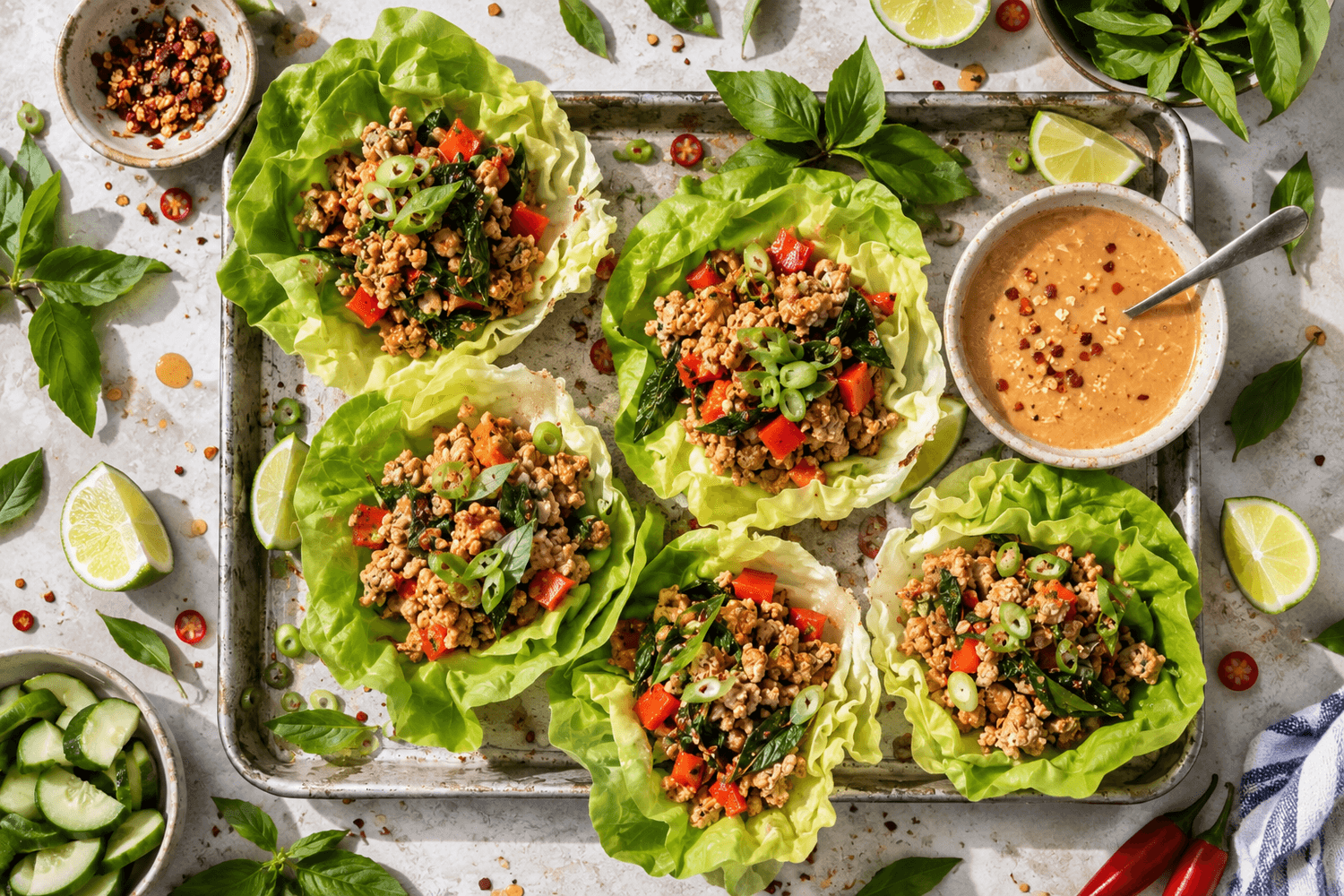
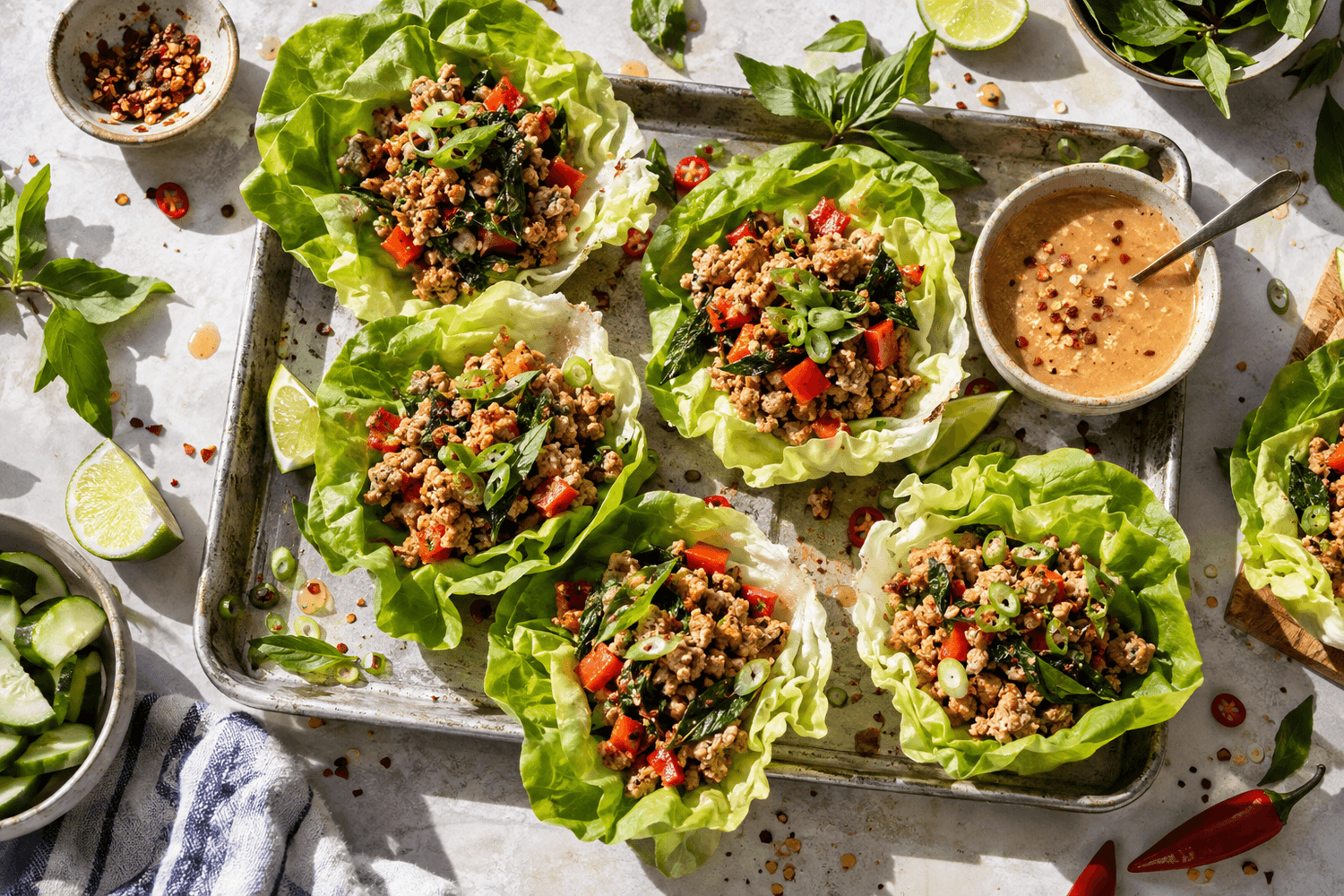
These Thai basil ground turkey lettuce cups combine lean ground turkey, garlic, ginger, bell pepper, soy sauce, lime, toasted sesame oil, and fresh Thai basil inside crisp butter lettuce leaves.
The result is a protein-forward lunch that delivers strong flavor without requiring tortillas (though if you want a tortilla option, this 5-minute high-protein turkey wrap is another great choice) or a rice-based serving format.
A quick powdered-peanut dipping sauce adds a nutty, tangy finish and takes only a couple of minutes to prepare.
Why This Lunch Works for Busy Workdays
The main advantage is the format.
The turkey filling can be cooked ahead and packed separately from the lettuce. At lunchtime, reheat the turkey, assemble the lettuce cups, and add the sauce.
That keeps the lettuce crisp and makes portioning simple.
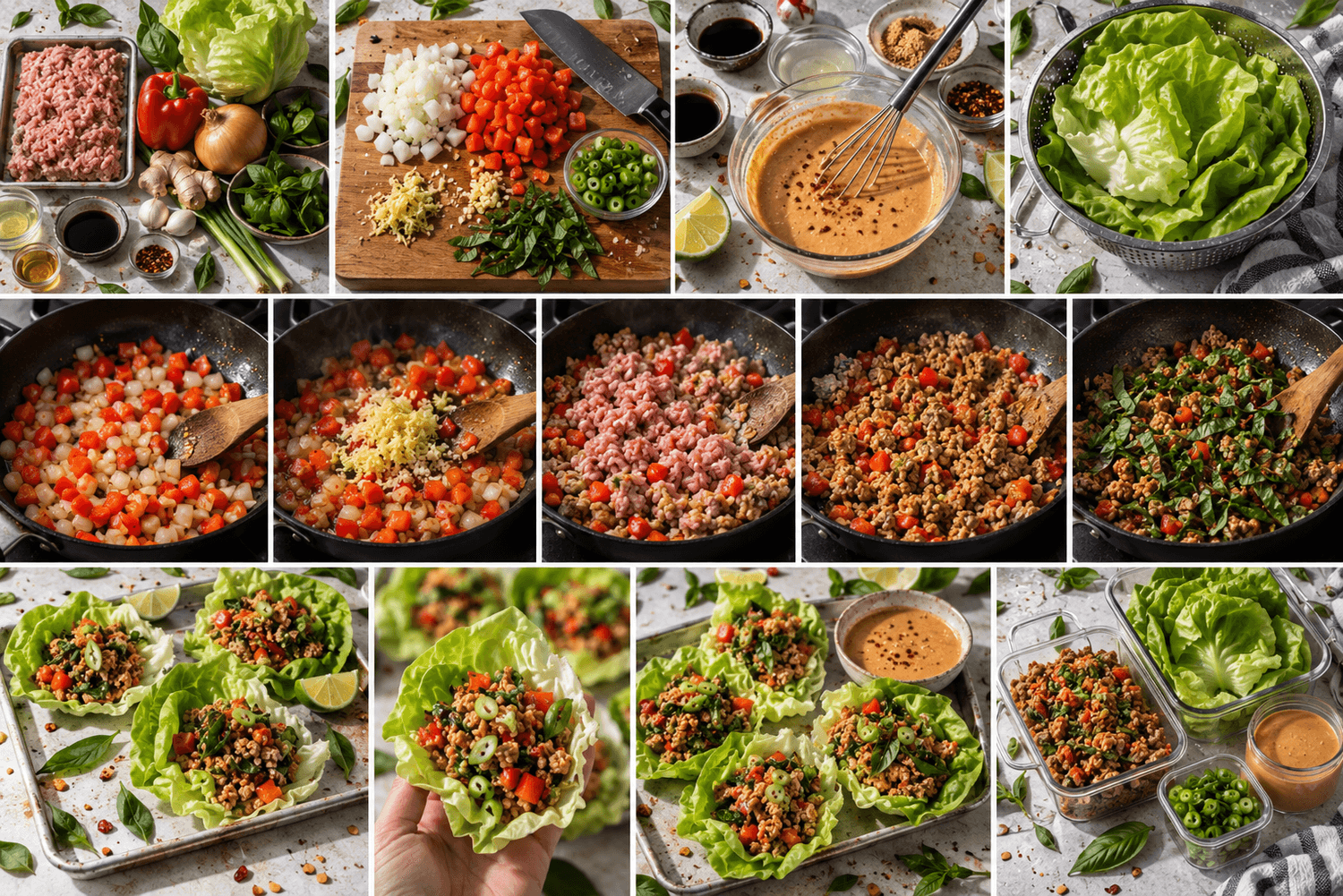
The recipe makes approximately 16 lettuce cups for four servings, so the base serving is four lettuce cups. If you prefer a smaller meal, you can eat fewer cups and save the remaining refrigerated turkey for later.
This is a practical feature for people whose appetite varies from meal to meal.
What Makes the Turkey Filling Flavorful
The filling relies on several small amounts of high-impact ingredients rather than a heavy sauce.
Garlic and Ginger
Fresh garlic and ginger form the aromatic base of the turkey.
Adding them after the onion and bell pepper have started cooking helps release their aroma without giving the garlic enough time to burn.
Thai Basil
Fresh Thai basil provides the most distinctive flavor in the recipe.
Regular basil can substitute when necessary, but Thai basil gives the filling a more characteristic Thai-inspired aroma.
Lime and Toasted Sesame Oil
Fresh lime provides acidity that brightens the turkey.
Toasted sesame oil is used in a small quantity because its flavor is concentrated. Adding it with the finishing seasonings gives the filling a noticeable sesame aroma without making the entire dish taste oily.
Why Butter Lettuce Is the Best Wrap
Butter lettuce is a particularly useful lettuce for these cups because the leaves are broad, flexible, and naturally cupped.
Look for large, intact leaves that can hold several spoonfuls of filling.
Green-leaf lettuce is the easiest alternative.
Romaine can also work, although its leaves are generally more rigid and produce more of a lettuce "boat" than a soft wrap.
The important factor is structural: the leaf needs to be large enough to hold the turkey without tearing.
The Two-Minute Peanut Dipping Sauce
The sauce uses powdered peanut butter or peanut flour, coconut aminos, lime juice, rice vinegar, garlic powder, and red pepper flakes.
Add the warm water gradually rather than all at once.
Different powdered peanut products absorb liquid differently, so the final amount of water needed can vary slightly.
The finished sauce should be smooth and spoonable.
How to Meal Prep These Lettuce Cups
The most important meal-prep rule is:
Keep the turkey, lettuce, and sauce separate until you're ready to eat.
Cook the turkey and cool it promptly before refrigerating.
Keep the lettuce dry in a separate container.
Store the peanut sauce separately.
At lunchtime, reheat only the turkey and assemble the cups afterward.
This prevents the warm, moist filling from sitting against the lettuce for hours and helps preserve the crisp texture.
Cooked ground poultry can be refrigerated for 3 to 4 days when properly stored. For another high-protein turkey meal-prep option, turkey meatballs are also excellent.
A Food-Safety Detail That Matters
Ground turkey should reach 165°F internally.
A food thermometer is the reliable way to verify the temperature rather than relying only on color or appearance. USDA FSIS specifically recommends 165°F for ground poultry.
For more official guidance on safely handling ground poultry, readers can consult the USDA FSIS ground-poultry safety guidance.
Can You Make These With Plant Protein?
Yes.
For a plant-protein version, use 16 ounces of extra-firm tofu.
Press the tofu thoroughly, crumble it, and cook it in the skillet until the excess moisture has evaporated and the crumbles begin to brown.
Then continue with the same seasoning approach.
The resulting dish will have a different nutritional profile, so the nutrition information above applies only to the ground-turkey version.
How to Portion These for a Smaller Meal
The defined serving is four lettuce cups with approximately 1/4 of the dipping sauce.
That does not mean you must eat the entire serving at once.
If a smaller meal is more comfortable, start with fewer cups and refrigerate the remaining filling promptly.
The recipe is deliberately easy to divide because the filling is stored independently from the lettuce.
For another ground-turkey lunch format, see the high-protein ground turkey and cabbage taco bowl, which uses the same general protein category in a different meal format.
What to Serve With Them
These lettuce cups can stand on their own as a lunch.
If you want to make the meal larger, add a simple vegetable side or another food that fits your personal appetite and eating pattern.
Fresh lime, cucumber, and additional green onion are easy ways to add freshness and crunch without changing the core recipe.
A Practical GLP-1 Perspective
The useful GLP-1 connection here is meal format and portion flexibility, not a claim about medication or a special effect of lettuce.
This recipe provides a protein-forward meal in individually portioned lettuce cups, making it easier to choose a smaller amount when desired.
Individual tolerance and appetite vary. If a particular ingredient or portion does not work well for you, adjust the serving or ingredient accordingly.
This recipe does not treat, prevent, or manage medication side effects and does not change how GLP-1 medication works.