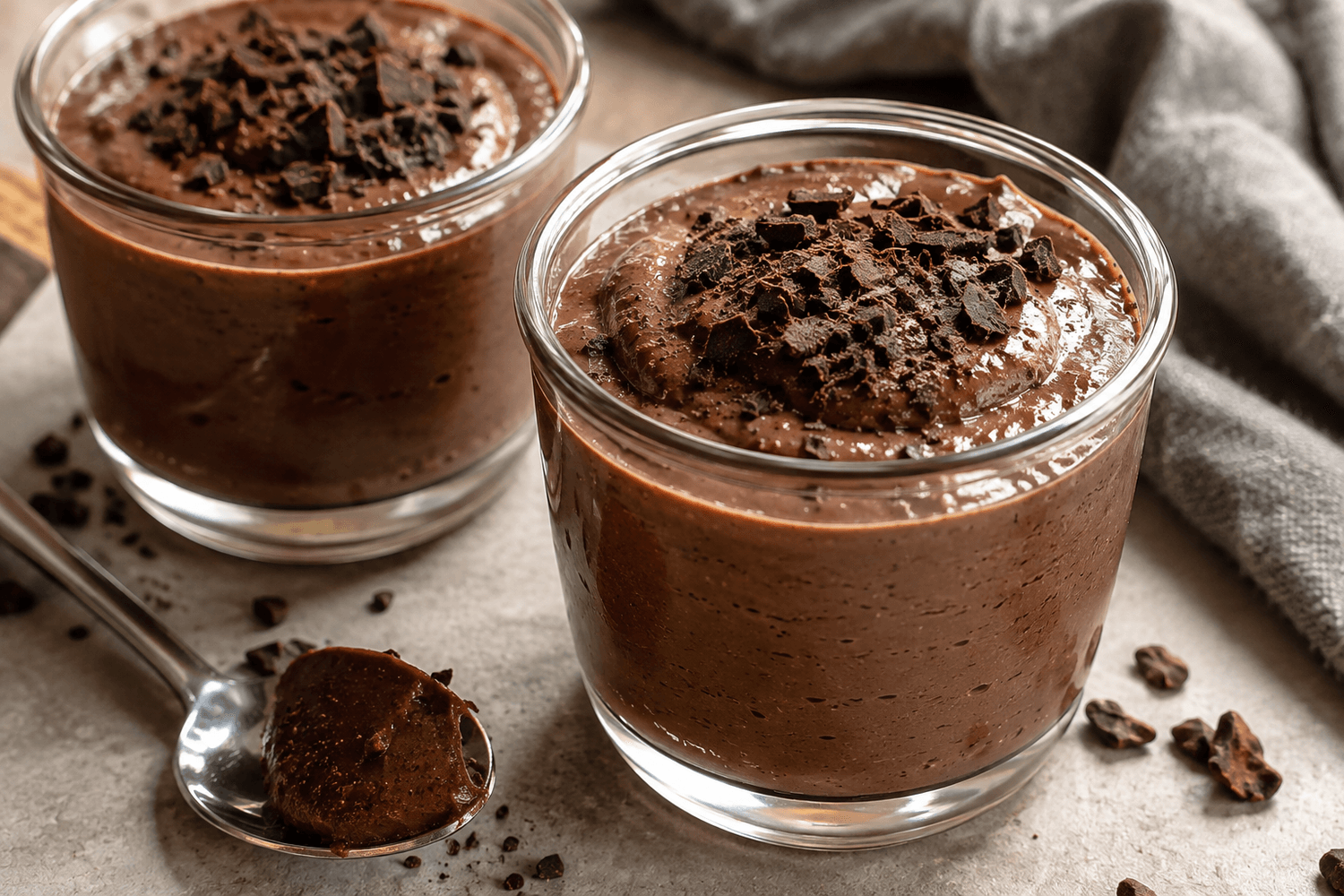



A Smooth Chocolate Dessert With Protein and Blended Chia
This whipped chocolate chia protein pudding is a small, chilled chocolate dessert made with ultra-filtered milk, chocolate whey protein, cocoa powder, and blended chia seeds.
The recipe is designed around two small portions, with approximately 22g of protein and 7g of total dietary fiber per serving using the reference ingredients.
The defining technique is simple: blend the chia seeds on high for 90 seconds before chilling.
That creates a much smoother texture than traditional whole-seed chia pudding.
Why This Works as a Small GLP-1 Dessert
The practical GLP-1 angle is the format, not a medical claim.
The recipe is intentionally portioned into two small servings rather than producing one large dessert that the reader has to portion independently.
It also combines protein from ultra-filtered milk and whey protein with dietary fiber from chia and cocoa.
That makes it a practical option for someone looking for a chocolate dessert that contributes meaningful protein and fiber without requiring a large serving.
It does not mean the pudding treats a GLP-1 medication side effect, guarantees satiety, guarantees appetite control, or guarantees constipation relief.
It is simply a food option designed around practical considerations that may matter when appetite, portion preferences, or food choices have changed.
Why Blend the Chia Seeds?
Traditional chia pudding leaves the seeds intact.
That texture works well for people who enjoy a noticeable chia-seed consistency.
This recipe takes a different approach.
The chia is blended directly into the milk and protein mixture for 90 seconds, then chilled.
The result is more uniform and closer to a smooth chocolate pudding or mousse than a conventional whole-seed chia pudding.
The important distinction is that blending is being used for texture. It is not being presented as a way to make chia medically superior or to change its health effects.
The Protein Base
Fairlife 2% Ultra-Filtered Milk
The reference Fairlife 2% reduced-fat ultra-filtered milk provides 13g protein per cup and 120 calories per cup according to the manufacturer's nutrition information. Fairlife 2% Reduced Fat Ultra-Filtered Milk
It provides the liquid base needed to blend the chia while contributing protein and creating a creamy texture.
Chocolate Whey Protein
The reference Ascent Chocolate Protein Powder provides 25g protein, 120 calories, 4g carbohydrate, 1g fat, and 115mg sodium per 33g scoop. It contains milk and soy. Ascent Chocolate Protein Powder
Another chocolate whey protein can work, but the nutrition and texture may change.
Different powders can alter:
- sweetness
- protein
- calories
- carbohydrates
- sodium
- thickness
- chocolate intensity
For that reason, the nutrition shown here is a recipe estimate based on the specified reference products rather than a universal value for every protein powder.
Chia Seeds
Chia is the recipe's primary fiber-containing ingredient.
Because chia is fiber-dense, the recipe does not need an enormous quantity to make a meaningful contribution to total dietary fiber.
That is also why adding substantially more chia is not automatically better.
Chia, Fiber, and Constipation: What This Recipe Can and Cannot Do
Constipation can have many causes, and a recipe should not be presented as a treatment for a medication side effect.
The useful evidence-based point is simpler.
The National Institute of Diabetes and Digestive and Kidney Diseases (NIDDK) constipation nutrition guidance recommends adequate dietary fiber and plenty of liquids, and recommends increasing fiber gradually so the body can adjust.
Mayo Clinic similarly notes that increasing fiber too quickly can contribute to gas, bloating, and cramping, and that fiber works best when it absorbs adequate water. Mayo Clinic: Dietary Fiber
That leads to a more useful approach for this recipe:
Treat the pudding as one fiber-containing food within your overall diet—not as a constipation remedy.
If your usual fiber intake is low, a smaller portion may be a more comfortable starting point than suddenly increasing your intake substantially.
And if constipation persists, becomes severe, or worsens, repeatedly adding more chia is not an appropriate substitute for medical guidance. NIDDK recommends medical evaluation when constipation does not resolve with self-care or when concerning symptoms occur. NIDDK: Symptoms & Causes of Constipation
The 90-Second Blending Protocol
Add the milk, protein powder, chia, cocoa, vanilla, sweetener, and salt to a high-speed blender.
Blend on high for 90 seconds.
The mixture will still look relatively fluid.
That is expected.
Do not keep adding chia because the blender mixture has not yet become pudding-thick.
Pour into the two containers and refrigerate for at least 2 hours.
The chia hydrates during refrigeration, and the final consistency develops during chilling.
A Practical Fiber Approach
If you are deliberately increasing dietary fiber, think in terms of gradual intake rather than maximum intake.
A practical approach is:
- Start with a smaller portion if you are not accustomed to fiber-rich foods.
- Maintain adequate fluid intake appropriate for your individual needs.
- Increase dietary fiber gradually rather than making a large overnight jump.
- Pay attention to your own GI response.
- If constipation persists or worsens, seek professional guidance rather than repeatedly increasing the chia.
NIDDK specifically recommends increasing fiber gradually and drinking liquids to help fiber work better. NIDDK: Eating, Diet, & Nutrition for Constipation
Why the Two-Serving Format Matters
The recipe is designed as two small portions.
That gives the reader a defined serving rather than requiring the entire batch to be treated as one dessert.
You can prepare both portions ahead of time, refrigerate them separately, and have one when you want something sweet.
If half a cup feels like more than you want on a particular day, you do not need to finish it simply because it is the defined recipe serving.
The recipe provides an option; it does not dictate how much you must eat.
What Makes This Different From Conventional Chia Pudding?
Three details define the recipe:
- Blended chia: creates a smoother texture than whole-seed chia pudding.
- Protein-focused base: combines ultra-filtered milk with chocolate whey protein.
- Defined portion: creates two intentionally small dessert servings.
The result is closer to chilled chocolate mousse than traditional soaked whole-seed chia pudding.
Storage and Make-Ahead
This pudding is easy to prepare ahead.
Blend the batch, divide it into covered containers, and refrigerate.
It can be kept refrigerated for up to 3 days, although the texture is generally best within the first 1 to 2 days.
If it becomes thicker than preferred, stir in a small amount of milk before serving.