


A Creamy Chocolate Halloween Dessert in Small, Spooky Cups
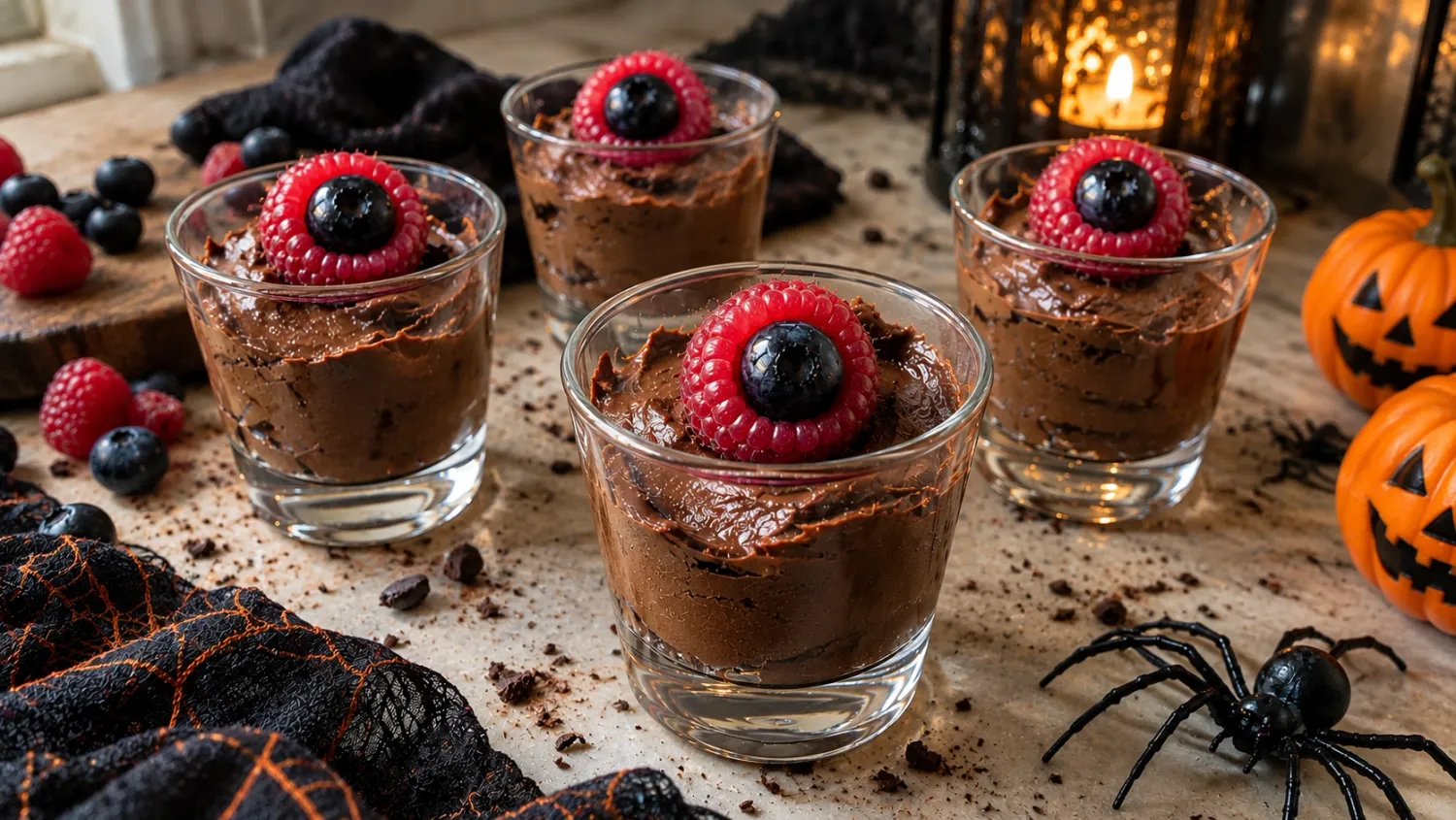
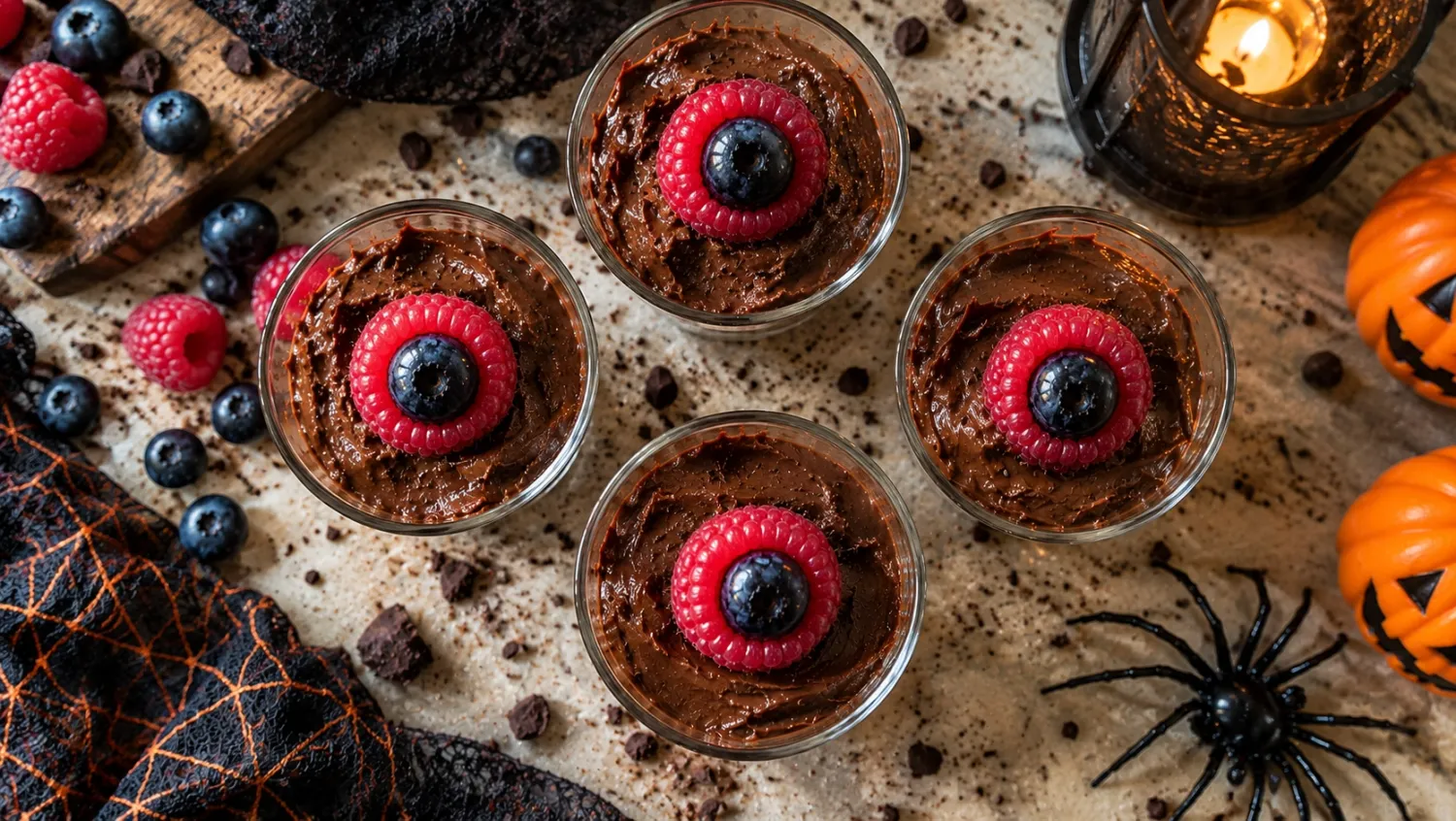
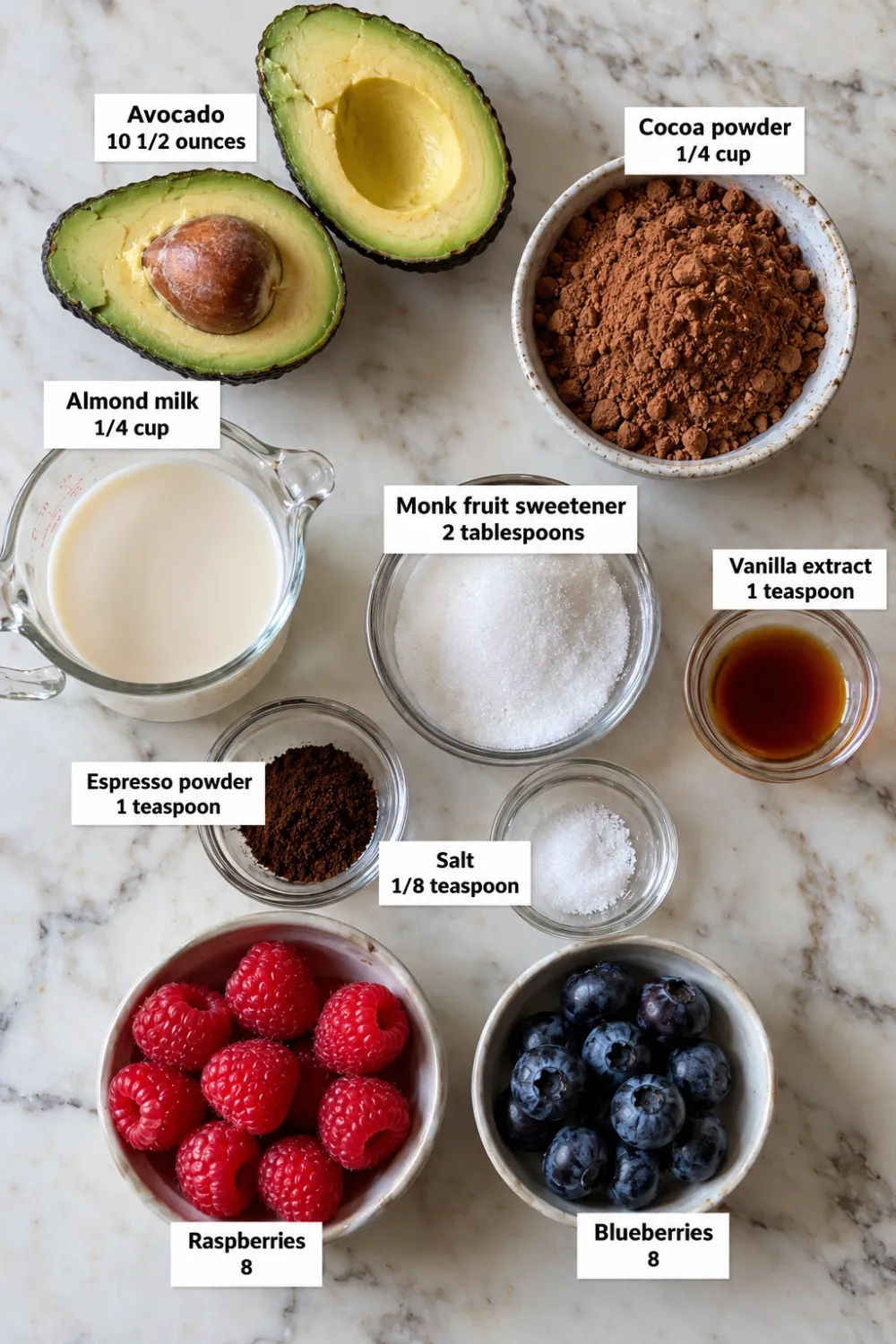
Wicked Dark Chocolate Avocado Mousse Eyeball Cups are a chilled Halloween dessert made with ripe avocado, unsweetened cocoa powder, monk fruit sweetener, espresso powder, and vanilla. The mousse is divided into small individual cups and finished with raspberry-and-blueberry eyeballs for an easy spooky presentation.
The avocado provides the creamy base, so this version does not need heavy cream or butter. The result is rich enough to feel like a real dessert while remaining intentionally portioned for Halloween entertaining.
For another chocolate-focused GLP-1 dessert with a different base, compare this recipe with Whipped Chocolate Chia Protein Pudding.
Why Avocado Works in Chocolate Mousse
Ripe avocado has a naturally soft, creamy texture and contributes fiber and unsaturated fat. That makes it useful as the structural base for a mousse-style dessert.
The key is not to expect the avocado to taste like chocolate on its own. Instead, the recipe builds a chocolate-forward flavor using unsweetened cocoa, vanilla, espresso powder, and controlled sweetness.
The avocado supplies the body; cocoa supplies the dominant flavor.
If you want to explore another creamy chocolate mousse built on an alternative base, try our Silken Tofu Chocolate Mousse.
How to Make the Mousse Taste Chocolate-First
Three things matter most.
Start With a Ripe Avocado
A properly ripe avocado blends smoothly and has a milder flavor than an underripe one.
If the avocado is firm, stringy, or strongly grassy-tasting, the finished mousse is more likely to retain noticeable avocado flavor.
Use Enough Cocoa
Unsweetened cocoa is the primary chocolate ingredient, so its quality and intensity matter.
Because there is no melted chocolate or chocolate syrup in the recipe, cocoa needs to carry most of the chocolate flavor.
Balance the Cocoa
Unsweetened cocoa can be naturally bitter. Vanilla and espresso powder help round out the flavor, while monk fruit sweetener supplies the sweetness.
Taste the mousse after blending and adjust before chilling.
Can You Taste the Avocado?
You may notice a subtle avocado note, especially if the avocado is underripe or strongly flavored.
With a ripe, mild avocado and enough cocoa, the dominant flavor should be dark chocolate rather than avocado.
If chocolate flavor is your priority, do not compensate for weak cocoa by adding large amounts of liquid. That can make the mousse thinner without necessarily making it taste more chocolatey.
Why Small Cups Work Well for This Dessert
The recipe is intentionally divided into approximately 2-ounce portions before serving.
That makes the portion visible and defined from the beginning rather than asking guests to serve themselves from one large bowl.
For readers using GLP-1 medications, smaller portions can be a practical way to approach richer foods, but individual tolerance varies. GLP-1 medications can affect appetite and gastric emptying, so this recipe should be viewed as a portion-conscious dessert option rather than a food that treats or prevents medication effects.
Looking for another festive single-serving dessert option? Check out our Protein Pumpkin Peanut Butter Cups.
What Makes These Halloween Mousse Cups Different?
The recipe combines three useful elements:
- A creamy avocado-based chocolate mousse
- Individual small dessert portions
- A simple edible eyeball garnish
The visual effect comes primarily from contrast. Nearly black chocolate mousse provides the background, while the red raspberry and dark blueberry create an immediately recognizable eyeball.
There is no need for elaborate frosting, piping, or specialty Halloween decorations.
How to Make the Edible Eyeballs
The easiest version uses a raspberry and blueberry.
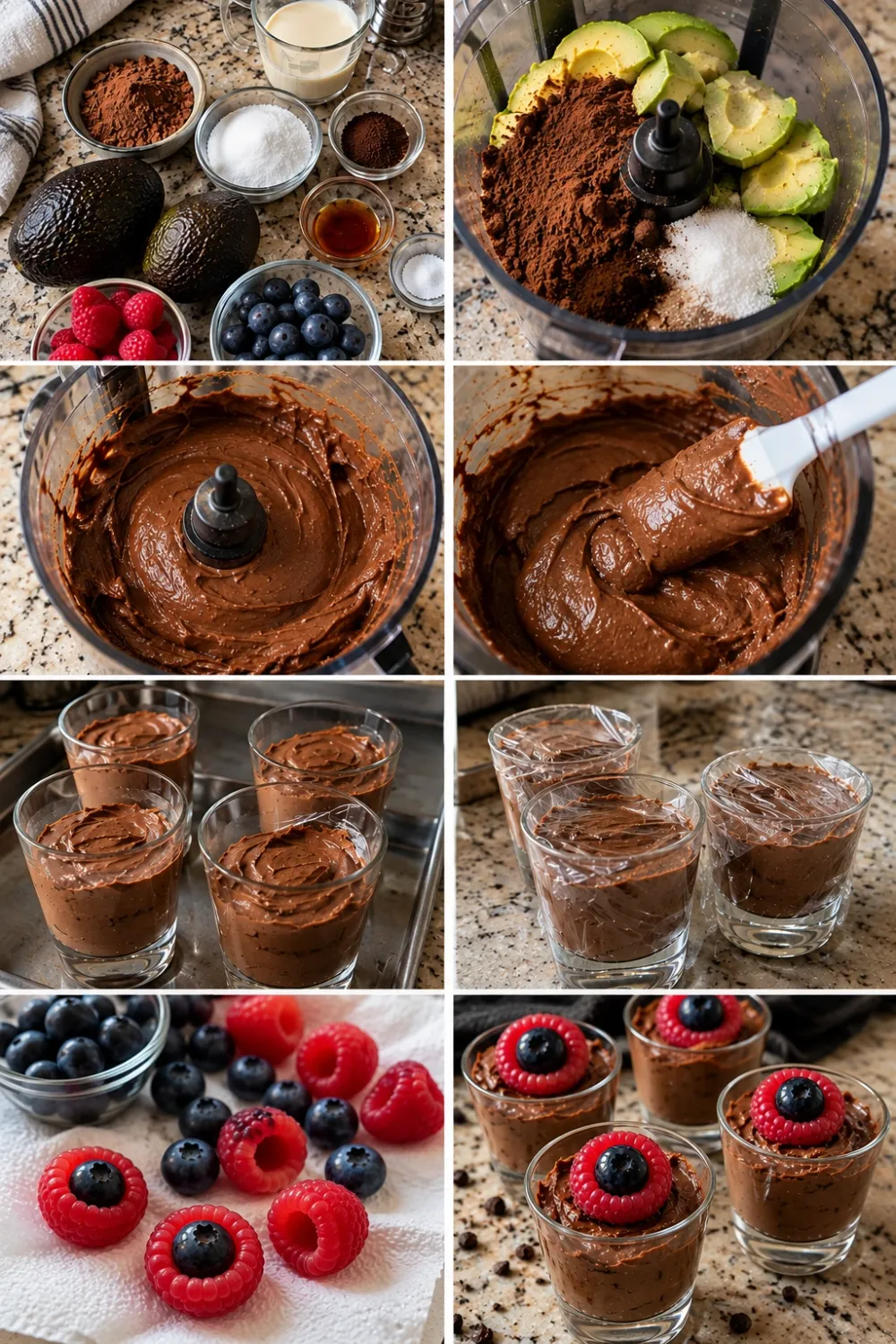
Place one raspberry on top of each chilled mousse cup, then gently press a blueberry into its center.
The irregular shape of the raspberry makes each eyeball look slightly different, which is actually useful for a Halloween presentation.
Add the fruit shortly before serving to keep the garnish fresh-looking.
Choosing a Monk Fruit Sweetener
Monk fruit products are not all formulated the same way. Some are blends with erythritol or other bulking ingredients, while others use different sweetener combinations.
That means there is no single formulation that can objectively be called the cleanest-tasting option for every person.
For this recipe, a granulated monk fruit/erythritol blend is practical because it is easy to incorporate into the mousse. Start with the listed amount, blend completely, taste, and adjust.
Is This a Sugar-Free Dessert?
When made with a sugar-free monk fruit sweetener, the recipe contains no conventional added sugar from table sugar, syrup, honey, or similar ingredients.
However, the fruit garnish and avocado naturally contain sugars.
FDA distinguishes total sugars, which include naturally occurring sugars, from added sugars, which are added during processing. (FDA — Added Sugars on the Nutrition Facts Label)
For that reason, describing this recipe as low-sugar or made without conventional added sugar is more precise than suggesting that the entire dessert contains zero sugar.
How Far Ahead Can You Make It?
The mousse can be prepared and portioned up to 2 days ahead.
Keep the cups covered and refrigerated. Prepare the raspberry-and-blueberry eyeballs separately and add them shortly before serving.
That simple separation improves the presentation and prevents the fruit from sitting on the mousse longer than necessary.
A Halloween Dessert That Looks More Complicated Than It Is
The finished cups look highly themed, but the actual preparation is straightforward.
- Blend the mousse.
- Portion it.
- Chill it.
- Add the fruit eyeballs.
That makes this recipe particularly useful when the Halloween table needs a dessert that looks distinctive without requiring complicated pastry work.
If you are also serving a fruit-forward Halloween snack alongside these mousse cups, try our High Protein Caramel Apple Dip.