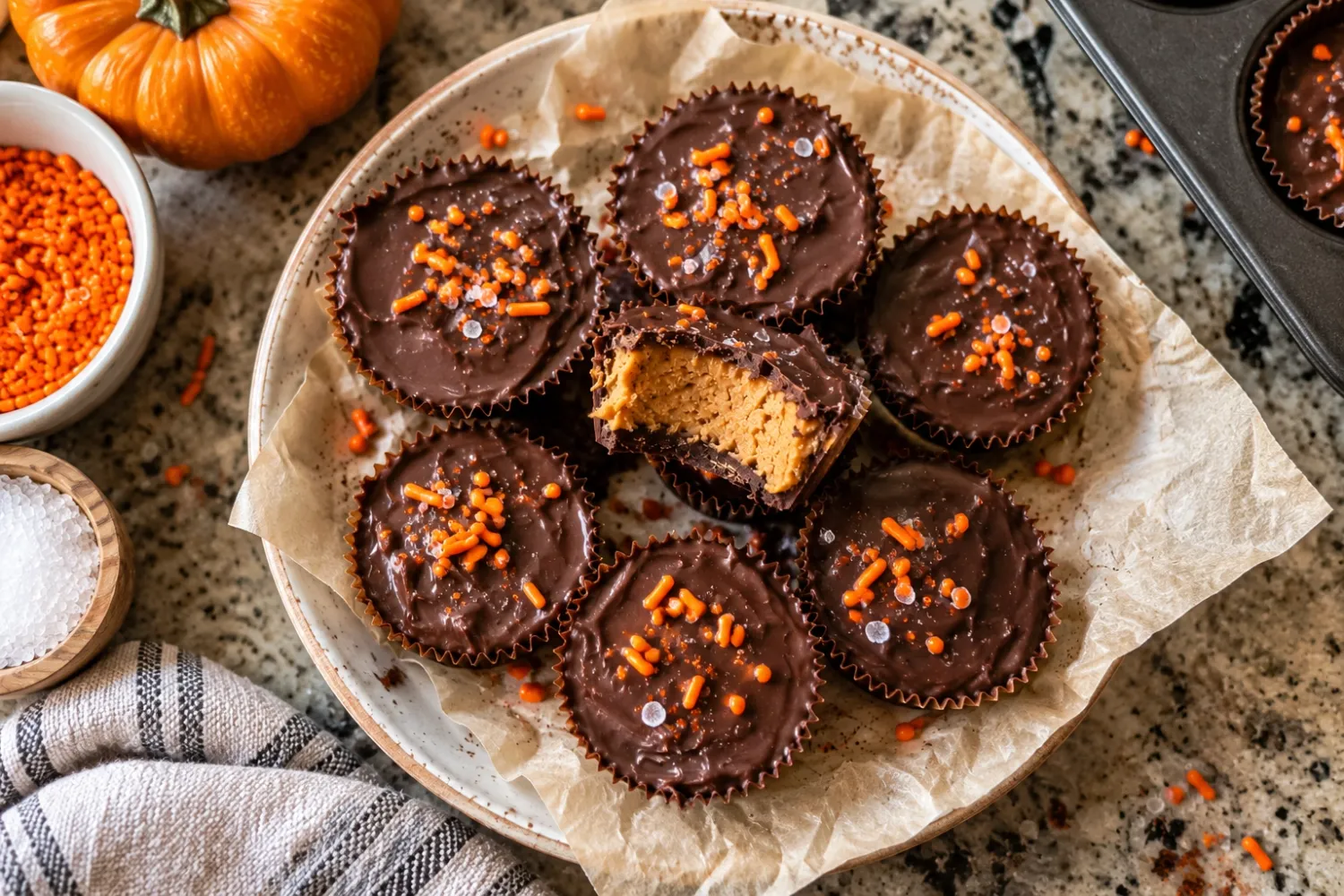



Protein Pumpkin Peanut Butter Cups | High-Protein Halloween Treat

4.9 ★
0 people reviewed 🎉 Thanks for review!
Lauren Hayes
Written By Lauren Hayes ✓
Lauren Hayes
Recipe Developer & Culinary Editor

Lauren develops and reviews GLPIANS recipes with a focus on ingredient accuracy, cooking technique, texture, timing, portioning, and reliable home-kitchen execution.

Melissa Grant, MS, RDN
Reviewed By Melissa Grant, MS, RDN ✓
Melissa Grant, MS, RDN
Registered Dietitian Nutritionist

Melissa reviews GLPIANS content for nutrition accuracy, responsible GLP-1 framing, portion guidance, and evidence-based communication.

Daniel Harper, MPH
Fact Checked By Daniel Harper, MPH ✓
Daniel Harper, MPH
Food Safety & Health Fact Checker

Daniel reviews GLPIANS content for food-safety accuracy, including cooking temperatures, food handling, storage, reheating, and source-backed safety guidance.

Protein Pumpkin Peanut Butter Cups for Halloween

These Dark Chocolate Pumpkin Protein Peanut Butter Cups turn the familiar peanut-butter-cup format into a small, freezer-friendly Halloween dessert with pumpkin spice flavor and a protein-rich center.

Each mini cup combines dark chocolate with a filling made from natural peanut butter, pumpkin puree, vanilla whey protein isolate and pumpkin pie spice. The result is a firm chocolate shell around a soft, slightly fudgy pumpkin-peanut-butter center.

The recipe makes 12 mini cups, with 1 cup as the defined serving size.
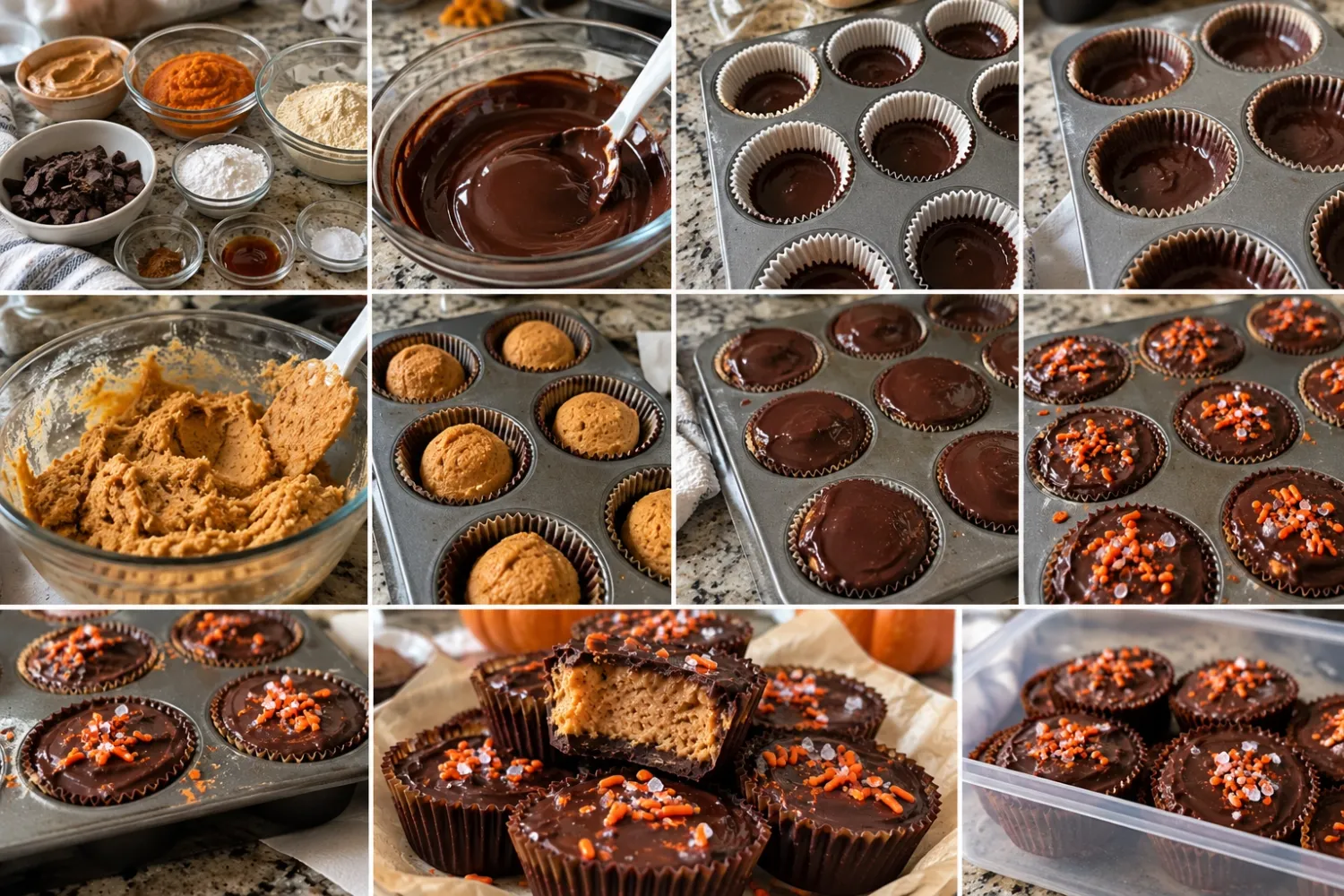
Process of making protein pumpkin peanut butter cups

Why These Pumpkin Peanut Butter Cups Work

The main advantage of making peanut butter cups at home is control over the ingredients and portion size.

Instead of a large conventional candy serving, these are deliberately made as mini cups. The filling also contributes substantially more protein than a traditional chocolate-and-peanut-butter confection because vanilla whey protein isolate is incorporated directly into the center.

The recipe also avoids adding honey, maple syrup or regular table sugar to the filling. That does not make the cups sugar-free—the pumpkin and chocolate still contribute naturally occurring and/or remaining sugars—but it keeps the recipe focused on a lower-added-sugar formulation.

FDA notes that added sugars are separate from naturally occurring sugars and recommends using the Nutrition Facts label to compare added-sugar amounts.

Why Pumpkin Belongs in the Filling

Pumpkin is doing more than providing a seasonal name.

A small amount of plain pumpkin puree gives the filling moisture, color and pumpkin flavor while helping the protein powder blend into the peanut butter. Pumpkin pie spice then provides the familiar cinnamon-forward Halloween flavor without requiring a sugary syrup.

The important distinction is to use plain pumpkin puree, not prepared pumpkin pie filling. If you're planning a full seasonal menu, pair these treats after a bowl of High-Protein Pumpkin Turkey Chili for a balanced Halloween night.

The Best Protein Powder for the Filling

A finely milled vanilla whey protein isolate is the preferred option for this recipe because it can create a relatively smooth, dense filling when combined with peanut butter and pumpkin.

Protein powders vary considerably in their ability to absorb moisture. If your particular powder produces a dry mixture, add pumpkin puree gradually—about 1 teaspoon at a time—rather than adding a large amount immediately.

Plant-based protein can also work, although the finished texture may be slightly thicker or grainier depending on the formulation.

Does Dark Chocolate Have a Special GLP-1 Advantage?

Not in the sense of a guaranteed medical effect.

A higher-cacao dark chocolate is used here because it generally has a more intense cocoa flavor and can contain less sugar than sweeter chocolate. That makes it useful for this recipe's lower-added-sugar goal.

However, it would be inaccurate to claim that 70% or 80% dark chocolate automatically provides superior "glycemic management" for people taking GLP-1 medications. The overall serving, carbohydrate content, fat, calories and individual response still matter.

For nutrition decisions, FDA recommends looking at the complete Nutrition Facts label rather than focusing on one nutrient alone.

A More Practical Halloween Candy Swap

The goal is not to turn Halloween into a restriction exercise.

Instead, these cups provide a deliberately portioned homemade option when the specific craving is chocolate + peanut butter + pumpkin spice.

That distinction matters. A recipe designed around the actual craving can be more useful than simply replacing candy with an unrelated "healthy" snack.

For another small-format GLP-1 dessert, see High-Protein Cottage Cheese Mug Cake with Lemon & Chia.

Why Freezing Works Especially Well

Freezing changes the eating experience.

A frozen peanut butter cup is firmer and takes longer to eat than a soft room-temperature confection. The chilled texture also makes it easy to portion the batch ahead of time and take out one cup when wanted.

Freezing does not make the food nutritionally "better," and it does not guarantee appetite control. It is simply a practical portioning and storage technique.

For the best freezer quality, USDA recommends maintaining the freezer at 0°F.

How to Keep the Texture Smooth

Three details make the biggest difference:

  1. Use finely milled protein powder. Coarse powders can make the filling gritty.
  2. Add pumpkin gradually. Too much moisture can make the filling difficult to contain.
  3. Do not overheat the chocolate. Gentle microwave heating with frequent stirring keeps the chocolate fluid without scorching it.

The filling should be thick enough to press into a compact layer inside each chocolate shell.
GLPIANS
Professional Recipe Collection
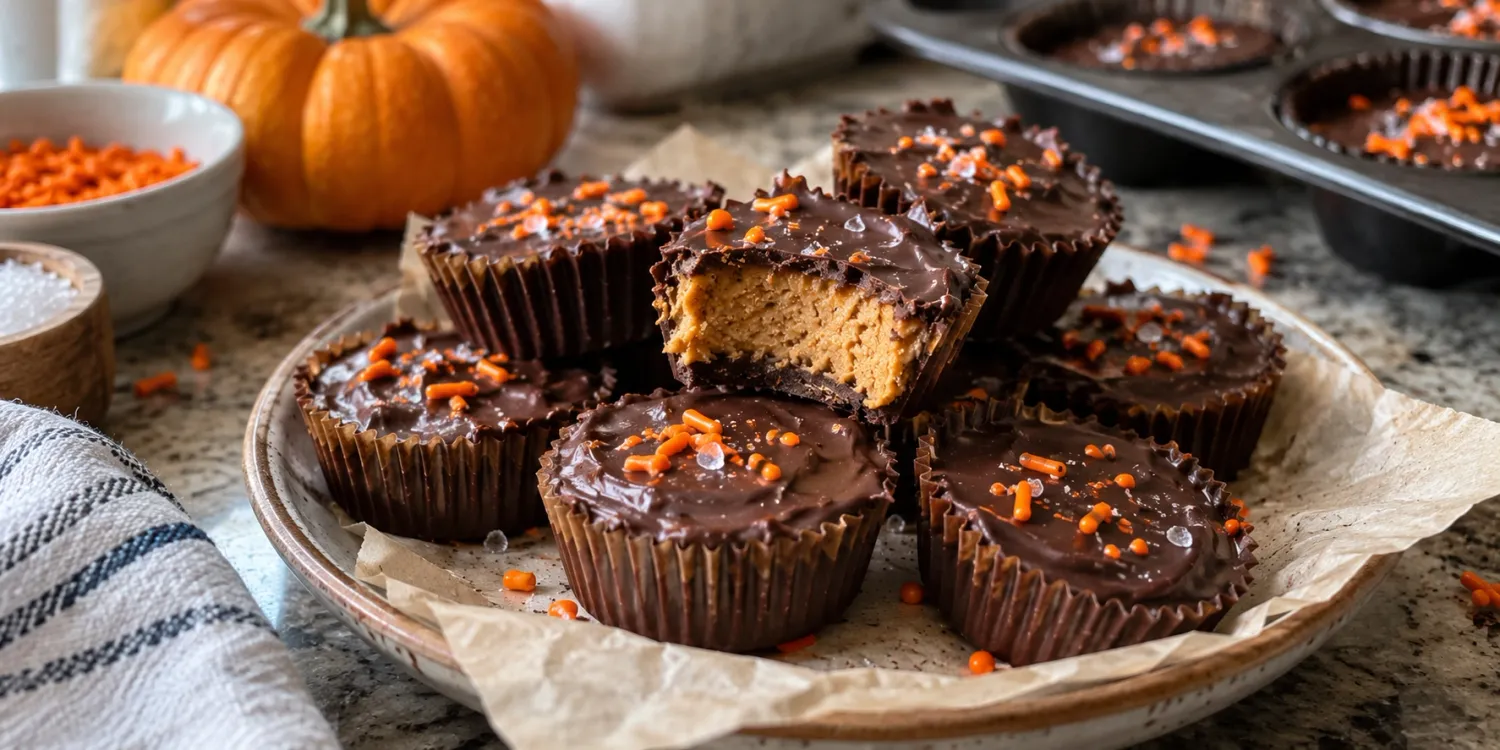
Dark chocolate pumpkin protein peanut butter cups with a creamy pumpkin peanut butter filling
HALLOWEEN DESSERT

Dark Chocolate Pumpkin Protein Peanut Butter Cups

No-bake mini peanut butter cups made with dark chocolate and a pumpkin-spiced filling blended with vanilla whey protein isolate for a festive, portion-friendly Halloween dessert.

Servings
12
Yield 12 mini cups
Prep Time 20 mins
Cook Time 2 mins
Total Time 1 hr 20 mins
Course Dessert / Snack
Cuisine American

Ingredients

Equipment

12-cup mini muffin pan
Mini paper liners or silicone mold
Microwave-safe bowl
Medium mixing bowl
Spoon or small cookie scoop
Measuring cups and spoons
Rubber spatula or sturdy spoon

Instructions

  • 1
    Line a 12-cup mini muffin pan with mini paper liners. Silicone mini muffin molds can also be used, particularly for a pumpkin-shaped Halloween presentation.
  • 2
    Melt the chopped dark chocolate with the coconut oil, if using, in a microwave-safe bowl in 15- to 20-second intervals, stirring thoroughly between each interval. Stop as soon as the chocolate is smooth. Do not overheat it.
  • 3
    Spoon approximately 1 1/2 teaspoons of melted chocolate into each liner. Rotate or gently tap the pan so the chocolate spreads across the bottom and slightly up the sides.
  • 4
    Refrigerate the chocolate layer for about 10 minutes, or until firm.
  • 5
    While the chocolate chills, combine the peanut butter, pumpkin puree, vanilla whey protein isolate, powdered sweetener, vanilla extract, pumpkin pie spice and salt in a medium bowl.
  • 6
    Stir until a thick, cohesive filling forms. The mixture should be soft enough to press into the chocolate cups but firm enough to hold its shape. If the filling is unusually dry, mix in 1 teaspoon pumpkin puree at a time, using only enough to bring it together.
  • 7
    Divide the filling evenly among the 12 chilled chocolate cups. Press each portion gently into a compact, even layer, leaving enough room around the edges for the chocolate top layer.
  • 8
    Spoon the remaining melted chocolate over each filling portion, using approximately 1 1/2 teaspoons per cup. Gently spread the chocolate to completely cover the filling.
  • 9
    If desired, add a very small pinch of flaky sea salt or a few sugar-free orange sprinkles to each cup before the chocolate sets.
  • 10
    Refrigerate for approximately 30 minutes, or until completely firm.
  • 11
    For the firmest texture, transfer the cups to the freezer for another 10–15 minutes before serving.
  • 12
    Store the finished cups in an airtight container. For the intended chilled, firm texture, serve directly from the refrigerator or freezer.

Recipe Notes

  • Use pumpkin puree, not pumpkin pie filling. Pumpkin pie filling contains added sweeteners and spices and would change both the texture and nutrition.
  • Why whey isolate: A fine whey isolate generally produces a smoother, less gritty filling than many coarse protein powders. Different protein powders absorb moisture differently, so the pumpkin amount may need a small adjustment.
  • For plant-based protein: A finely milled plant protein can work, but the filling may be slightly thicker or grainier. Add pumpkin gradually rather than adding a large amount at once.
  • Chocolate percentage: Dark chocolate at 70% cacao or higher is useful here primarily because it generally provides a more intense chocolate flavor with less sugar than sweeter chocolate.
  • Pumpkin texture: Canned pumpkin varies slightly in moisture. The filling should be thick and moldable rather than loose.
  • Halloween presentation: Mini silicone pumpkin molds create a stronger seasonal shape without requiring additional decorations.
  • Portioning: These are intentionally mini cups. One cup is the recipe's defined serving size.
  • Food Safety Note: Because the filling contains pumpkin puree, keep finished cups refrigerated at 40°F or below or frozen at 0°F or below. FDA recommends refrigerating or freezing within two hours.

Nutrition Facts

Estimated nutrition per serving (1 mini cup):
NutrientAmount
Calories~190 kcal
Protein~13 g
Carbohydrates~10 g
NutrientAmount
Fat~12 g
Fiber~2 g
Sugar~5 g
NutrientAmount
Sodium~50 mg

Substitutions

  • Peanut butter → Natural almond butter. Flavor and consistency will vary slightly.
  • Vanilla whey isolate → Finely milled plant protein. Texture may become thicker or grainier; add pumpkin gradually.
  • 70%+ dark chocolate → Unsweetened or higher-cacao dark chocolate. Cups will taste more bitter.
  • Monk fruit/allulose blend → Another powdered zero-sugar sweetener. Adjust to taste/bulk.
  • Coconut oil → No oil. Chocolate will still set, but may be slightly thicker when melted.

Storage

Store finished cups in an airtight container in the refrigerator for up to 1 week for best texture and quality.

For longer storage, freeze them in a sealed container with parchment between layers for up to 2 months. Keep freezer at 0°F or below.

Reheating

NOT APPLICABLE.

These cups are designed to be eaten chilled or frozen. Do not microwave them to reheat.

Make-Ahead / Meal Prep

  • These cups are particularly well suited to Halloween make-ahead preparation.
  • Prepare the full batch, freeze the cups until firm, then transfer them to an airtight freezer-safe container. Remove one cup at a time when desired.
  • For a softer texture, move one cup from the freezer to the refrigerator for approximately 10–15 minutes before eating.

Serving Suggestions

Keep the experience simple and seasonal with these serving ideas:

  • Serve one chilled cup alongside coffee or tea for a small Halloween dessert.
  • Add one cup to a Halloween dessert plate with fresh berries for color contrast.
  • Use mini pumpkin-shaped silicone molds for a stronger Halloween presentation.
  • Finish with a tiny pinch of flaky sea salt for a sweet-salty contrast.
  • For a Halloween party, place the cups in mini candy liners and keep the tray chilled until needed.
Serving Suggestions for Pumpkin Peanut Butter Cups

GLP-1 Practical Notes

This recipe is designed around several practical considerations that may be useful to some GLP-1 users:

  • The mini format creates a defined portion.
  • Protein is incorporated into the dessert itself.
  • The cups can be prepared ahead and frozen individually.
  • The recipe delivers a recognizable chocolate-peanut-butter Halloween experience rather than simply labeling an unrelated snack as "GLP-1 friendly."
  • Individual tolerance and appetite vary, so one serving may be appropriate for one person while another may prefer a smaller amount.

This recipe should be viewed as a food option, not a treatment for medication side effects or a guarantee of weight loss, appetite control or blood-glucose outcomes.

Common Mistakes

Using pumpkin pie filling instead of pumpkin puree: This can add unwanted sugar and change the consistency.

Adding too much pumpkin: The filling can become too wet to sit cleanly inside the chocolate shell.

Using an overly coarse protein powder: The filling may become gritty.

Overheating the chocolate: Chocolate can become thick, scorched or difficult to spread.

Making the chocolate shell too thin: A very thin bottom layer can crack when the filling is pressed into it.

Halloween Serving Idea

For a party, make the cups in mini pumpkin-shaped silicone molds and finish them with a tiny amount of flaky sea salt or sugar-free orange sprinkles.

For a savory Halloween option alongside the dessert, see Healthy Halloween Deviled Eggs with Greek Yogurt.

Frequently Asked Questions

Are these protein pumpkin peanut butter cups high in protein?

Each mini cup provides approximately 13 grams of protein based on the recipe's estimated nutrition calculation. Actual protein will vary according to the protein powder and peanut butter used.

What protein powder works best?

A finely milled vanilla whey protein isolate is the preferred choice for the smoothest texture. A finely milled plant protein can also work, but the texture may be thicker or grainier.

Can I use milk chocolate instead of dark chocolate?

Yes, but the result will be sweeter and typically contain more sugar. Dark chocolate at 70% cacao or higher better matches this recipe's intended deeper chocolate flavor and lower-added-sugar direction.

Are these sugar-free?

No. The recipe is not accurately described as sugar-free because pumpkin and dark chocolate contribute sugars. It is better described as a low-sugar / lower-added-sugar Halloween treat, depending on the specific ingredients selected.

Can I freeze pumpkin peanut butter cups?

Yes. Freeze them in an airtight freezer-safe container for best quality for approximately 2 months. Keep the freezer at 0°F or below.

Can I make these without protein powder?

You can, but removing the protein powder changes the filling's structure and substantially reduces the protein content. The recipe was developed around protein powder as a structural ingredient, so a direct one-for-one replacement is not recommended.

Why are my protein cups gritty?

The most common reason is the protein powder. Different powders have different particle sizes and moisture absorption. A finely milled whey isolate generally produces a smoother filling than a coarse powder.

Can I make these in regular muffin cups?

Yes, but the yield and portion size will change. Regular muffin cups are considerably larger, so the recipe should not be represented as 12 mini servings if regular-size cups are used.

Explore Another High-Protein Chocolate Dessert

If you're looking for another chocolate-forward GLP-1 dessert option, explore this whipped chocolate chia protein pudding.

View Chia Protein Pudding
Link copied to clipboard!