



```html ``` ```html ```

High-Protein Cottage Cheese Mug Cake with Lemon & Chia | GLP-1 Dessert

4.9 ★
0 people reviewed 🎉 Thanks for review!
Lauren Hayes
Written By Lauren Hayes ✓
Lauren Hayes
Recipe Developer & Culinary Editor

Lauren develops and reviews GLPIANS recipes with a focus on ingredient accuracy, cooking technique, texture, timing, portioning, and reliable home-kitchen execution.

Melissa Grant, MS, RDN
Reviewed By Melissa Grant, MS, RDN ✓
Melissa Grant, MS, RDN
Registered Dietitian Nutritionist

Melissa reviews GLPIANS content for nutrition accuracy, responsible GLP-1 framing, portion guidance, and evidence-based communication.

Daniel Harper, MPH
Fact Checked By Daniel Harper, MPH ✓
Daniel Harper, MPH
Food Safety & Health Fact Checker

Daniel reviews GLPIANS content for food-safety accuracy, including cooking temperatures, food handling, storage, reheating, and source-backed safety guidance.

A High-Protein Cottage Cheese Mug Cake for One

This high-protein cottage cheese mug cake makes one moist lemon chia cake in a mug, with about 21 grams of protein per serving based on standard ingredient estimates.

The batter combines blended cottage cheese, egg white, almond flour, chia seeds, lemon zest, and lemon juice. It cooks in the microwave in roughly 90 seconds, although the exact time depends on your microwave's wattage.

For GLP-1 users who prefer smaller portions, the single-serving format also avoids preparing an entire batch of dessert when one portion is all you want. If you prefer a savory morning option using the same protein-rich base, high-protein cottage cheese egg bites are an excellent alternative.
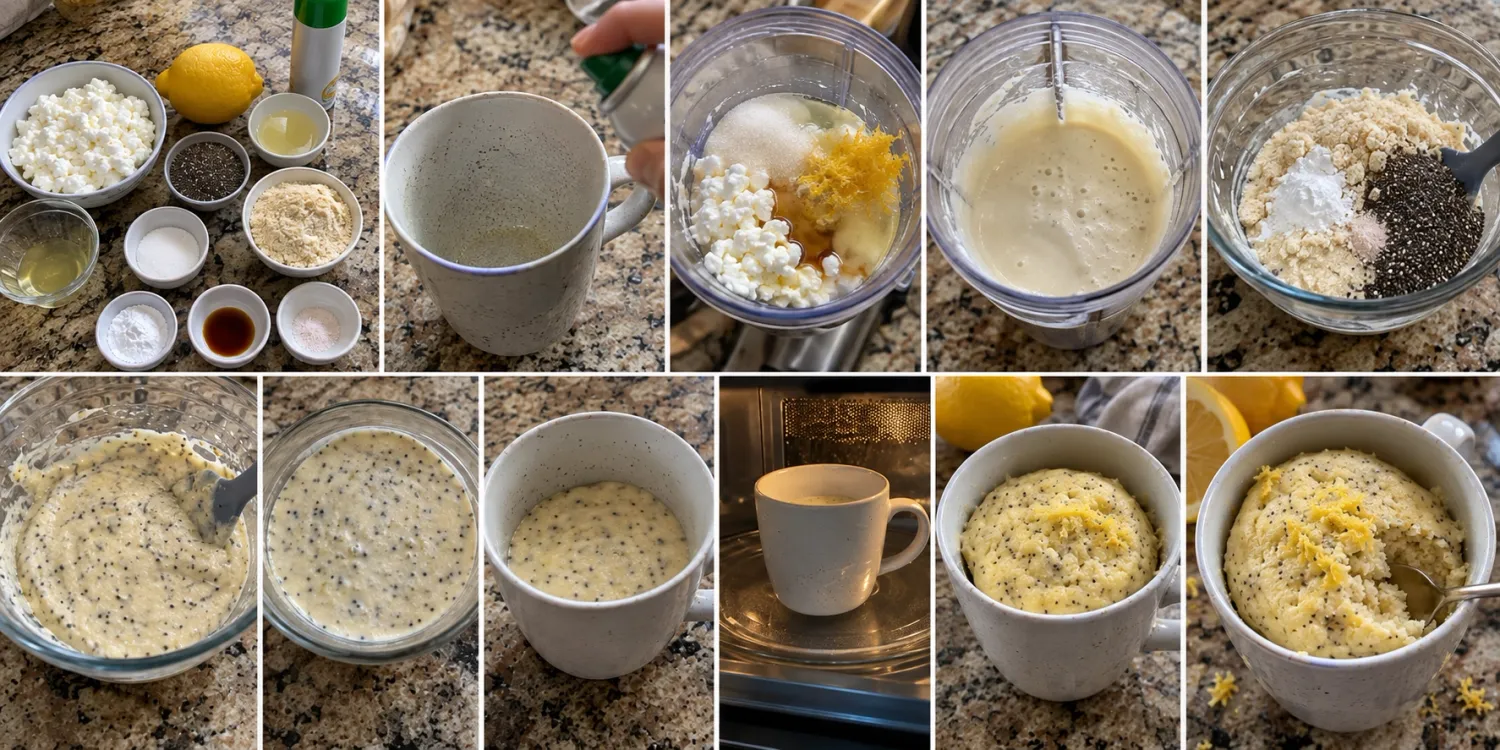
Step-by-step process of making the high-protein cottage cheese lemon chia mug cake

Why cottage cheese works in this mug cake

Blending cottage cheese turns the curds into a smooth, moisture-rich base.

That matters because cottage cheese is doing more than simply adding protein. Its moisture helps create the soft texture of the finished mug cake, so replacing it with an unrelated ingredient can substantially change the recipe.

The result is a moist cake-like crumb without relying on butter or oil as the primary source of richness.

Why lemon works with cottage cheese

Cottage cheese has a mild dairy richness. Lemon zest adds concentrated citrus aroma, while a small amount of lemon juice contributes acidity.

Together, they give the mug cake a brighter flavor and keep the dessert from tasting overly heavy or dairy-forward.

What chia seeds do in the batter

Chia seeds contribute fiber and absorb moisture.

That moisture absorption is one reason the batter should rest for about one minute before microwaving. The short rest allows the chia seeds to begin hydrating and helps the batter develop a more consistent texture.

Their inclusion here is primarily culinary and nutritional; this recipe should not be presented as a treatment for blood-sugar regulation or any medical condition.

How to prevent a rubbery mug cake

The biggest practical issue with microwave mug cakes is overcooking.

A small quantity of batter heats very quickly, so an extra 20–30 seconds can make a major difference.

For a softer result:

  • Use the appropriate wattage starting range.
  • Begin at the lower end.
  • Check the center.
  • Add only 5–10 seconds at a time.
  • Stop once the top is set and the center is springy.
  • Let the cake rest for 1–2 minutes.

The goal is a cooked but moist crumb rather than a completely dry center.

Microwave wattage cooking guide

Microwave Power Starting Time
700 watts 100–110 seconds
900 watts 80–90 seconds
1,100 watts 65–75 seconds
1,200 watts 55–65 seconds

These are starting ranges rather than guarantees. Microwave efficiency, mug shape, batter temperature, and the exact appliance can all affect cooking time.

Because this recipe contains egg white, the finished egg-containing mixture should reach 160°F. USDA recommends using a food thermometer to verify the temperature of cooked egg mixtures. (Ask USDA)

Why this is useful as a single-serving dessert

A traditional cake, muffin batch, or pan of brownies can leave several portions sitting in the refrigerator.

This recipe is intentionally different.

It makes one mug cake, which can be useful when you want:

  • one dessert portion;
  • minimal preparation;
  • a quick sweet option;
  • a protein-focused recipe;
  • less leftover food;
  • no oven preheating.

For people using GLP-1 medications, individual appetite and food tolerance vary. The recipe is designed around a smaller serving, but "GLP-1-friendly" should not be interpreted as a guarantee that every person will tolerate the food or portion in the same way.

Can protein powder replace the almond flour?

Not directly.

Almond flour contributes fat, structure, and its own moisture behavior. Protein powder can absorb liquid much more aggressively depending on its formulation.

A direct 1:1 replacement can therefore produce a dense, dry, or rubbery mug cake.

If you want a protein-powder version, it should be treated as a separate recipe formulation rather than a simple ingredient swap.

What if you want another high-protein dessert?

If you prefer chocolate instead of lemon, try GLPIANS' Whipped Chocolate Chia Protein Pudding.

It uses chia in a completely different dessert format, so it provides variety without simply repeating the mug-cake concept.

For additional food-safety guidance on egg-containing recipes, the USDA guidance on safely cooking egg dishes explains the 160°F minimum internal-temperature recommendation.

Fresh is best for this mug cake

Microwave cakes are generally most enjoyable shortly after cooking.

If you refrigerate leftovers, the crumb can become firmer. Gentle reheating for a short period can soften it somewhat, but avoid extended microwave heating.

For food safety, USDA recommends promptly refrigerating cooked egg dishes and using them within 3–4 days. (Ask USDA)
GLPIANS
Professional Recipe Collection
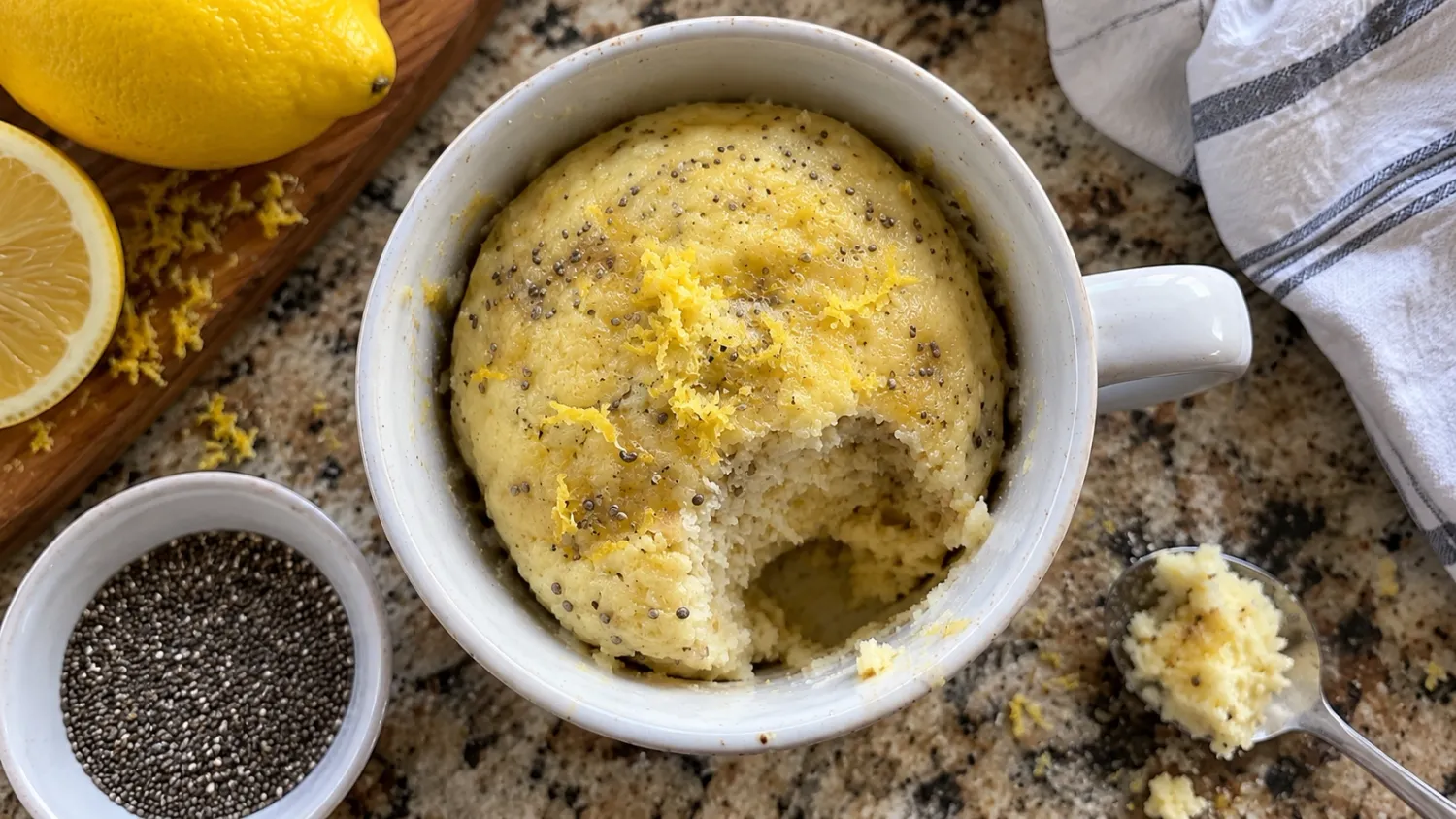
High-protein cottage cheese lemon chia mug cake in a ceramic mug topped with lemon zest
MICROWAVE MUG CAKE

High-Protein Cottage Cheese Lemon Chia Mug Cake

A moist, single-serve lemon mug cake made with blended cottage cheese, almond flour, egg white, and chia seeds. It cooks quickly in the microwave and provides a protein-focused option when you want a small sweet treat.

Servings
1
Yield 1 mug cake
Prep Time 5 mins
Cook Time 1 min 30 secs
Total Time 6 mins 30 secs
Course Dessert / Snack
Cuisine American

Ingredients

Equipment

12-ounce microwave-safe mug
Small blender or food processor
Measuring spoons
Food thermometer (optional but useful)

Instructions

  • 1
    Prepare the mug. Lightly coat a microwave-safe 12-ounce mug with nonstick cooking spray.
  • 2
    Blend the cottage cheese mixture. Add the cottage cheese, egg white, sweetener, lemon zest, lemon juice, and vanilla extract to a small blender or food processor. Blend until smooth and creamy.
  • 3
    Add the dry ingredients. Add the almond flour, chia seeds, baking powder, and salt. Pulse briefly or stir until evenly combined.
  • 4
    Rest the batter. Let the batter stand for 1 minute so the chia seeds can begin absorbing moisture.
  • 5
    Transfer to the mug. Scrape the batter into the prepared mug. The batter should occupy no more than about two-thirds of the mug's height.
  • 6
    Microwave on HIGH. Use the following starting ranges:

    • 700 watts: 100–110 seconds
    • 900 watts: 80–90 seconds
    • 1,100 watts: 65–75 seconds
    • 1,200 watts: 55–65 seconds

    Start at the lower end of the appropriate range. If the center is still visibly wet, continue in 5–10 second increments.
  • 7
    Check doneness. The top should be set and the center should feel springy rather than liquid. Because this recipe contains egg white, the egg-containing mixture should reach 160°F when checked with a food thermometer. USDA recommends 160°F for egg mixtures. (Ask USDA)
  • 8
    Rest before serving. Let the mug cake stand for 1–2 minutes before eating. The crumb will firm slightly as it cools.

Recipe Notes

  • Blend the cottage cheese thoroughly: A smooth cottage-cheese base creates a more uniform crumb.
  • Do not overcook: Microwave mug cakes can become firm and rubbery quickly when overheated.
  • Start low and add time: Microwave wattage varies considerably, so the wattage chart should be treated as a starting point.
  • Rest the batter: The one-minute rest gives the chia seeds time to hydrate before cooking.
  • Use a 12-ounce mug: The batter needs room to rise.
  • Expect a moist crumb: Cottage cheese contributes substantial moisture, so this cake is intentionally softer than a conventional dry cake.
  • Flavor balance: Lemon zest provides concentrated citrus aroma, while lemon juice adds acidity without requiring a large amount of liquid.

Nutrition Facts

Estimated nutrition per serving (1 mug cake):
NutrientAmount
Calories~240 kcal
Protein~21 g
Carbohydrates~15 g
NutrientAmount
Fat~10 g
Fiber~5 g
Sugar~4 g
NutrientAmount
Sodium~520 mg

Substitutions

  • Low-fat cottage cheese → full-fat: Use the same amount. Result will be richer.
  • Fresh egg white → liquid: Use 2 tablespoons liquid egg white.
  • Almond flour → oat flour: Use 2 tablespoons finely ground oat flour.
  • Lemon → orange: Swap zest and juice for milder citrus.
  • Almond flour → protein powder: Not a 1:1 substitution. It requires specific recipe reformulation.
  • Allulose → another sweetener: Use according to sweetness equivalence.

Storage

This recipe is designed to be eaten fresh. If leftovers remain, cover and refrigerate promptly. Use refrigerated leftovers within 3–4 days. (Ask USDA)

Reheating

Microwave at 50–70% power for 10–20 seconds. Check texture before adding time. Avoid prolonged reheating to prevent a tough crumb.

Food Safety

Because the recipe contains egg white, cook the egg-containing mixture to 160°F and use a food thermometer when practical. USDA identifies 160°F as the safe minimum internal temperature for egg mixtures.

Microwave cooking can produce uneven heating, so check the center if there is any uncertainty about doneness.

Refrigerate leftovers promptly and use within 3–4 days.

Serving Suggestions

Keep toppings modest when maintaining the recipe's intentionally small serving format:

  • Serve warm directly from the mug.
  • Add a small spoonful of plain Greek yogurt for extra creaminess.
  • Add a few fresh berries for color and a contrasting fruit flavor.
  • Finish with a little additional lemon zest.
  • Add a light dusting of powdered sweetener if desired.
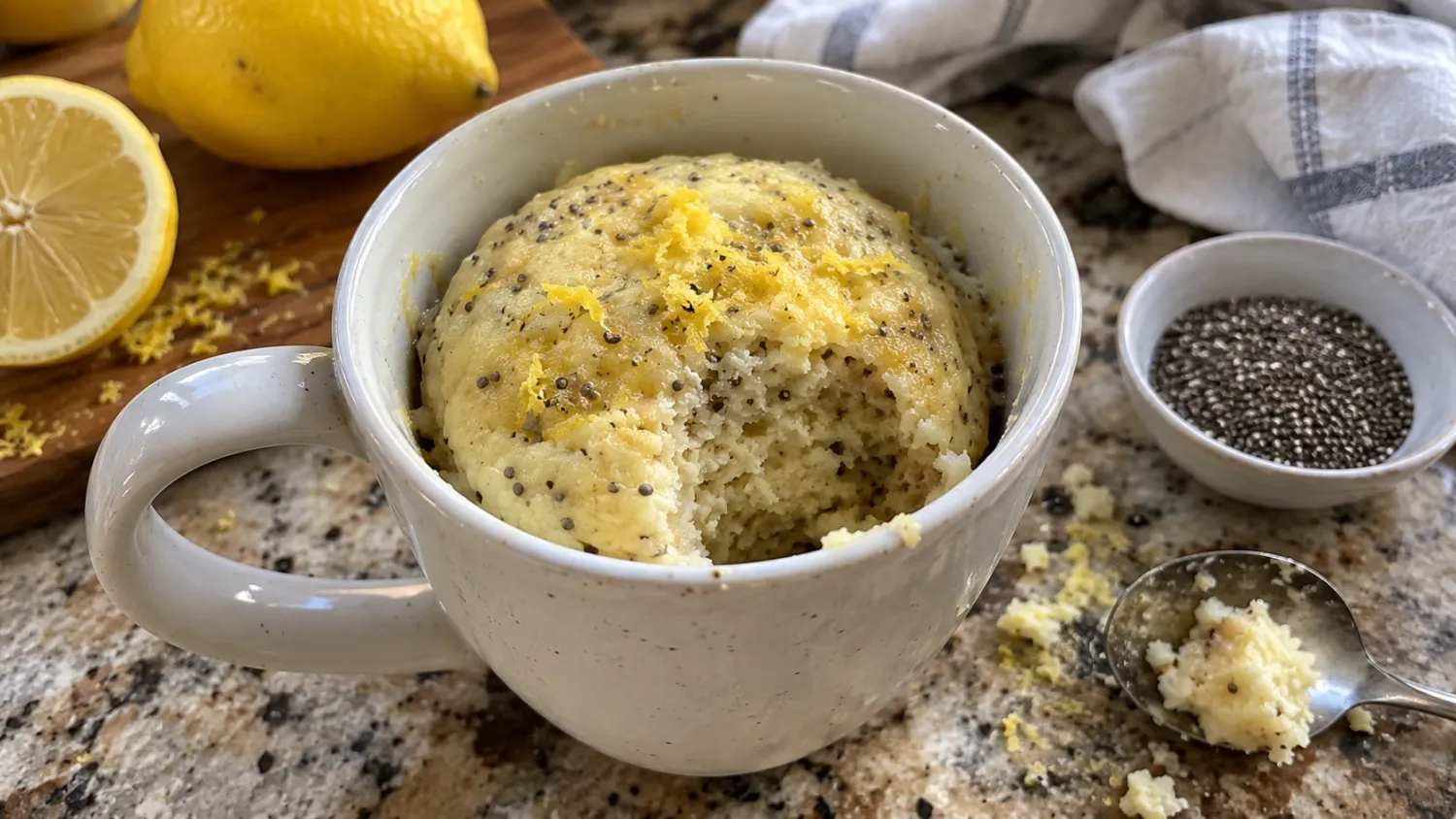
Side view of the lemon chia mug cake, illustrating texture

GLP-1 Practical Notes

This recipe was deliberately structured as a single-serving dessert rather than a multi-serving cake.

That format can be useful for someone who prefers making only the amount they intend to eat. It also reduces the need to store a large dessert batch.

The recipe provides approximately 21 grams of protein per mug cake, based on standard ingredient estimates. Exact nutrition varies according to the cottage cheese, almond flour, egg-white product, and sweetener used.

Individual food tolerance varies, so the portion should be adjusted according to personal needs and preferences.

Common Mistakes to Avoid

Overcooking: The most common texture problem. Start at the lower end of the microwave range.

Using too small a mug: The batter needs room to rise.

Skipping the chia rest: Give the batter one minute before cooking.

Leaving cottage-cheese curds unblended: Large curds can create an uneven texture.

Replacing almond flour with protein powder 1:1: The two ingredients behave differently and require different formulation.

Texture Check

The finished mug cake should be:

  • set on top;
  • moist;
  • lightly springy;
  • cohesive;
  • not visibly liquid in the center;
  • not tough or rubbery.

The cake will firm slightly as it rests.

Why "90 Seconds" Is a Starting Point

The recipe concept is built around a roughly 90-second microwave cook, but microwave wattage varies.

A 700-watt microwave may need substantially more time than a 1,200-watt microwave.

Use the wattage chart, then make small adjustments rather than treating 90 seconds as a universal fixed cooking time.


Frequently Asked Questions

How do you prevent a microwave mug cake from becoming rubbery?

Avoid overcooking. Start at the lower end of the microwave wattage range and add only 5–10 seconds when necessary. The finished cake should be set and springy rather than dry or tough.

Can protein powder replace almond flour in this mug cake?

Not as a direct 1:1 substitution. Protein powder absorbs moisture differently from almond flour and can produce a dense or rubbery texture. A protein-powder version should be reformulated rather than swapped ingredient-for-ingredient.

What role does lemon zest play in a cottage cheese mug cake?

Lemon zest provides concentrated citrus aroma and helps balance the mild richness of cottage cheese. Lemon juice adds additional acidity and brightness.

How much protein is in this cottage cheese mug cake?

The recipe provides approximately 21 grams of protein per mug cake, based on standard ingredient estimates. Exact nutrition varies by the specific products used.

Can I make this mug cake without chia seeds?

Yes, but chia contributes fiber and affects the batter's moisture balance. Removing it can change the texture, so the recipe should not be assumed to behave identically without it.

What size mug should I use?

A 12-ounce microwave-safe mug is recommended. It gives the batter enough room to expand during cooking.

Can I make this mug cake ahead of time?

The recipe is best prepared immediately before eating. If necessary, refrigerate the cooked cake promptly and reheat it gently.

Is this recipe suitable for people using GLP-1 medication?

The recipe is designed around a small, single serving and a protein-focused ingredient profile, but individual food tolerance and portion needs vary. It is not a treatment for GLP-1 medication effects or side effects.

Does this recipe treat GLP-1 medication side effects?

No. It is a food recipe and should not be presented as a treatment for medication side effects or as a substitute for medical advice.

Try Another High-Protein Dessert

Looking for a different texture and chocolate flavor? Try the whipped chocolate chia protein pudding next.

Try Another High-Protein GLP-1 Dessert
Link copied to clipboard!