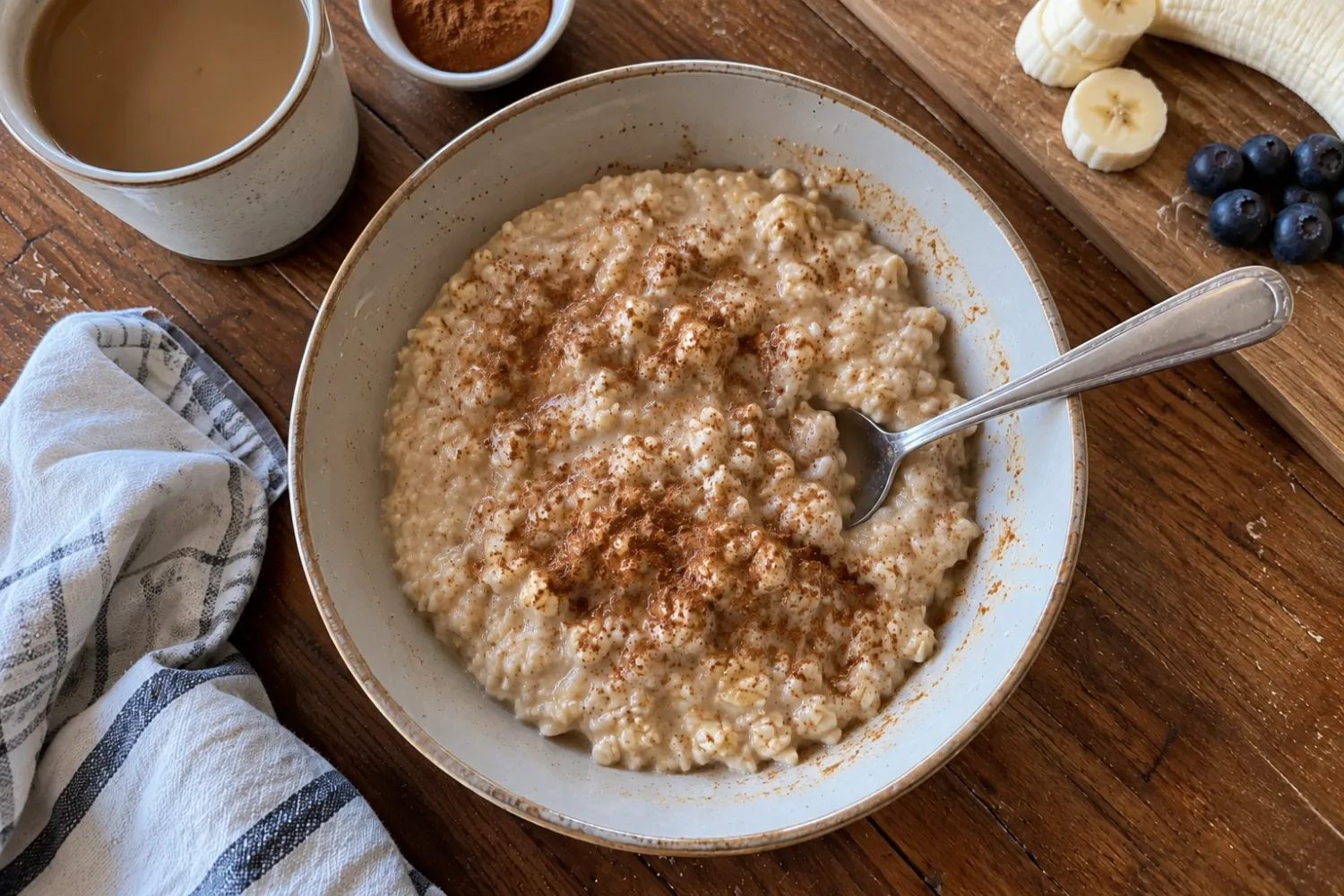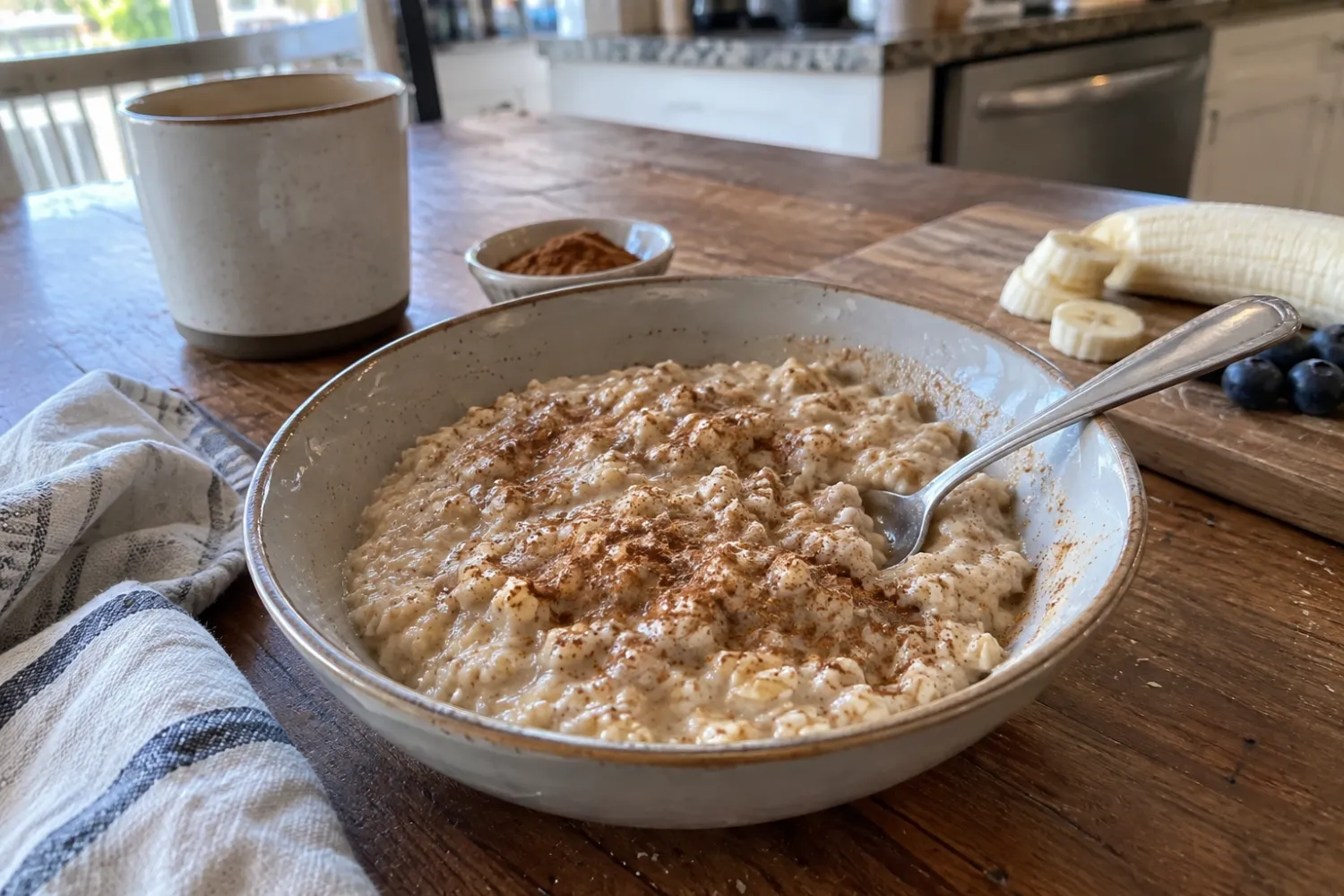


High-Protein Psyllium Husk Oatmeal With Egg Whites
This high protein psyllium husk oatmeal combines old-fashioned rolled oats, liquid egg whites, unsweetened almond milk, cinnamon, and a small amount of psyllium husk powder in one warm breakfast bowl.
The recipe is built around three practical goals: increasing protein, adding fiber, and creating a creamy oatmeal texture without requiring a large amount of additional ingredients.
The most important technique is adding the egg whites slowly over low heat while whisking continuously. That keeps them distributed through the oatmeal instead of producing obvious scrambled-egg pieces.
Why Add Egg Whites to Oatmeal?
Rolled oats provide carbohydrates and fiber, but they are not especially protein-dense by themselves.
Liquid egg whites provide a convenient way to increase the protein content without adding the fat from whole eggs.
In this recipe, the egg whites are incorporated directly into the oatmeal rather than cooked separately. This gives the bowl a thicker, creamier texture while keeping the preparation simple.
How to Cook Egg Whites Into Oatmeal Without Scrambling Them
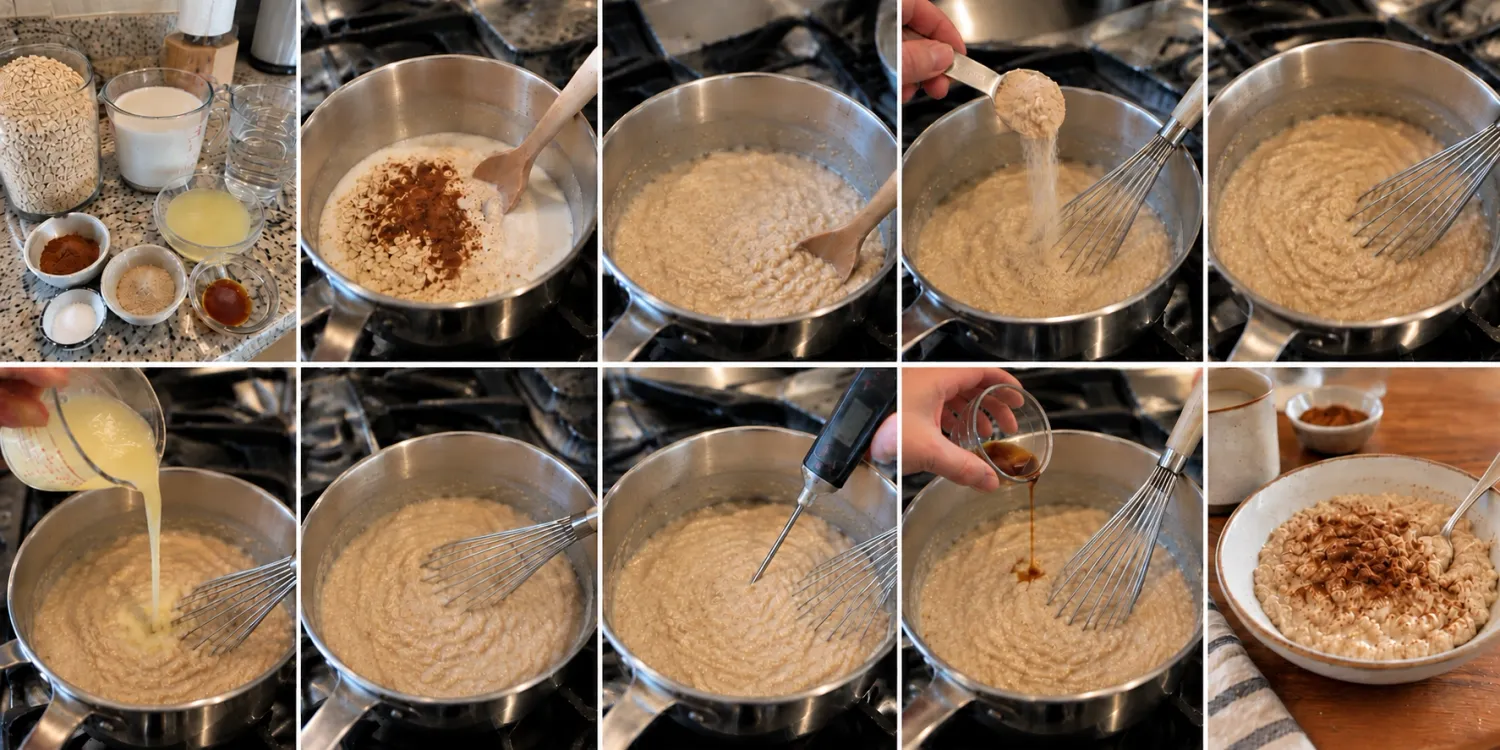
The key is low heat + slow addition + continuous whisking.
First, cook the oats until they are nearly tender.
Next, reduce the heat to low and allow the oatmeal to stop actively bubbling.
Then slowly stream the liquid egg whites into the oatmeal while whisking continuously.
Do not pour the entire amount into the center of the pan at once.
Continue stirring gently until the egg whites are fully incorporated and the mixture reaches 160°F. FDA recommends 160°F for egg dishes. (U.S. Food and Drug Administration)
The result should be creamy oatmeal rather than visible egg curds.
How Much Psyllium Should You Add?
This recipe uses 1 teaspoon of psyllium husk powder with 1 1/4 cups of combined water and almond milk.
That ratio is intentionally conservative.
Psyllium absorbs liquid and increases viscosity. FDA includes psyllium husk among the isolated non-digestible carbohydrates recognized within its dietary-fiber definition. (U.S. Food and Drug Administration)
The goal here is to create a thicker oatmeal texture without making the bowl excessively dense.
The most important technique is distribution.
Sprinkle the psyllium gradually over the oatmeal while whisking rather than dumping it into one place.
Why This Recipe Uses Psyllium Instead of Simply Adding More Oats
Adding more oats would increase the overall amount of oatmeal and its carbohydrate contribution.
Psyllium serves a different culinary purpose: it absorbs liquid and changes the viscosity of the finished bowl.
That makes it useful when the goal is to modify texture without simply adding another large quantity of oats.
However, more psyllium is not automatically better.
The amount should be appropriate for the recipe, and individual tolerance can vary.
Is This Oatmeal Appropriate for GLP-1 Users?
It can be a practical breakfast option for some people using GLP-1 medications because it combines oats, egg-white protein, and fiber in a warm, portion-flexible meal.
It should not, however, be described as a food that treats medication effects, guarantees satiety, stabilizes blood glucose, prevents side effects, or produces a particular weight-loss result.
Individual appetite and gastrointestinal tolerance vary.
If a full bowl feels too large, a smaller portion can be eaten and the remainder refrigerated.
For another breakfast option with a different texture and preparation style, see this high-protein GLP-1 breakfast recipe.
What If You Have Mild Nausea?
This recipe should not be presented as universally nausea-friendly.
Although warm oatmeal has a soft texture, psyllium increases fiber and viscosity. That may be comfortable for some people and uncomfortable for others.
If you experience mild nausea and know that high-fiber foods are difficult for you, consider:
- starting with a smaller portion;
- using a thinner oatmeal consistency;
- avoiding heavy toppings;
- eating slowly;
- stopping if the food makes your symptoms worse.
Psyllium can cause gastrointestinal symptoms in some people, and it is important to follow appropriate product directions and consider individual tolerance.
Persistent or severe nausea should not be treated through recipe modification alone.
The Best Texture Technique
There are four important stages:
- Cook the oats first.
- Add psyllium gradually while whisking.
- Lower the heat before adding the egg whites.
- Stream the egg whites slowly while whisking continuously.
If the oatmeal becomes too thick, add warm liquid one tablespoon at a time.
If it becomes lumpy, the egg whites were likely exposed to excessive heat or added too quickly.
Can You Make This Oatmeal Ahead?
Yes.
The oatmeal can be refrigerated after cooking, but its texture will change.
Psyllium continues to hold liquid as the oatmeal cools, so the refrigerated version becomes much thicker.
When reheating, add water or unsweetened almond milk gradually until the desired consistency returns.
If you prefer fiber-rich overnight oats for a chilled, make-ahead alternative, those require a different preparation method entirely.
FDA recommends promptly refrigerating perishable cooked foods and keeping refrigerated food at 40°F or below. (U.S. Food and Drug Administration)
Why This Recipe Works as a Portion-Flexible Breakfast
The recipe produces one complete bowl, but the entire quantity does not have to be eaten in one sitting.
That flexibility can be useful for people whose appetite varies from day to day.
If a full bowl is more food than you want at breakfast, portion it according to your appetite and refrigerate the remainder promptly.
The recipe's ingredient quantities can also be scaled mathematically for additional servings, although cooking time should not simply be multiplied by the number of servings.