


Low-Carb Eggplant Mini Pizzas with Lean Beef
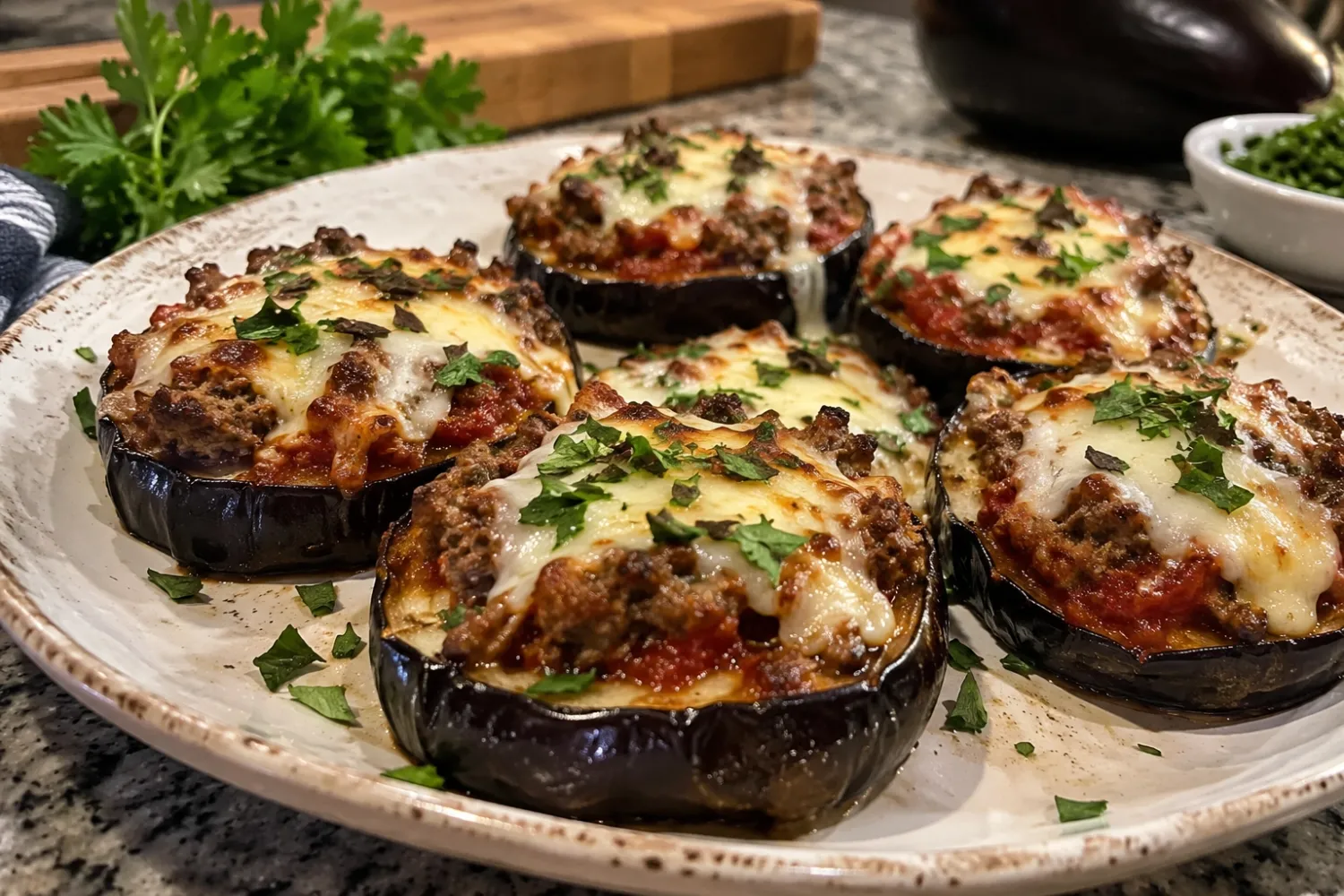
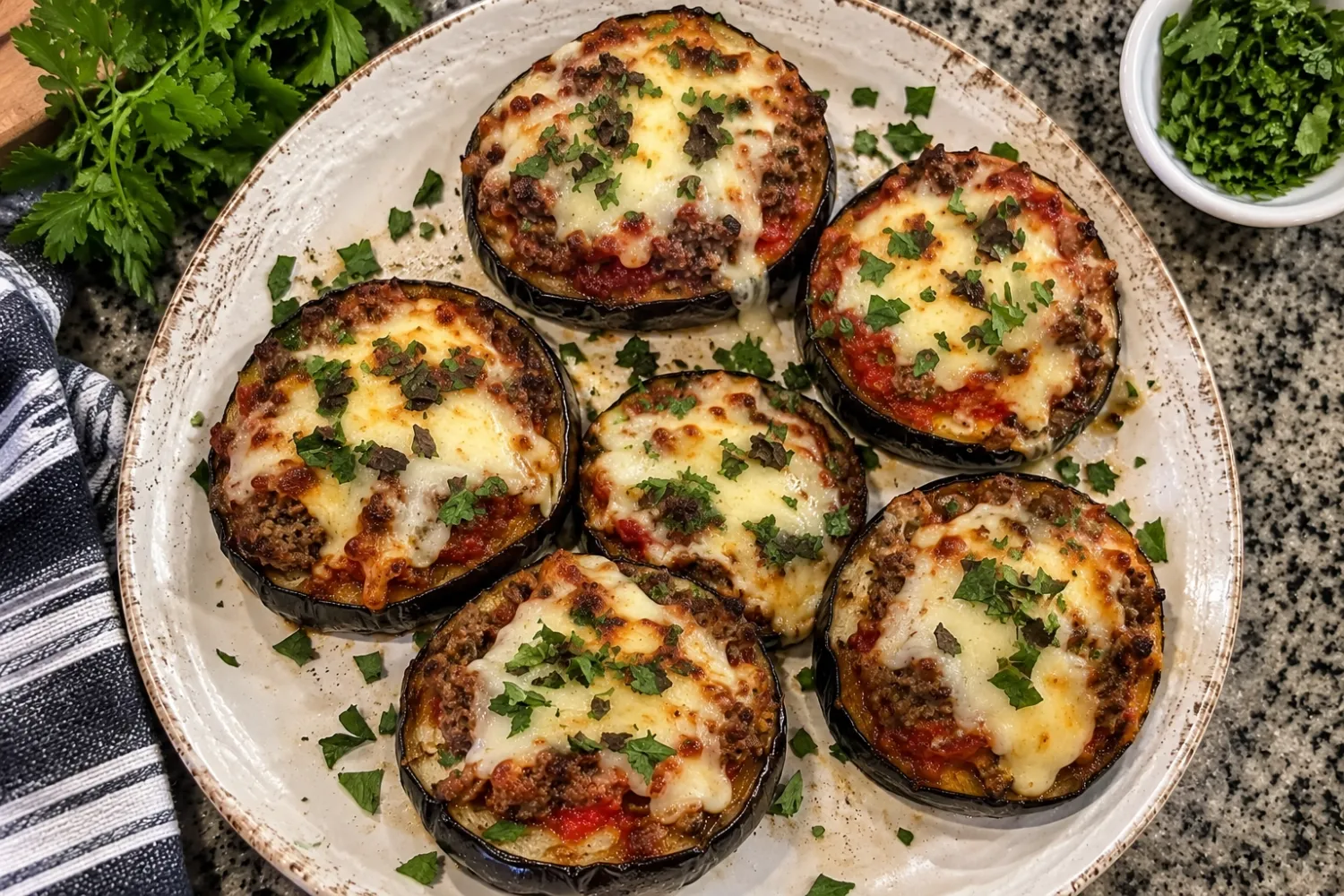
These low carb eggplant mini pizzas turn thick roasted eggplant rounds into a sturdy vegetable-based pizza alternative. Each round is topped with marinara, seasoned 93% lean ground beef, and part-skim mozzarella, then baked until the cheese melts.
The recipe makes 12 mini pizzas, or 6 servings of 2 mini pizzas each.
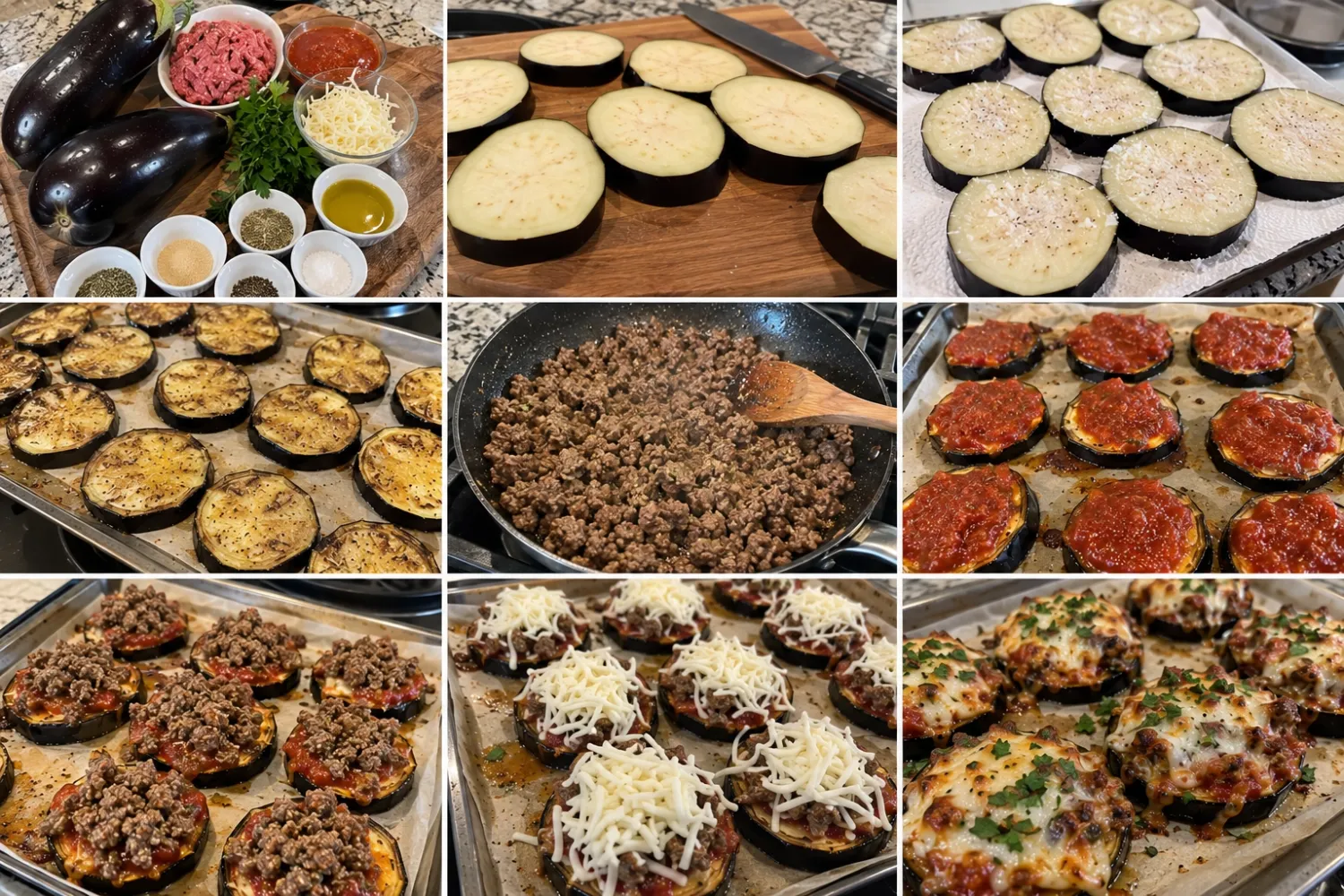
The key technique is the eggplant preparation: salt the thick-cut rounds briefly, blot them thoroughly, and pre-roast them before adding the toppings. That gives the eggplant time to lose some surface moisture and develop enough structure to carry the beef, sauce, and cheese.
Why Use Eggplant Instead of a Traditional Pizza Crust?
Eggplant changes the eating experience without trying to imitate bread exactly.
A conventional pizza crust provides chew and structure from flour and gluten. Roasted eggplant provides a tender, savory vegetable base instead. The result is softer than traditional pizza but substantial enough to hold a modest amount of topping when the rounds are cut thick and pre-roasted.
The approach also makes portioning simple: instead of cutting a large pizza into uncertain slices, the finished recipe produces individual mini pizzas.
How to Keep Eggplant Mini Pizzas From Getting Soggy
The most important step is not adding more oil or roasting the eggplant until it collapses.
Instead:
- Cut the eggplant approximately 3/4 inch thick.
- Salt it lightly.
- Let it stand for 15 minutes.
- Blot both sides thoroughly.
- Brush lightly with olive oil.
- Roast before adding the toppings.
- Keep the marinara layer modest.
- Avoid piling on wet toppings.
This creates a better surface for the toppings while preserving enough structure to pick up the finished mini pizzas.
Why the Lean Beef Works
The seasoned ground beef gives the recipe the savory, familiar quality people often look for in a meat-topped pizza without requiring a large quantity of processed meat.
Using 93% lean ground beef also keeps the topping relatively lean compared with many traditional pizza-meat combinations.
The beef should be cooked separately before the eggplant is topped. This makes it easier to control excess rendered fat and, more importantly, allows the ground beef to reach the USDA-recommended 160°F minimum internal temperature before assembly. (FSIS)
A Practical GLP-1 Portion Strategy
There is no medically defined number of eggplant pizzas that constitutes an "ideal" GLP-1 dinner.
This recipe instead establishes a clear baseline serving of 2 mini pizzas. That gives the recipe a consistent nutrition basis while leaving room for individual adjustment.
If two pieces feel like too much, starting with one is reasonable. If two pieces do not provide enough food for your meal, you can add a suitable side or another mini pizza according to your appetite and dietary needs.
That flexibility matters because individual appetite and food tolerance can vary.
What About Reflux?
The original recipe brief positioned eggplant as a way to prevent reflux and reduce delayed-gastric-emptying distress. Those claims are too strong to state as universal facts.
Food triggers for reflux vary between individuals. NIDDK notes that tomatoes and high-fat foods are among foods commonly associated with worsening GERD symptoms in some people, and recommends paying attention to individual food triggers. (NIDDK)
That is relevant here because marinara is tomato-based. Therefore, this recipe should not be presented as a reflux-prevention meal.
If tomato-based foods or richer meals tend to worsen your symptoms, reduce or omit the marinara and use the ingredients that you personally tolerate. If you regularly experience reflux symptoms, discuss persistent symptoms with a healthcare professional. (NIDDK)
How Much Marinara Should You Use?
About 2 teaspoons per eggplant round is enough to provide tomato flavor without flooding the roasted eggplant with sauce.
This is particularly important because the eggplant has already been roasted to develop structure. Excess sauce can quickly turn a firm round into a soft one.
If you prefer more sauce, serve a small amount on the side rather than automatically increasing the amount on every round.
Can You Use Other Lean Protein Toppings?
Yes, but the recipe should be recalculated if the protein changes.
Lean ground turkey can replace the beef, although it will produce a milder flavor.
Cooked chopped chicken can also work, particularly if it has been seasoned with Mediterranean herbs.
The important principle is to use a fully cooked, relatively dry protein topping so the eggplant does not become overloaded with moisture.
A Simple Mediterranean Flavor Profile
The flavor comes from a deliberately short seasoning list:
- oregano
- Italian seasoning
- garlic
- black pepper
- marinara
- mozzarella
- fresh parsley
The combination gives the eggplant a pizza-like savory profile without requiring a long list of toppings.
You can finish the mini pizzas with fresh basil instead of parsley if you prefer a more classic pizza flavor.
How These Compare With Other GLPIANS Dinner Options
If you prefer a conventional protein-and-vegetable dinner rather than a pizza-style format, GLPIANS also has a Mediterranean chicken kabob dinner with yogurt sauce that uses a different cooking method and flavor profile.
If the specific appeal is the pizza format itself, a cottage-cheese-based flatbread provides another type of protein-focused pizza-style base and can be useful when you want a breadier texture. High-Protein Cottage Cheese Flatbread Recipe
For broader meal planning, GLPIANS also maintains a collection of high-protein GLP-1 dinner recipes. 10 High-Protein GLP-1 Dinner Recipes for Easy Meal Planning
Why This Recipe Is More About Technique Than a "Healthy Pizza" Label
The useful part of this recipe is not simply calling eggplant a healthier crust.
The meaningful difference is the technique:
- thick-cut eggplant provides structure;
- salting and blotting addresses excess surface moisture;
- pre-roasting develops texture before toppings are added;
- lean ground beef supplies the main protein component;
- a controlled amount of marinara prevents excessive moisture;
- part-skim mozzarella provides familiar pizza flavor and melt;
- the 12-piece yield makes portions easy to identify.
That makes the recipe practical even for someone who is not following a GLP-1 eating pattern.
A Note on Individual Food Tolerance
GLP-1 medications can be associated with gastrointestinal symptoms, but food tolerance is individual.
This recipe should therefore be presented as a practical meal option, not as a treatment for medication side effects.
If tomato sauce, cheese, beef, larger portions, or eating close to bedtime does not work well for you, adjust the recipe or choose another meal.
For people who experience nighttime reflux symptoms, NIDDK notes that eating meals at least three hours before lying down or going to bed may help some people with GERD symptoms. NIDDK: Eating, Diet, & Nutrition for GER & GERD