



Mediterranean Chicken Kabobs with Yogurt Sauce | GLP-1 Dinner

4.9 ★
0 people reviewed 🎉 Thanks for review!
Lauren Hayes
Written By Lauren Hayes ✓
Lauren Hayes
Recipe Developer & Culinary Editor

Lauren develops and reviews GLPIANS recipes with a focus on ingredient accuracy, cooking technique, texture, timing, portioning, and reliable home-kitchen execution.

Melissa Grant, MS, RDN
Reviewed By Melissa Grant, MS, RDN ✓
Melissa Grant, MS, RDN
Registered Dietitian Nutritionist

Melissa reviews GLPIANS content for nutrition accuracy, responsible GLP-1 framing, portion guidance, and evidence-based communication.

Daniel Harper, MPH
Fact Checked By Daniel Harper, MPH ✓
Daniel Harper, MPH
Food Safety & Health Fact Checker

Daniel reviews GLPIANS content for food-safety accuracy, including cooking temperatures, food handling, storage, reheating, and source-backed safety guidance.

A Mediterranean Chicken Dinner That Works Beyond "Diet Food"

These grilled Mediterranean chicken kabobs pair lemon-garlic chicken breast with charred bell peppers, red onion, and cool cucumber tzatziki. The result is a protein-focused dinner that feels appropriate for a backyard grill, family dinner, or casual social gathering rather than a highly restrictive meal.

The recipe makes 4 main-course servings and gives you three cooking options: outdoor grilling, indoor skillet cooking, and air frying.

For readers building a broader rotation of protein-focused dinners, the 10 High-Protein GLP-1 Dinner Recipes for Easy Meal Planning collection provides additional meal ideas without requiring every meal to follow the same format.
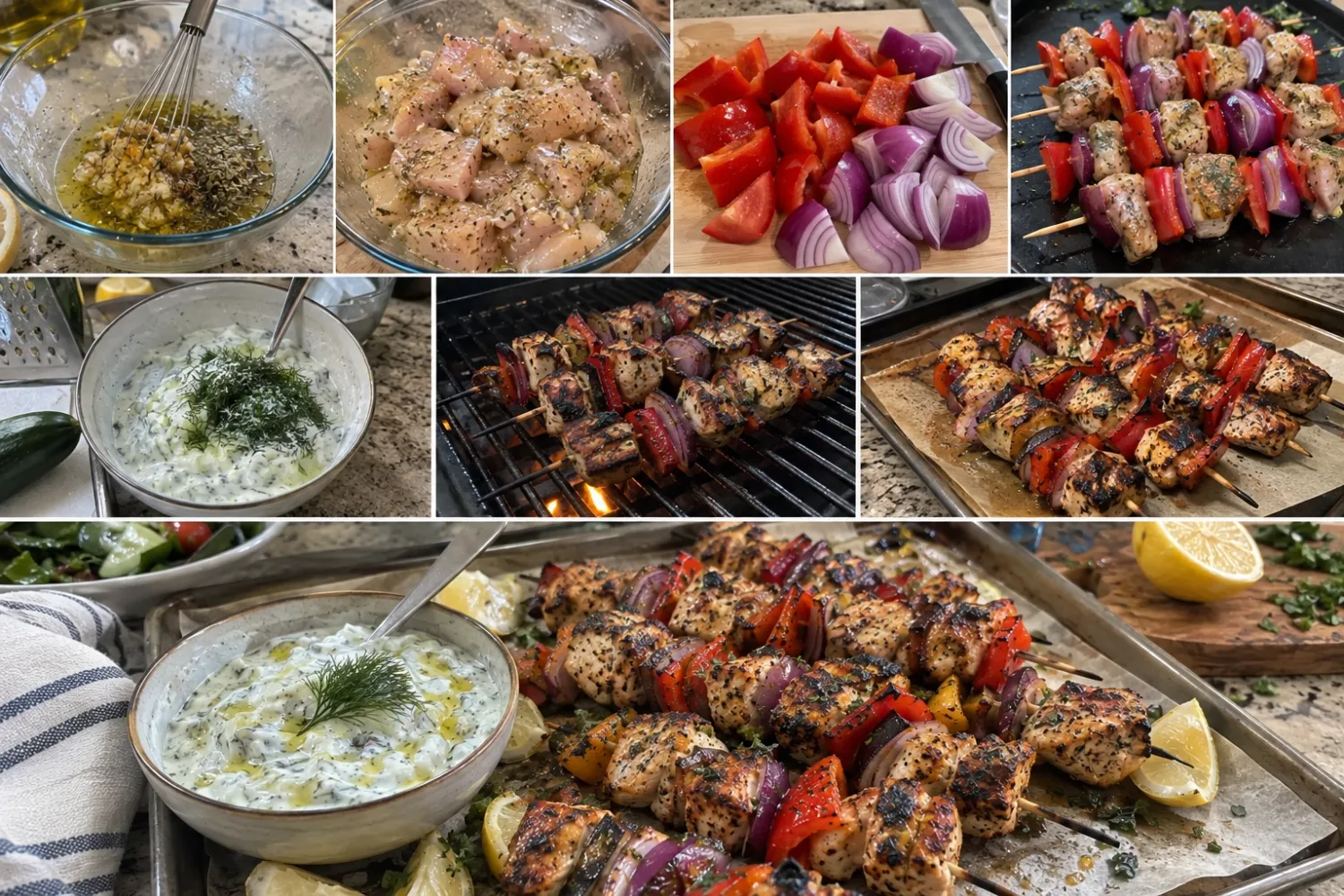
Process of making Mediterranean chicken kabobs with cucumber tzatziki

Why These Chicken Kabobs Fit Long-Term GLP-1 Maintenance

Long-term maintenance can benefit from having meals that are enjoyable enough to fit ordinary social eating rather than relying exclusively on repetitive, highly functional meals.

These kabobs offer several practical advantages:

  • The chicken provides a substantial protein component.
  • The vegetables add color, texture, and volume.
  • Tzatziki adds moisture and tang without requiring a heavy sauce.
  • The components can be served separately for flexible portions.
  • The same recipe works on a grill, skillet, or air fryer.
  • Optional grains can be added according to appetite and the rest of the meal.

This is not a claim that the recipe produces a medical or weight-management outcome. Individual appetite, tolerance, nutritional needs, and medication experience vary.

USDA MyPlate describes lean poultry such as skinless chicken breast as a lean protein-food choice and emphasizes variety across protein foods. (MyPlate)

What the Lemon Marinade Actually Does

The marinade combines lemon juice, olive oil, garlic, oregano, salt, and pepper.

The lemon juice adds acidity and brightness, while the olive oil helps carry the aromatic flavors across the surface of the chicken. Because the chicken is cut into relatively small pieces, the marinade has plenty of surface area to contact.

The practical goal is flavor and surface tenderness, not an exaggerated claim that lemon "breaks down" the chicken throughout its entire interior.

For this reason, the recipe uses a relatively short marinating window. Marinating longer is not automatically better.

Why the Tzatziki Matters

The cucumber tzatziki is more than a garnish.

The cool yogurt sauce provides moisture and a contrasting temperature against the hot grilled chicken and vegetables. That contrast makes the plate feel more complete without requiring a heavy creamy sauce.

The grated cucumber should be squeezed well before mixing. Excess water can make the tzatziki thin and dilute the flavor.

If you want the sauce to taste more developed, prepare it several hours before serving and refrigerate it.

How to Grill the Kabobs Without Drying Out the Chicken

Chicken breast is lean, so the key is to cook the pieces evenly rather than simply leaving the skewers over high heat for a long time.

Cut the chicken into similarly sized pieces and leave small spaces between pieces on the skewers.

Grill over medium-high heat and turn the skewers every few minutes. The chicken is finished when the thickest piece reaches 165°F on a food thermometer.

USDA guidance specifically recommends using a food thermometer for poultry rather than relying on appearance alone. (Food Safety and Inspection Service)

No Grill? Use a Skillet or Air Fryer

You do not need to reserve this recipe for summer.

Indoor Skillet

Heat a large skillet or grill pan over medium-high heat. Cook the prepared skewers in batches if necessary so the pan is not overcrowded. If you enjoy indoor skillet cooking, you might also like this Creamy Garlic Chicken Skillet | High-Protein GLP-1 Dinner.

Turn the skewers every few minutes and continue cooking until the chicken reaches 165°F.

If the vegetables brown faster than the chicken, lower the heat slightly rather than increasing the cooking time dramatically.

Air Fryer

Cook the prepared chicken and vegetables at approximately 400°F for about 10–14 minutes, turning halfway through. For another great air fryer option, check out these Air Fryer Chicken Drumsticks High Protein | Crispy GLP-1 Dinner.

Because air-fryer models vary, use the cooking time as a starting point rather than a guarantee. The final safety check is the chicken's internal temperature.

Which Grain Goes Best With Mediterranean Chicken Kabobs?

There is no single required grain for this recipe.

For a more traditional Mediterranean-style plate, try:

  • bulgur;
  • farro;
  • quinoa;
  • brown rice;
  • barley;
  • whole-grain pita.

For a smaller meal, you can simply serve the kabobs with tzatziki and vegetables without adding a grain.

For a larger family-style dinner, put the grain on the table separately so people can choose how much they want.

USDA MyPlate recommends making at least half of grain choices whole grains, while also emphasizing variety across the overall eating pattern. (MyPlate)

How to Make the Meal More Social

One advantage of kabobs is that they naturally work as a shared-table meal.

Place the grilled chicken and vegetables on a platter with the tzatziki in a separate bowl. Add a grain, salad, or whole-grain pita if desired.

This setup lets everyone build a plate according to appetite and preference rather than requiring a predetermined combination.

For GLP-1 users in maintenance, that flexibility can be more practical than trying to make every meal fit a rigid portion template.

A Few Things That Can Go Wrong

Chicken Pieces Are Too Large

Large chunks can brown outside before reaching a safe internal temperature. Keep pieces reasonably uniform and around 1 1/2 inches.

The Skewers Are Packed Too Tightly

Crowded ingredients can reduce direct heat exposure and make cooking less even. Leave small spaces between pieces.

Tzatziki Is Watery

The cucumber contains substantial water. Grate it and squeeze out excess moisture before mixing.

The Chicken Is Dry

Overcooking is a common problem with lean chicken breast. Use a thermometer and remove the chicken from the heat once it reaches the safe minimum temperature.

The Vegetables Burn First

Cut the vegetables into similarly sized pieces and adjust heat if they are browning significantly faster than the chicken.

Portioning for a GLP-1-Friendly Meal

There is no universal "correct" portion for someone using a GLP-1 medication.

Start with an amount that fits your appetite and current tolerance rather than assuming you need to finish a fixed serving.

The recipe is intentionally easy to portion because the chicken, vegetables, tzatziki, and optional grain can be served separately.

If a full serving feels larger than you want, save the remainder properly rather than forcing yourself to finish it.

If you want a more substantial meal, add a reasonable portion of your preferred grain or another vegetable side.
GLPIANS
Professional Recipe Collection
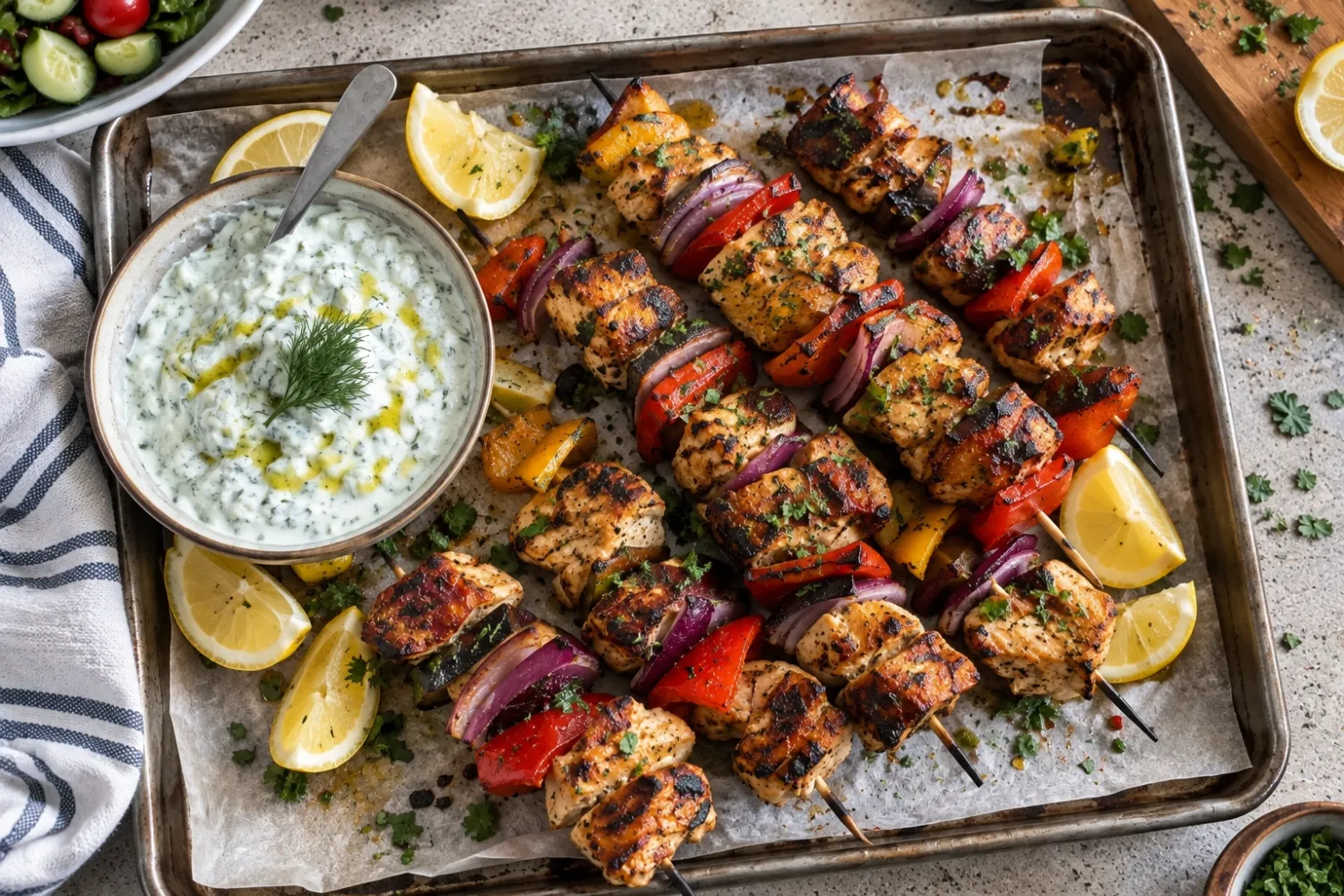
Grilled Mediterranean chicken kabobs with bell peppers and red onion served with cucumber tzatziki
HIGH-PROTEIN MEDITERRANEAN DINNER

Grilled Mediterranean Chicken Kabobs with Cucumber Tzatziki

Tender grilled chicken breast is marinated with lemon, garlic, oregano, and olive oil, then skewered with bell pepper and red onion and served with cool cucumber tzatziki. The recipe also includes indoor skillet and air-fryer methods for year-round cooking.

Servings
4
Yield 4 servings
Prep Time 30 mins
Cook Time 16 mins
Total Time 46 mins
Course Dinner
Cuisine Mediterranean

Ingredients

Equipment

Large mixing bowl
Small mixing bowl
Whisk or spoon
Measuring cups and spoons
Chef's knife & Cutting board
Skewers
Outdoor grill, skillet, or air fryer
Food thermometer
Fine grater for cucumber and garlic

Instructions

  • Prepare the Chicken
  • 1
    Make the marinade. In a large bowl, whisk together the lemon juice, olive oil, minced garlic, oregano, 1/2 teaspoon kosher salt, and black pepper.
  • 2
    Marinate the chicken. Add the chicken pieces and toss until evenly coated. Cover and refrigerate for at least 20 minutes and up to approximately 2 hours. Do not leave raw chicken at room temperature while marinating.
  • 3
    Prepare the vegetables. Thread the chicken, bell pepper, and red onion onto skewers, alternating the ingredients. Leave small spaces between pieces rather than packing them tightly together so heat can circulate.
  • Make the Tzatziki
  • 4
    Combine the sauce. Stir together the Greek yogurt, squeezed grated cucumber, lemon juice, dill, garlic, and 1/4 teaspoon kosher salt. Refrigerate until ready to serve.
  • Grill the Kabobs
  • 5
    Preheat the grill. Heat an outdoor grill to medium-high heat, approximately 400–450°F. Lightly oil the grates if needed to reduce sticking.
  • 6
    Grill. Place the skewers on the grill and cook, turning every 3–4 minutes, until the chicken is browned in spots and reaches 165°F in the thickest piece when checked with a food thermometer.
  • 7
    Rest briefly. Transfer the kabobs to a clean plate and let them rest for about 3–5 minutes before serving.
  • Indoor Skillet Method
  • 8
    Heat a large skillet or grill pan over medium-high heat. Add the assembled kabobs in a single layer, working in batches if necessary.
  • 9
    Cook, turning every few minutes, until the chicken is browned and reaches 165°F internally. If the vegetables begin to brown too quickly before the chicken is cooked, reduce the heat slightly and continue cooking.
  • Air-Fryer Method
  • 10
    Preheat the air fryer to 400°F if the manufacturer's instructions recommend preheating.
  • 11
    Arrange the chicken and vegetables in the air-fryer basket in a single layer. Cook for approximately 10–14 minutes, turning or shaking the basket halfway through. Cooking time can vary with piece size and air-fryer model.
  • 12
    Verify that the thickest chicken piece reaches 165°F before serving.
  • Serve
  • 13
    Serve the warm chicken and vegetables with cucumber tzatziki on the side. Add an optional grain or vegetable side according to appetite and preference.

Recipe Notes

  • Cut the chicken and vegetables into similarly sized pieces so they cook more evenly.
  • Do not pack the skewers tightly. Small spaces help the chicken cook more evenly.
  • If using wooden skewers, soak them according to the skewer manufacturer's instructions before grilling.
  • The lemon-based marinade contributes acidity and flavor, but it should not be treated as a guaranteed medical or swallowing aid.
  • Because chicken breast is lean, avoid substantially overcooking it after it reaches the safe internal temperature.
  • Squeezing excess water from the cucumber keeps the tzatziki thick rather than watery.
  • For a stronger Mediterranean flavor, the tzatziki can be prepared several hours ahead and refrigerated.
  • The recipe is intentionally portion-flexible: a smaller serving of chicken and tzatziki can be paired with vegetables or a grain according to individual appetite.
  • The indoor methods use the same prepared chicken and vegetables, so the recipe does not require a separate winter version.

Nutrition Facts

Estimated nutrition per serving (approx. 1/4 of finished kabobs and tzatziki):
NutrientAmount
Calories~305 kcal
Protein~46 g
Carbohydrates~9 g
NutrientAmount
Fat~11 g
Fiber~1 g
Sugar~5 g
NutrientAmount
Sodium~700 mg

Substitutions

  • Chicken breast → boneless, skinless chicken thighs (more forgiving, but alters calories/fat).
  • Nonfat Greek yogurt → 2% or whole-milk Greek yogurt (richer sauce, increases fat).
  • Fresh dill → 1 teaspoon dried dill.
  • Red bell pepper → yellow or orange bell pepper.
  • Red onion → yellow onion.
  • Fresh lemon juice → bottled lemon juice.
  • Dried oregano → Italian seasoning (flavor will be slightly less specifically Mediterranean).

Storage

Refrigerate cooked chicken/vegetables in airtight containers within 2 hours of cooking. Use within 3–4 days. Keep tzatziki refrigerated separately in a covered container.

Reheating

Skillet: Reheat over medium heat with a small splash of water, covered loosely.
Air fryer: Reheat at 350°F for 3–5 minutes, checking frequently.
Tzatziki: Do not heat. Serve chilled.

Make Ahead / Meal Prep

  • Prepare tzatziki up to 1 day ahead for better flavor.
  • Cut the chicken and vegetables ahead of time.
  • Prepare the marinade shortly before adding the raw chicken.
  • Marinate the chicken for at least 20 minutes and up to approximately 2 hours under refrigeration.
  • Cook the kabobs when ready to eat.
  • Store cooked chicken, vegetables, and tzatziki separately for easier portioning.

Serving Suggestions

For a maintenance-oriented meal, adapt the plate to fit your appetite and the rest of the meal:

  • Grain Options: Pair with quinoa, brown rice, farro, bulgur, barley, or whole-grain pita.
  • Vegetable Options: Serve alongside a tomato and cucumber salad, roasted zucchini, grilled eggplant, mixed greens, or roasted cauliflower.
  • Social-Grilling Option: Set the kabobs, tzatziki, vegetables, and optional grain or pita on the table separately so each person can assemble a portion that matches their appetite.
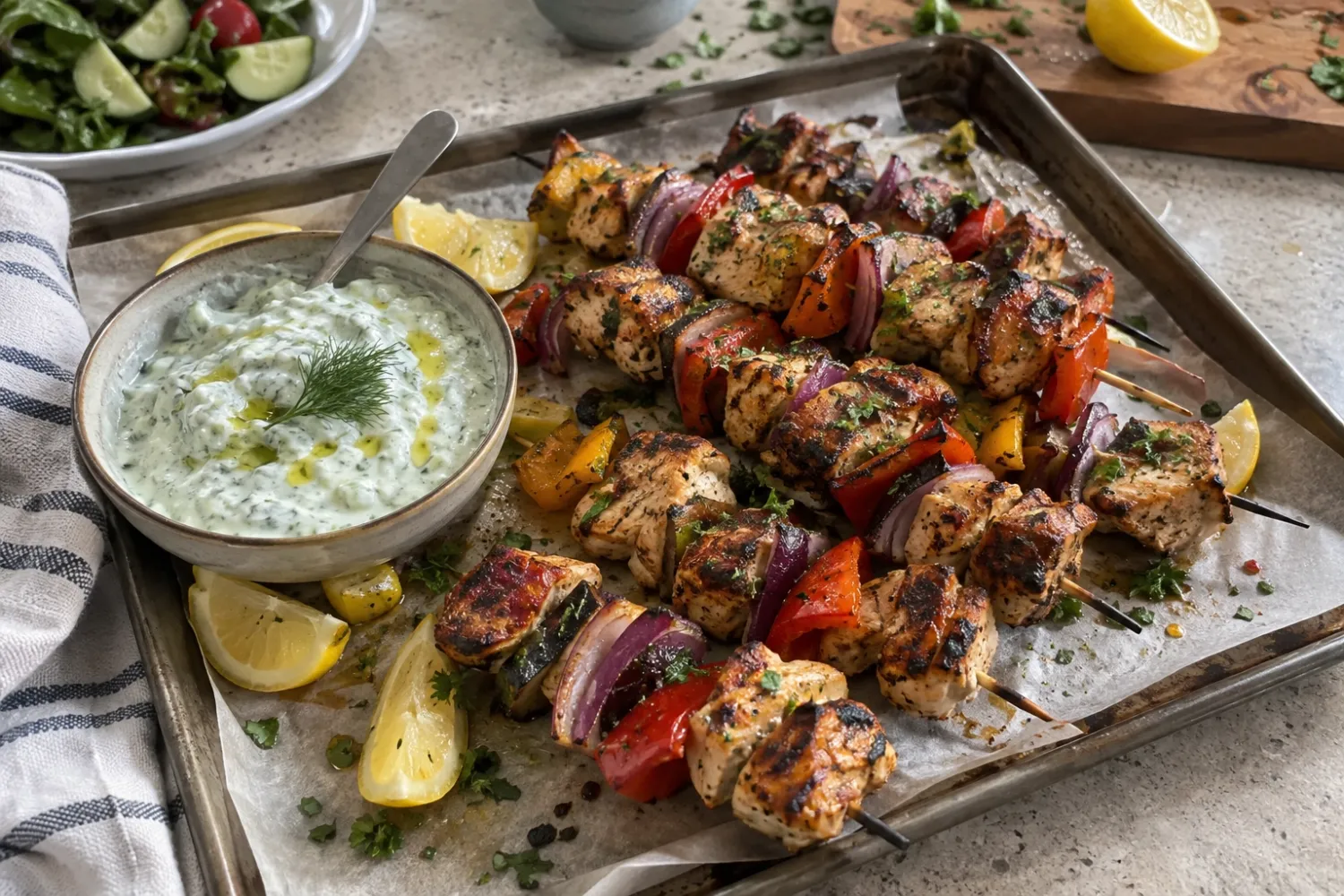
Serving Suggestions for Mediterranean Chicken Kabobs with Tzatziki

GLP-1 Practical Notes

This recipe is positioned around long-term maintenance and flexible social eating, not around a claim that Mediterranean ingredients or lemon juice produce a medication-related effect.

The most useful feature is flexibility.

You can serve:

  • chicken + tzatziki;
  • chicken + vegetables + tzatziki;
  • chicken + a small grain portion + tzatziki;
  • a larger family-style platter with optional pita and vegetables.

Individual appetite and food tolerance vary, so the appropriate portion is personal.

Common Mistake: Treating the Marinade as a Medical Tool

The lemon marinade is a culinary technique.

It adds acidity and flavor and affects the texture of the chicken's surface, but it should not be presented as a treatment for dry mouth, nausea, medication side effects, or another medical condition.

If a reader has persistent swallowing difficulty, significant dry mouth, or other concerning symptoms, that is a matter for an appropriate healthcare professional rather than a recipe adjustment.

Common Mistake: Treating "Healthy" as a Fixed Portion

The ingredients in a recipe do not determine a universally appropriate portion for every person.

This recipe provides a defined four-serving baseline so nutrition and recipe scaling remain consistent, while still allowing the meal to be served flexibly.

Social-Grilling Strategy

For a gathering, prepare the chicken and vegetables ahead of the cooking stage, make the tzatziki separately, and cook the kabobs close to serving time.

Serve the components family-style rather than plating everyone's food in advance.

This keeps the meal visually appealing while giving diners control over their portions and side choices.

Storage Strategy

Store chicken and vegetables separately from tzatziki whenever possible.

This helps preserve the sauce's cool, thick texture and prevents the vegetables from making the sauce watery.

Cooked chicken leftovers should be refrigerated promptly and used within the recommended refrigerated storage window.

Food Safety Reminders

  • Raw chicken should be kept refrigerated until preparation.
  • Keep raw chicken separate from ready-to-eat foods and use separate or thoroughly washed utensils and cutting boards.
  • Do not rely on chicken color alone to determine doneness. Chicken should reach a minimum internal temperature of 165°F, measured with a food thermometer in the thickest portion. (Food Safety and Inspection Service)
  • Do not reuse marinade that has contacted raw chicken unless it is thoroughly cooked first. This recipe does not require using leftover raw marinade as a sauce.
  • Refrigerate cooked leftovers within 2 hours, or within 1 hour when exposed to temperatures above 90°F. (FoodSafety.gov)
  • Reheat refrigerated leftovers to 165°F before serving. (FoodSafety.gov)

Frequently Asked Questions

Are Mediterranean chicken kabobs with yogurt sauce good for GLP-1 meal planning?

They can be a practical option for people using GLP-1 medications because the meal provides a substantial protein component, vegetables, and flexible serving options. Individual appetite and tolerance vary, so the appropriate portion is personal.

Does lemon juice make chicken more tender?

Lemon juice contributes acidity and can affect the texture of the chicken's surface while adding flavor. It does not guarantee that chicken will remain juicy, so controlling cooking time and using a thermometer are still important.

Can I make these chicken kabobs without a grill?

Yes. The recipe includes both an indoor skillet/grill-pan method and an air-fryer method.

What temperature should chicken kabobs reach?

Chicken should reach a minimum internal temperature of 165°F, measured with a food thermometer in the thickest piece. (Food Safety and Inspection Service)

What yogurt is best for tzatziki?

Plain Greek yogurt works well because it is thick enough to produce a substantial sauce. Nonfat Greek yogurt keeps the recipe lighter, while 2% or whole-milk Greek yogurt creates a richer texture.

Can I make the tzatziki ahead?

Yes. Making it several hours ahead can give the garlic, dill, lemon, and cucumber time to blend into the yogurt. Keep it refrigerated.

What grains go well with Mediterranean chicken kabobs?

Bulgur, farro, quinoa, brown rice, and barley all work well. Whole-grain pita is another practical option.

Can I meal-prep these chicken kabobs?

Yes. Cooked chicken and vegetables can be portioned into refrigerated containers, with tzatziki stored separately. For best quality, avoid assembling the sauce directly against the cooked vegetables for several days.

Can I freeze the cooked chicken?

Cooked chicken can be frozen, although the vegetables may lose some of their original texture after freezing and thawing. Freeze the chicken separately when possible.

How should I serve the kabobs for a social meal?

Place the chicken, vegetables, tzatziki, and optional grains or pita separately on the table. This makes the meal easy to customize without requiring one fixed plate size.

Explore More High-Protein GLP-1 Dinner Recipes

Looking for more ways to build satisfying, protein-focused dinners into your routine? Explore the GLPIANS collection for additional meal formats and flavor profiles.

10 High-Protein GLP-1 Dinner Recipes for Easy Meal Planning
Link copied to clipboard!