

Low-Fat Turkey White Bean Stew for a Protein-Focused GLP-1 Meal
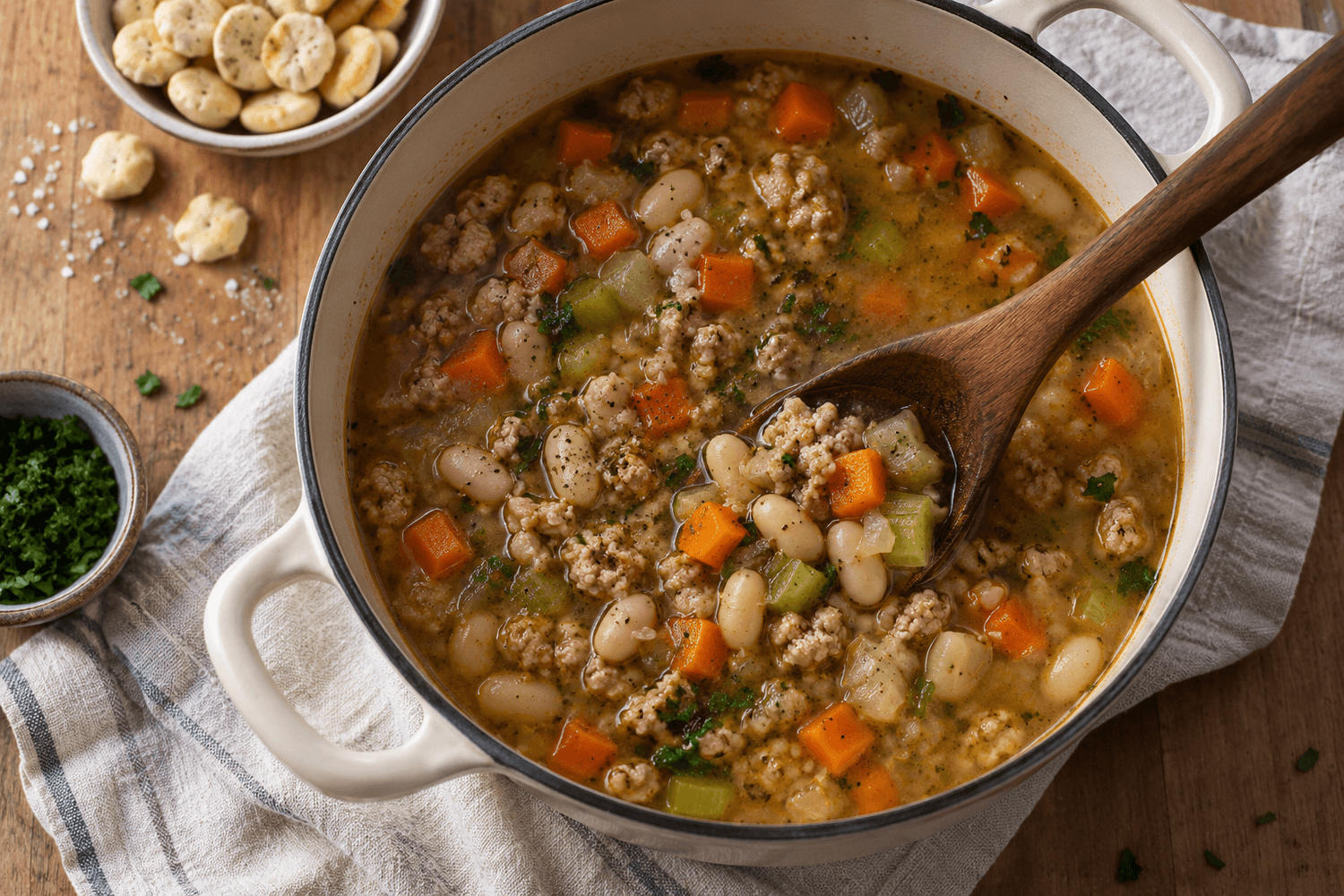
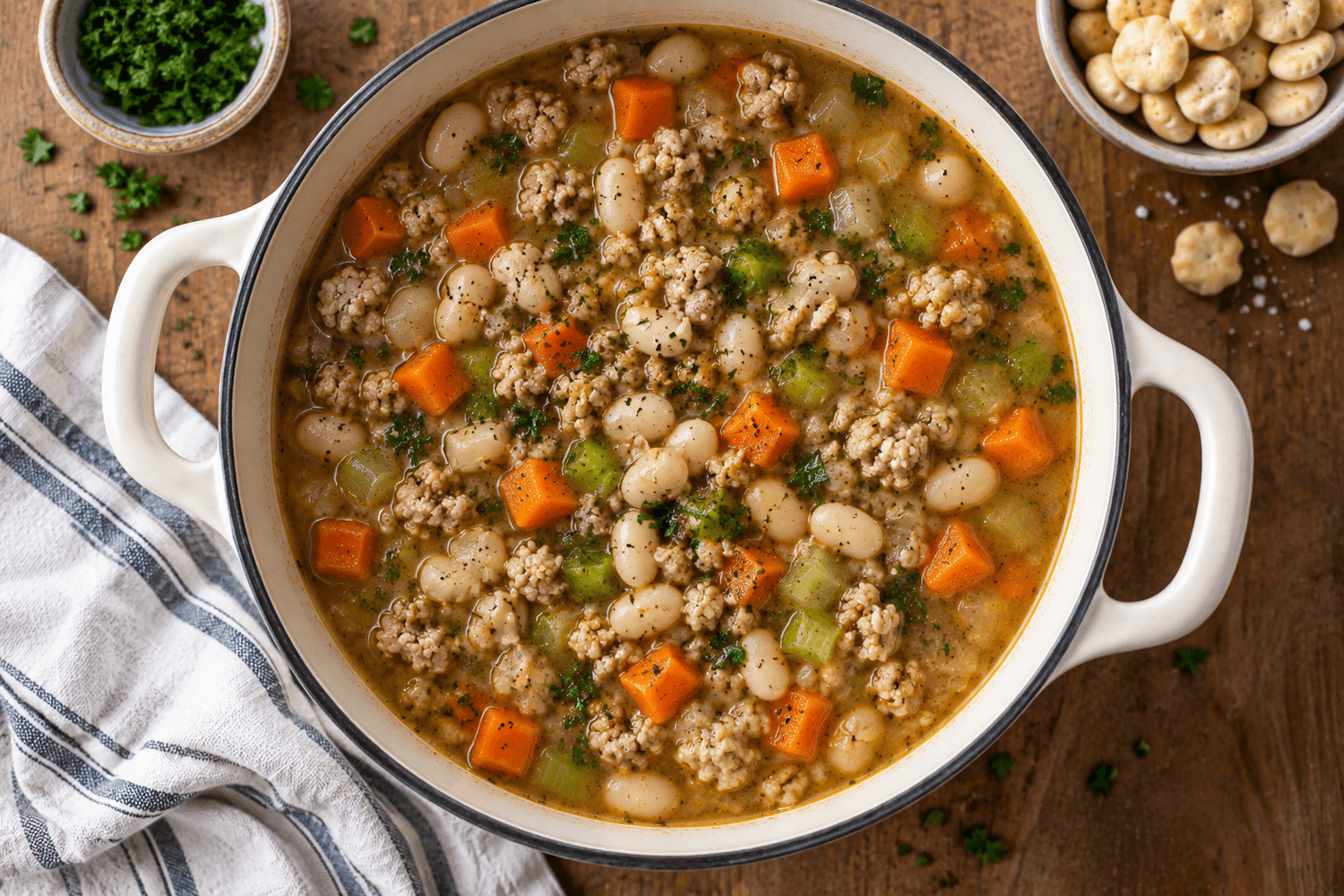
This Low-Fat White Bean & Ground Turkey Stew combines extra-lean ground turkey, navy beans, carrots, celery, and herbs in a savory broth without added cooking oil.
The recipe makes approximately six 1 1/2-cup servings and provides an estimated 26 grams of protein per serving. It is designed to give GLP-1 users a practical, lower-fat comfort meal that can also be divided into smaller portions.
For readers who have had their gallbladder removed, the recipe is particularly relevant because some people find that smaller amounts of dietary fat are easier to tolerate. That does not make this a medical treatment or a guaranteed solution for digestive symptoms.
If you're looking for another gentle, soup-style GLP-1 meal, you can also try gentle chicken noodle soup for GLP-1 shot days as a different protein-and-broth option.
Why This Stew Is Built Differently
A traditional hearty stew can become relatively high in fat through cooking oil, fattier ground meat, cream, cheese, or rich toppings.
This recipe takes a more deliberate approach:
Extra-lean ground turkey breast supplies the primary protein.
Navy beans contribute fiber and carbohydrate while adding body.
Carrots and celery provide flavor and texture without relying on added fat.
Vegetable broth replaces cooking oil during the initial cooking process.
Garlic, thyme, oregano, smoked paprika, lemon, and parsley provide flavor without a creamy sauce.
Six portions make the recipe easy to refrigerate or freeze.
The result is a simple, savory stew that does not need a heavy sauce to taste substantial.
Why Use Extra-Lean Ground Turkey?
Ground turkey is not automatically low fat.
Different ground-turkey products can have very different fat levels, so the package label matters. For this recipe, 99% lean ground turkey breast is the preferred choice.
That distinction is important because changing to a higher-fat turkey can substantially alter the nutrition profile.
It can also change the cooking behavior. Very lean turkey has less fat available to lubricate the cooking surface, which is why this recipe uses a small amount of broth during the initial browning step.
How to Cook Turkey Without Added Oil
The key is not to try to aggressively sear very lean turkey in a dry, overheated pot.
Instead:
Heat the pot over medium heat.
Add the turkey.
Add a small amount of broth.
Break the turkey into small pieces.
Stir frequently.
Add a little more broth if sticking becomes an issue.
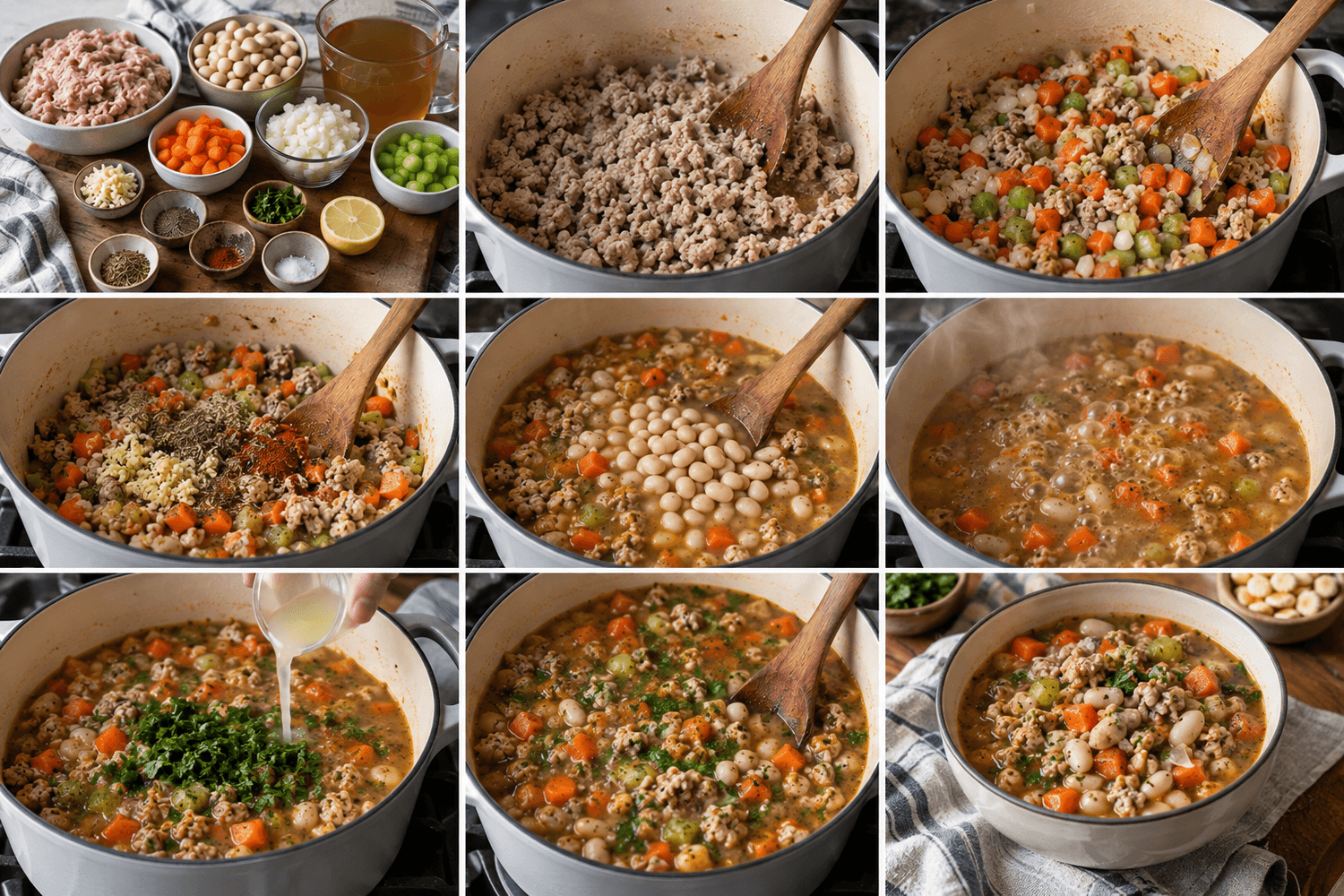
This creates a practical oil-free cooking method while still allowing the turkey and vegetables to develop savory flavor.
Why Navy Beans Work Here
Navy beans are small white beans with a mild flavor and tender texture.
They make the stew more substantial without requiring cream or another high-fat ingredient.
They also contribute fiber, but fiber tolerance varies. If your digestive system is sensitive, especially after gallbladder removal, increasing fiber rapidly can sometimes cause gas or cramping.
That is another reason portion flexibility is built into this recipe.
What Makes the Recipe Relevant After Gallbladder Removal?
There is no single universal gallbladder-removal diet.
Mayo Clinic explains that some people experience diarrhea after gallbladder removal and that larger amounts of fat may be harder for some people to digest. It also recommends smaller amounts of fat and smaller meals as practical strategies for people experiencing symptoms. (Mayo Clinic)
That evidence supports the basic direction of this recipe — lower fat, moderate portions, lean protein — but it does not justify claiming that a particular recipe will prevent diarrhea or bile-acid symptoms.
This distinction is important.
The stew is a lower-fat food option. It is not a treatment for post-cholecystectomy diarrhea or bile-acid malabsorption.
Why Smaller Portions Can Matter on GLP-1 Medications
GLP-1-based therapies can affect appetite and gastrointestinal tolerance.
Expert dietary guidance for GLP-1 receptor agonist treatment commonly emphasizes eating slowly, using smaller portions, stopping when comfortably full, and adapting food composition when gastrointestinal symptoms occur. Lower-fat meals may be easier for some people to tolerate during periods of GI sensitivity. (PubMed Central (PMC))
That makes a six-serving stew useful from a practical standpoint.
You do not need to treat 1 1/2 cups as a mandatory portion. If a smaller amount feels more appropriate for your appetite, serve less and save the remainder.
Why There Is No Added Oil
The recipe intentionally avoids added oil.
That does not mean dietary fat is inherently bad or that every person using a GLP-1 medication needs an ultra-low-fat diet.
Instead, the oil-free structure makes the recipe easier to fit into a lower-fat eating pattern when that is useful for an individual's food tolerance.
If you are comparing this recipe with another ground-turkey meal, our ground turkey and cabbage GLP-1 taco bowl offers a completely different flavor profile while keeping the same general protein-focused ingredient.
How to Add Flavor Without Added Oil
The stew gets its flavor from several small components rather than one heavy ingredient.
Onion and celery create the savory base.
Garlic adds aromatic depth.
Thyme and oregano give the broth a familiar stew-like character.
Smoked paprika adds warmth.
Lemon juice brightens the finished broth.
Fresh parsley gives the final bowl a fresh finish.
This is a useful technique for anyone trying to reduce reliance on butter, cream, cheese, or cooking oil without making meals taste bland.
Is This a “Gallbladder-Friendly” Recipe?
The safest description is lower-fat, not “gallbladder-friendly” as a medical guarantee.
People respond differently after gallbladder removal. Some return to a broad diet without significant problems, while others notice that certain foods or larger meals cause symptoms.
Mayo Clinic specifically notes that there is no single prescribed gallbladder-removal diet and that persistent or worsening diarrhea should be discussed with a healthcare professional. (Mayo Clinic)
So this recipe should be treated as one practical lower-fat option — not as a medical diet.
Important Note About the Original “Under 8 Grams of Fat” Concept
The original recipe brief proposed that keeping the meal below 8 grams of fat per serving would prevent bile-malabsorption flare-ups and diarrhea.
That claim should not be published as written.
A lower-fat meal may be easier for some people to tolerate, but a specific 8-gram threshold cannot responsibly be presented as a universal guarantee.
This recipe is intentionally formulated to remain well below that target based on its estimated ingredients, but individual response is still more important than a rigid number.
When to Get Medical Advice
A recipe should not be used to self-treat persistent gastrointestinal symptoms.
After gallbladder removal, seek medical guidance if diarrhea persists or becomes severe, particularly when accompanied by significant abdominal pain, fever, weight loss, blood or pus in the stool, or symptoms that interfere with daily life. (Mayo Clinic)
Likewise, persistent or severe gastrointestinal symptoms during GLP-1 treatment deserve discussion with the prescribing clinician rather than being managed solely by changing recipes.