


Soy-Marinated Soft-Boiled Eggs Make a Fast, Flavorful Lunch
These Korean-inspired soy-marinated eggs turn a small set of ingredients into a savory lunch with very little work at mealtime.
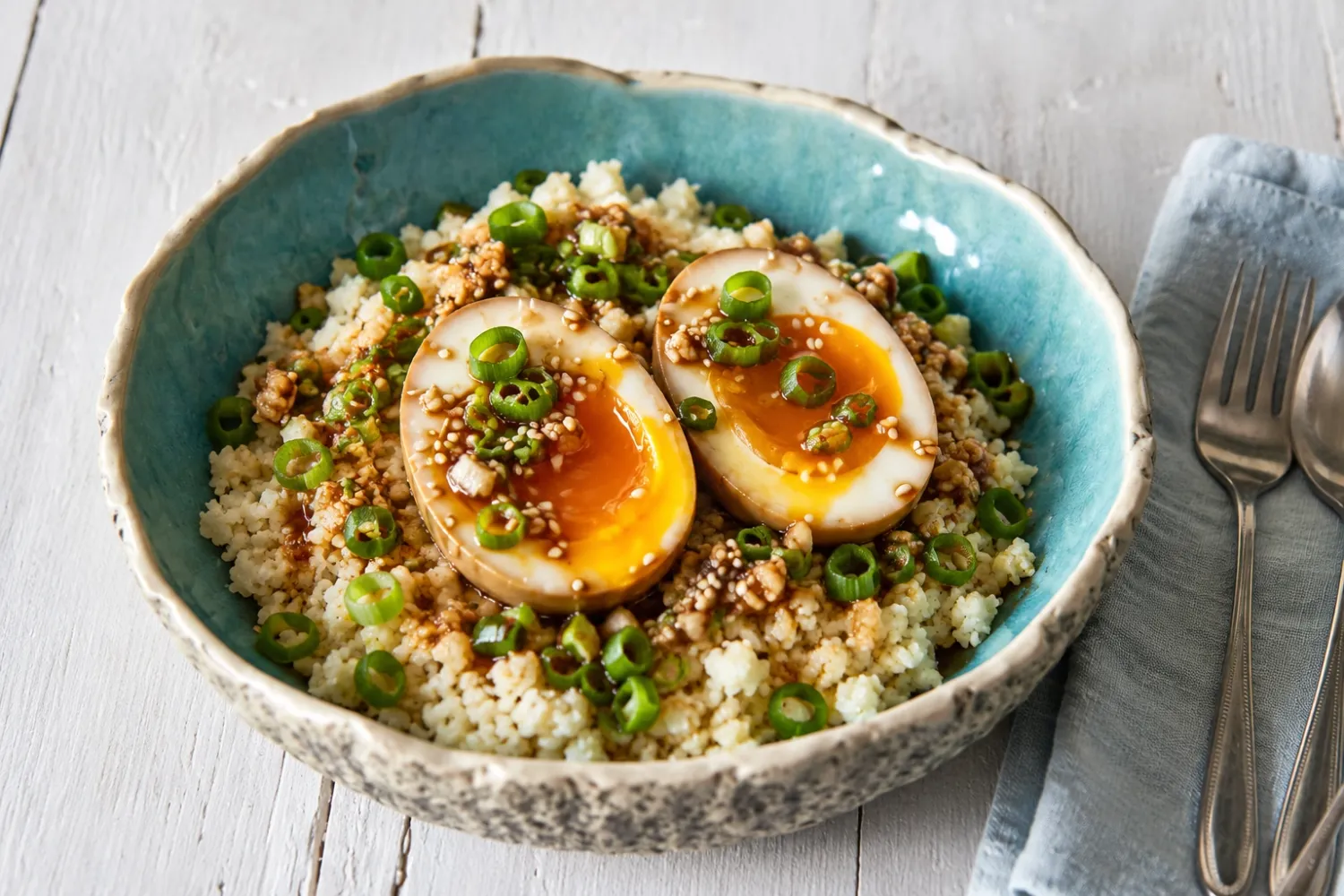
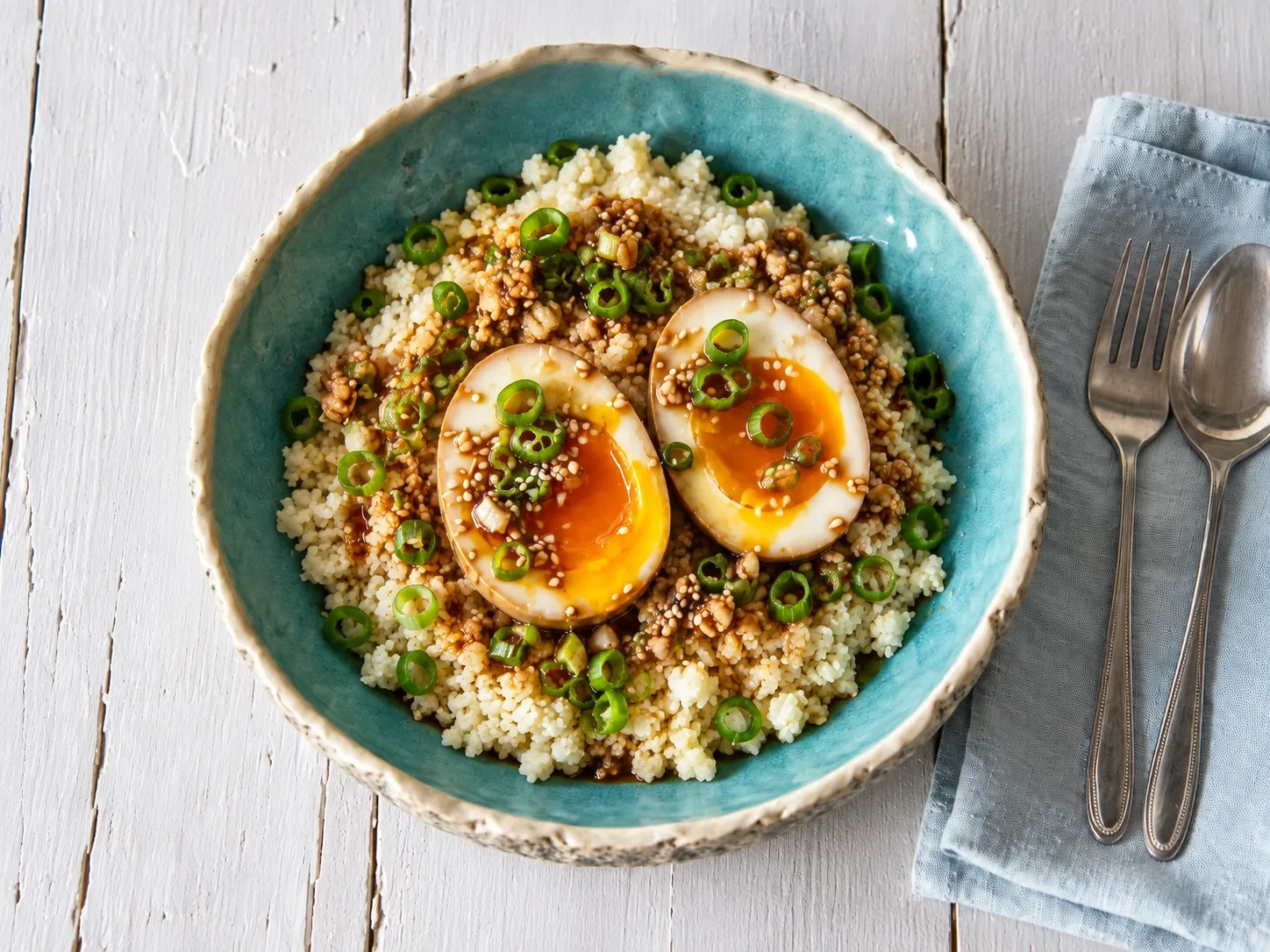
The eggs are cooked ahead, marinated with soy sauce, garlic, scallions, sesame oil and rice vinegar, then served over warm cauliflower rice. Once the components are prepared, the actual lunch assembly takes about 1–2 minutes.
That makes this recipe especially useful when the hardest part of lunch is deciding what sounds appealing.
For readers using GLP-1 medications, the recipe is designed around practical considerations such as a defined portion, advance preparation, strong flavor and the ability to divide the meal if a full serving feels too large.
It is not intended to treat medication side effects or guarantee an appetite response.
What Makes This Egg Bowl Different?
The concept is inspired by Korean-style marinated eggs, often called mayak eggs, but the recipe is structured specifically as a lunch rather than simply as a marinated egg side dish.
The difference comes from the complete meal format:
- Two marinated eggs provide the main protein component.
- Warm cauliflower rice creates a simple base.
- The marinade supplies concentrated savory flavor.
- The eggs can be prepared several hours ahead.
- The finished bowl requires almost no cooking at lunchtime.
- The portion can be divided if needed.
That combination makes the recipe more useful for a busy weekday than a recipe that requires every component to be cooked immediately before eating.
Why the Umami Flavor Matters
The marinade combines several flavors that make the bowl taste more complex than its ingredient count suggests.
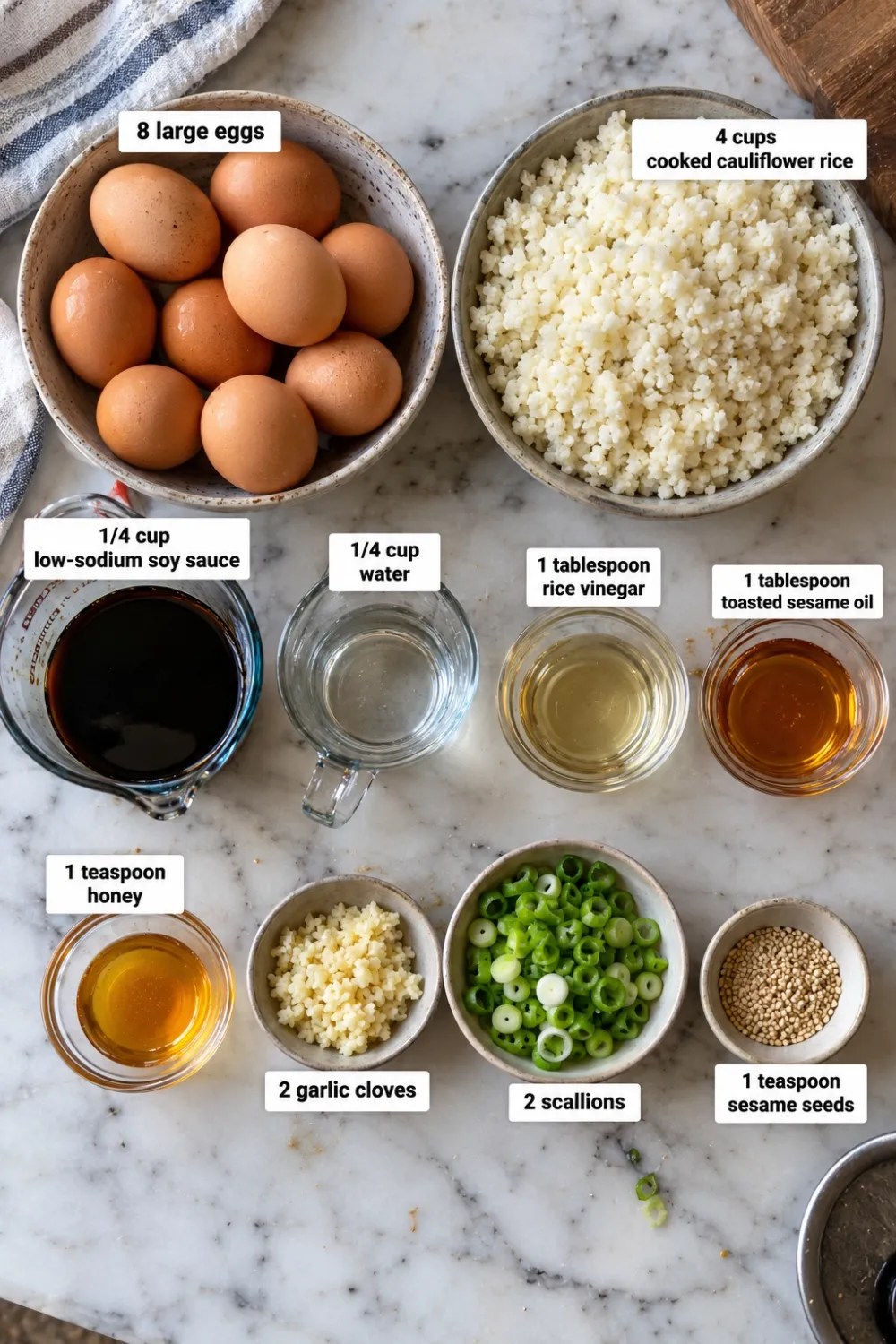
Soy sauce supplies salty, savory flavor. Garlic and scallions add aromatic sharpness. Sesame oil adds a roasted note, while rice vinegar provides acidity and honey adds a small amount of sweetness.
Umami is one of the recognized basic taste qualities, and research has examined how taste, palatability and sensory properties influence food selection and eating behavior. However, the evidence does not support a simple claim that umami universally “stimulates appetite” or treats low appetite. Research findings on taste, appetite and subsequent intake are mixed. (PubMed)
The practical takeaway is narrower and more useful: a strong savory flavor profile can make a small meal more interesting to eat.
That is the role umami plays in this recipe. It is a flavor strategy, not a medical intervention.
For the underlying research on sensory properties and appetite, see the PubMed review on sensory perception, appetite and food intake.
How Long Do You Boil Eggs for a Jammy Yolk?
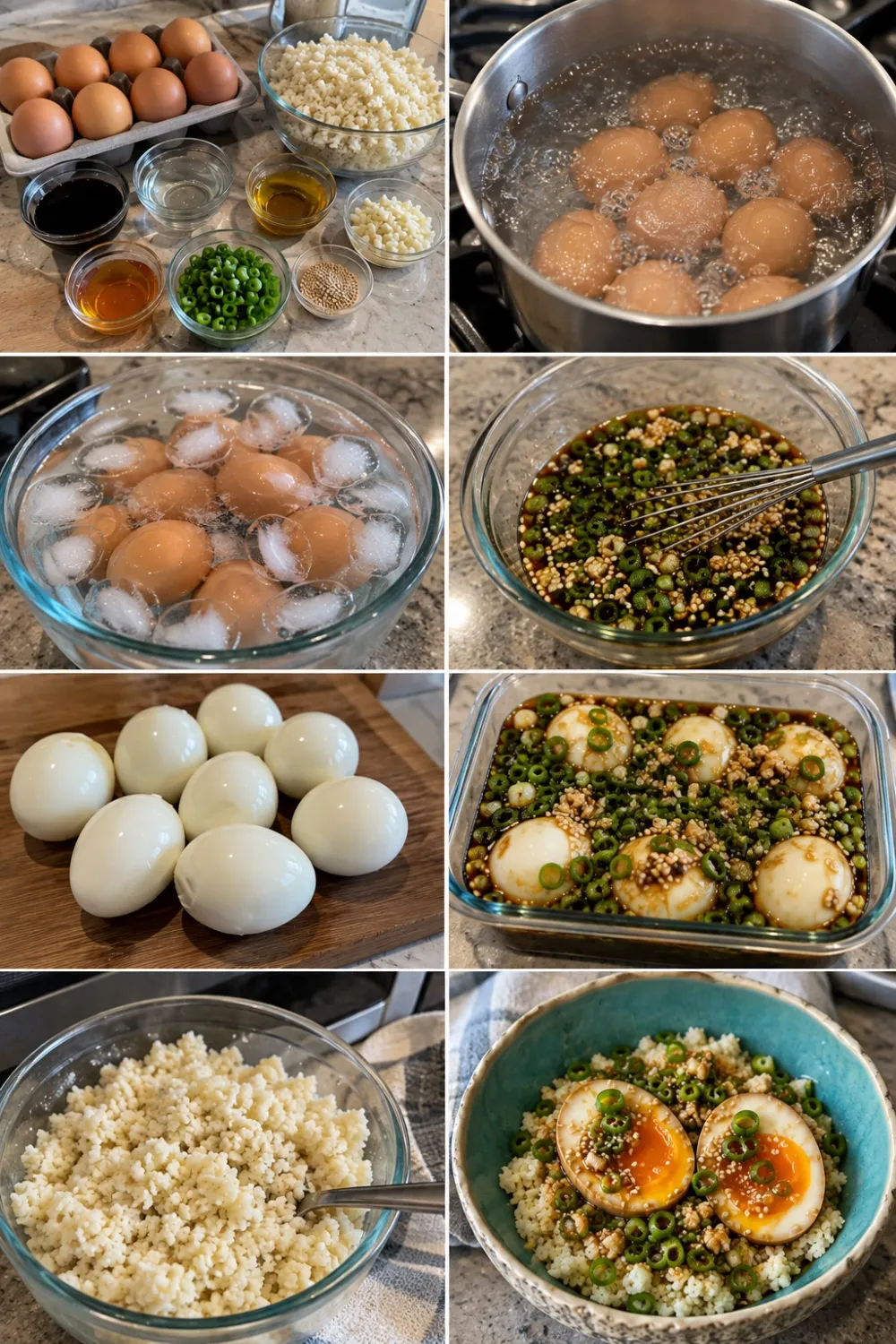
For this recipe, the starting target is 7 minutes in actively boiling water, followed immediately by an ice bath.
The exact result can vary because egg size, starting temperature, water volume and cooking equipment all influence the rate of cooking.
That means seven minutes should be treated as a repeatable recipe-development target rather than a universal guarantee that every egg will have exactly the same yolk.
There is also a safety distinction that should not be blurred: FDA recommends cooking eggs until the yolk and white are firm. If fully cooked eggs are appropriate for you, extend the cooking time until the yolks are firm rather than prioritizing the jammy texture. (U.S. Food and Drug Administration)
Why the Ice Bath Matters
Immediately moving the eggs into ice water stops the cooking process more quickly than leaving them in the hot water.
It also makes the eggs easier to handle and helps preserve the intended contrast between the cooked white and softer yolk.
For consistent results, prepare the ice bath before the eggs finish cooking so there is no delay between boiling and chilling.
How Long Should Soy-Marinated Eggs Marinate?
Give the peeled eggs at least 4 hours in the refrigerator.
The marinade flavors the exterior of the egg first, so a few minutes is not enough to create the same result.
For a workday lunch, an easy schedule is:
Night before: Cook, cool, peel and marinate the eggs.
Next morning: Keep the eggs refrigerated and portion the cauliflower rice.
Lunch: Warm the cauliflower rice and add two eggs.
The recipe's three-day recommendation is deliberately conservative for this jammy preparation. FDA's one-week storage guidance is specifically for hard-cooked eggs, so it should not automatically be treated as a storage guarantee for soft or jammy eggs. (U.S. Food and Drug Administration)
The Best Way to Build the Workday Lunch
The most efficient setup is to keep the two components separate.
Egg component
Store the peeled marinated eggs in their covered container in the refrigerator.
Cauliflower-rice component
Divide cooked cauliflower rice into individual portions and refrigerate.
Lunch assembly
Warm the cauliflower rice, add two eggs, spoon over a little marinade and finish with scallions.
Keeping the components separate gives you more control over texture and portion size. It also prevents the eggs from being repeatedly heated during meal prep.
Keep the Cauliflower Rice Mild
The cauliflower rice does not need a complicated seasoning mixture.
The eggs already bring:
- Soy sauce
- Garlic
- Sesame
- Scallions
- Mild sweetness
- Acidity
- Strong savory flavor
A heavily seasoned rice base can make the finished bowl unnecessarily salty.
Keeping the rice simple also makes the meal easier to customize.
What If a Full Serving Feels Too Large?
The recipe is written as two eggs plus one cup of cauliflower rice per serving, but a serving size is not a requirement to finish everything at once.
If a smaller amount feels more manageable, divide the prepared bowl into smaller portions and keep the remaining food refrigerated.
The practical advantage of this recipe is flexibility: the components are already prepared, so you do not have to cook another meal simply because you did not want the entire serving at once.
A Note About “Easy to Digest”
The original recipe brief described soft-boiled eggs as gentle for people with digestive issues. That claim should not be presented as a medical fact.
Texture can affect how a food feels to an individual, but this recipe should not claim that jammy eggs are universally easier to digest, safer for gastroparesis, or protective against nausea.
Individual tolerance varies.
If a particular food causes discomfort, it makes sense to choose another option that works better for you and discuss persistent digestive symptoms with an appropriate healthcare professional.
Three Practical Ways to Change the Bowl
Lower sodium
Use a lower-sodium soy sauce and reduce the amount of marinade spooned over the finished bowl.
More carbohydrates
Replace the cauliflower rice with cooked white or brown rice. The nutrition values will change.
Fully cooked eggs
If you need or prefer fully cooked eggs, cook them until the yolks and whites are firm rather than following the jammy-yolk target.
Related GLPIANS Recipes
If you want another quick savory option built around a small, protein-focused format, try the Savory Cottage Cheese Cucumber Bowl.
You may also enjoy our Bone Broth Egg Drop Protein Ramen for a comforting broth bowl or the Silken Tofu Protein Smoothie for GLP-1 Low-Appetite Days when a liquid option suits you best.
Bottom Line
The strongest feature of this recipe is not a claim that soy-marinated eggs have a special effect on GLP-1 users.
It is the combination of advance preparation, strong savory flavor, defined portions and almost instant lunchtime assembly.
Prepare the eggs ahead, keep the cauliflower rice ready, and lunch becomes a simple warm-and-assemble meal.